Description
Pattern Without Noise
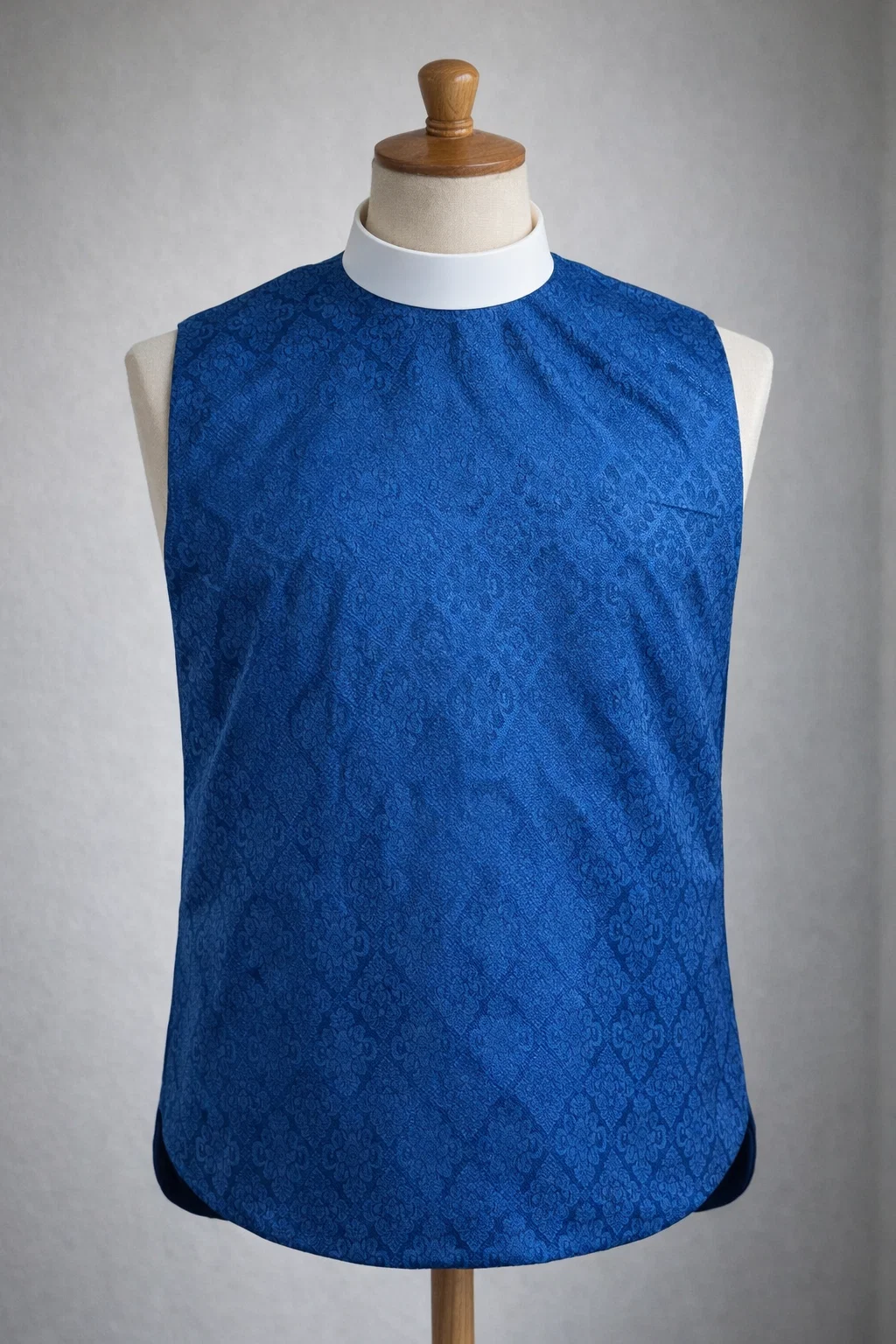
Most patterned clergy pieces announce the pattern. This one holds it back. The damask is woven into the cloth in the same blue as the ground, so from a few feet away you read a clean, deep blue panel, and only up close does the floral diamond pattern resolve. It is the modern instinct: texture and depth instead of contrast and display.
That woven quality is doing real work under lights. A tonal damask catches and releases light across its surface as you move, so it carries dimension on camera and in a bright sanctuary, where a flat cloth would read as a single dead block of color. The pattern earns its place without ever competing for attention.
The Blue
Measured, the cloth sits at #10468A. That is hue 213, a rich blue that runs slightly greener and deeper than a standard royal, which puts it close to true sapphire. It holds its saturation under artificial light rather than collapsing toward navy, and the woven pattern gives the color two registers, a lighter face where the weave catches light and a deeper tone in the recesses.
Blue is not a color the Western liturgical calendar assigns, apart from the muted Sarum blue some traditions use for Advent, and this is not that dusty shade. What it suits is everyday clerical wear in place of black, and the ceremonial and choir use that vivid blues carry across COGIC, Pentecostal and independent churches. This is a confident color for anniversaries, programs and Sunday services rather than a penitential one.
Why a Rabat
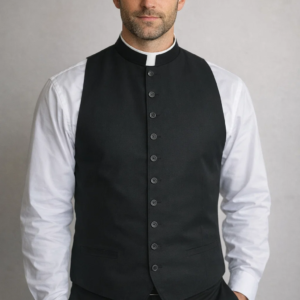
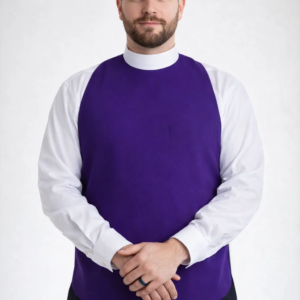
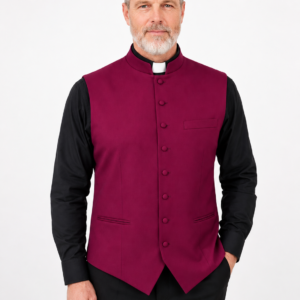
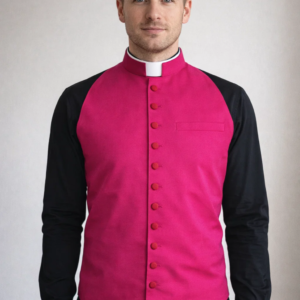
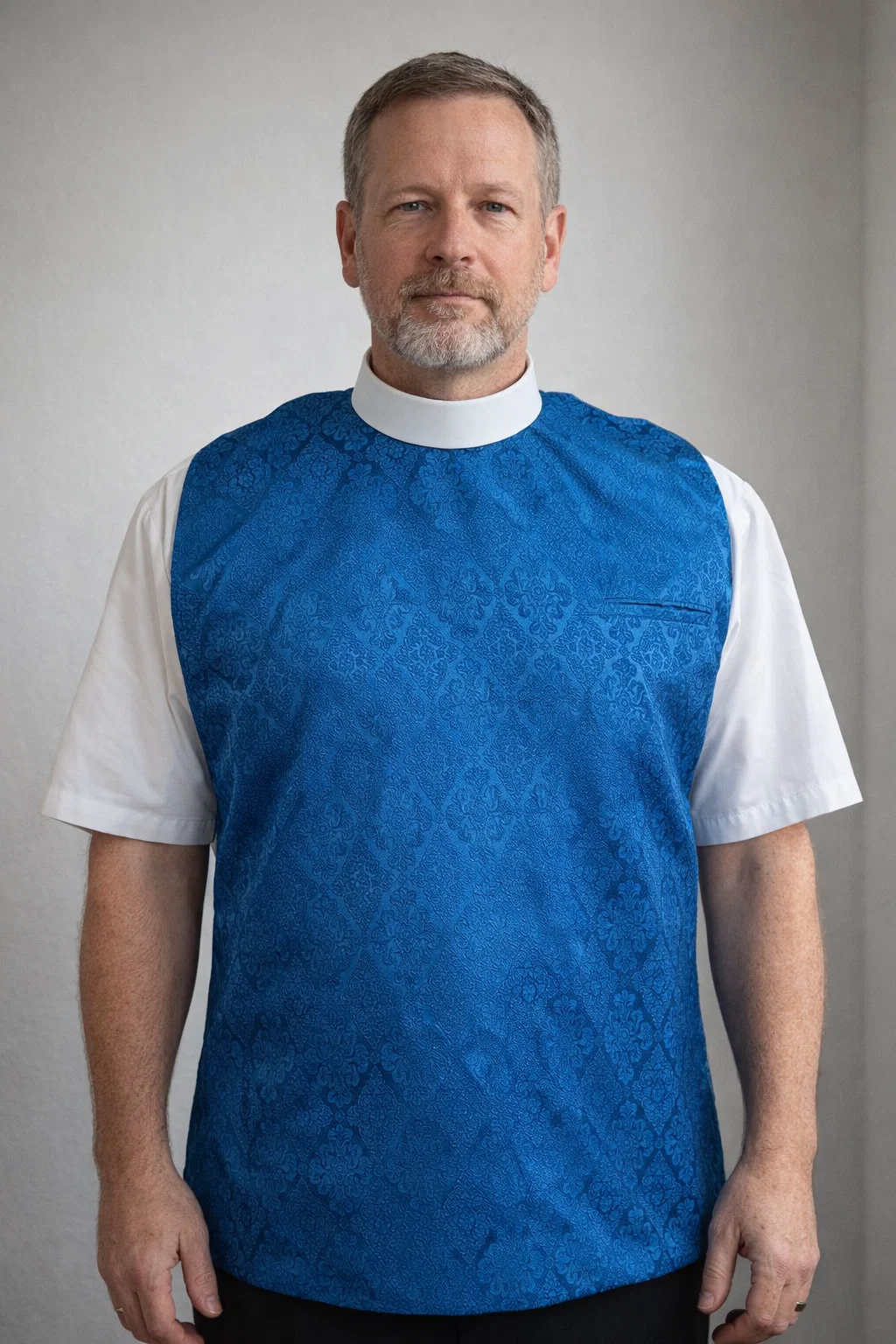
A rabat is a front panel with the collar built into it, worn over a shirt you already own. Your own sleeves and cuffs show at the sides, the panel covers the chest, and the attached collar band does the work a clergy shirt collar would. From the front you present as fully vested clergy, over any plain shirt.
For a patterned cloth like this that convenience is doubled. A full shirt in a woven damask is a costly garment, whereas a rabat gives you the same fabric and presence across the chest, at a fraction of the cost and the closet space, over the plain shirt you already own.
Collar, Coverage and Cut
The banded stand collar is built into the rabat, encircles the neck fully and is cut to hold a standard clerical insert. The panel is generous across the chest and tapers toward the collar, with the armhole edges curved deep so your own sleeves sit clean rather than bunching under the edge. Both short and long sleeve shirts work underneath, as the images show.
The hem is finished on a curve rather than cut straight, so it lies flat when you sit and shows no hard horizontal line through a jacket. A welt pocket sits at the left chest, set into the panel to keep the front line clean.
Fabric and Care
Soft quality tropical fabric with the damask woven in, lightweight and breathable, which is what a layer worn over a shirt should be. Because the pattern is part of the weave rather than printed on top, it will not crack, peel or fade the way a surface print eventually does.
Care: dry clean recommended. If you launder at home, wash cold on a gentle cycle and hang to dry, keeping strong colors separate for the first few washes. Do not press the damask hard, since heavy heat flattens a woven pattern and the depth does not fully return. Steam on low instead.
Sizing and Fit
Sized by neck measurement from 15 to 19 in half inch steps, with the panel cut proportionally to the collar size. Measure around the base of your neck where a collar sits and allow room for one finger. Between sizes, take the larger one, since a collar band that runs tight becomes uncomfortable well before a service ends. Every Clergyss rabat is cut to lie flat over a standard dress shirt without pulling at the shoulder.
FAQs
Is the pattern woven or printed?
Woven. The floral damask is formed in the structure of the cloth in the same blue as the ground, which is why it reads as texture rather than a bold print and why it shifts as the light moves across it. A woven pattern cannot crack or wash off the way a print eventually does.
How visible is the pattern from a distance?
Subtle. From the congregation you read a clean, deep sapphire panel. The floral diamond resolves only when someone is close. That is the point of a tonal damask: depth and richness without a loud pattern.
Do I need a clergy shirt underneath?
No. The collar band belongs to the rabat, so an ordinary dress shirt works, short or long sleeve. White is the usual choice because it frames the blue cleanly.
Is blue a liturgical color?
Not in the Western calendar, apart from the muted Sarum blue some traditions use for Advent, which this vivid sapphire is not. It works as everyday clerical color and for the ceremonial and choir use that vivid blues carry in COGIC, Pentecostal and independent churches.
How do I choose a size?
Size on your neck rather than your chest. Measure around the base of the neck where a collar sits and allow a finger of room. Between sizes, go up, since the collar band is the part you notice throughout a service.