
Description
A Short Surplice with Bold Lace
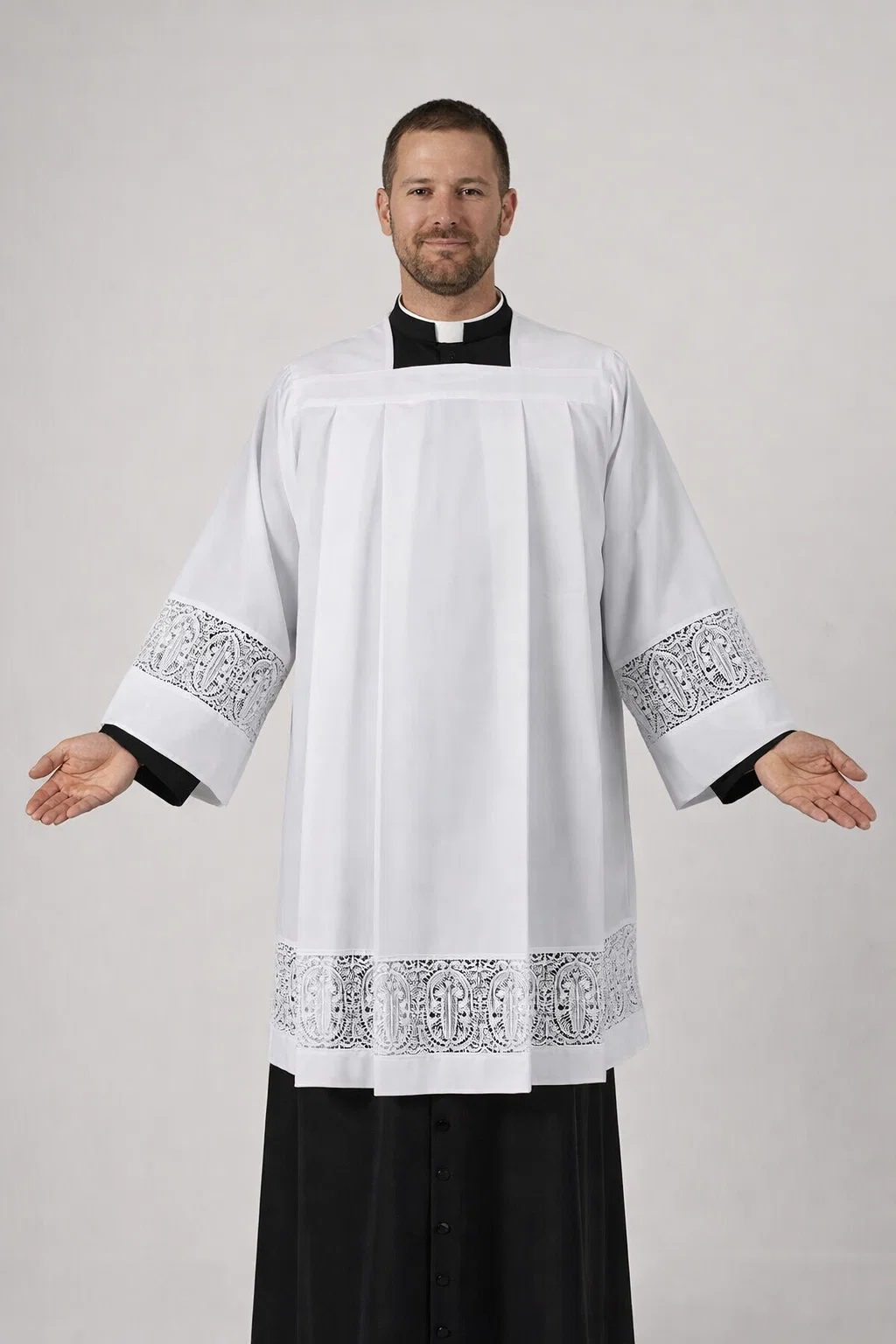
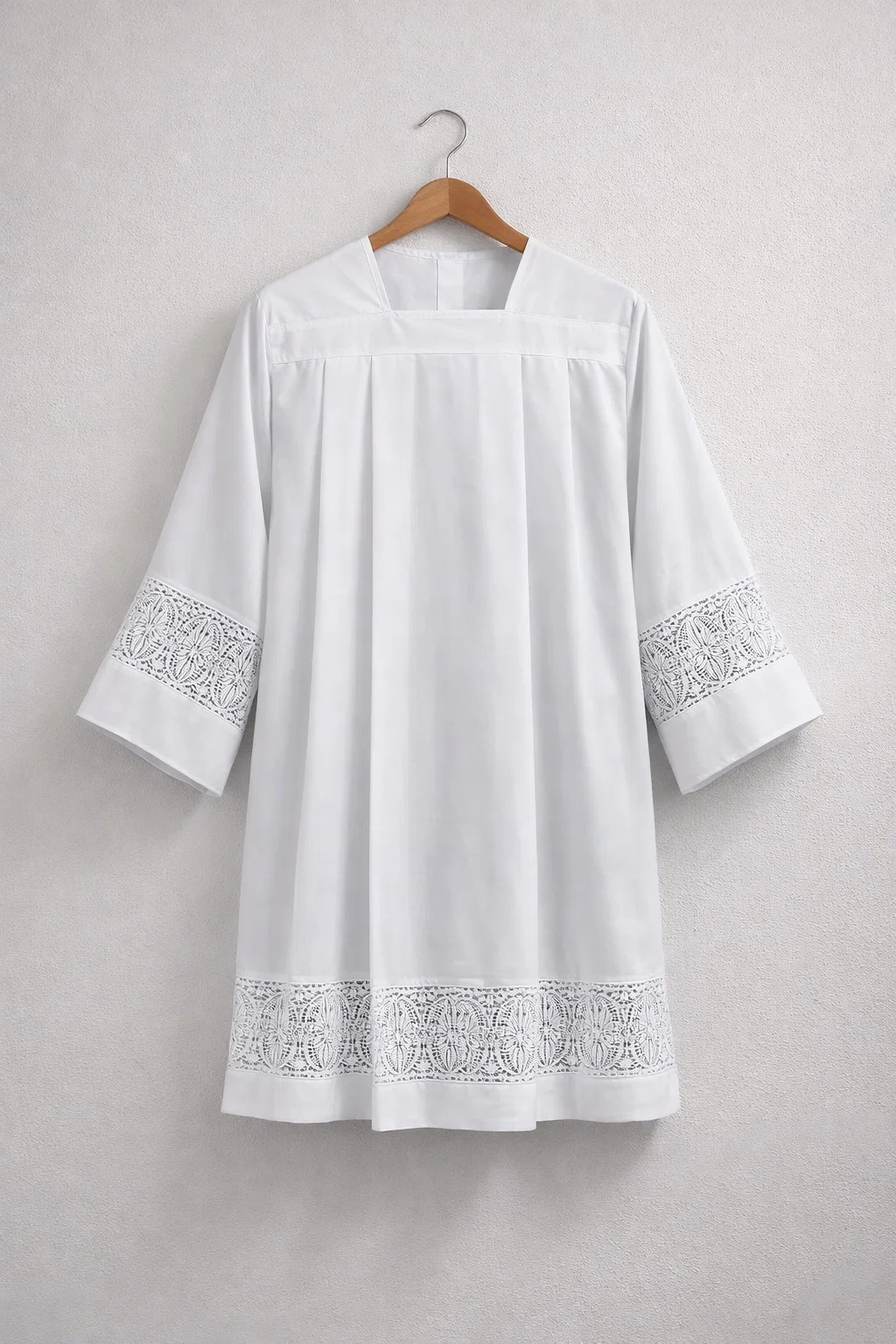
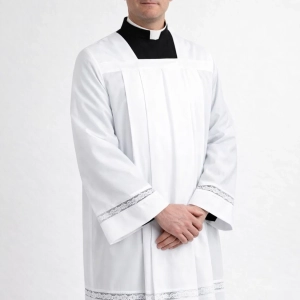
Pastoris is the shortest surplice in the line and carries the boldest lace. The body sits at hip to mid-thigh length, which places it closer to a Roman cotta in proportion than a full knee-length surplice, though the square neckline and box-pleated construction keep it firmly in the surplice family. The shorter length means the cassock is the dominant garment in the combination, with the surplice functioning as a formal white upper layer rather than covering most of the cassock beneath.
The lace is a wide crochet insertion in a large-scale cross-and-medallion motif. This is the same motif family used on the Castalis alb, scaled up for the surplice. Each medallion is large enough to be individually legible from the back of the nave, which is the practical distinction between this lace and the narrower floral trim on Gratian. A buyer choosing between the two is choosing between subtlety and visibility.
Lace Scale and Placement
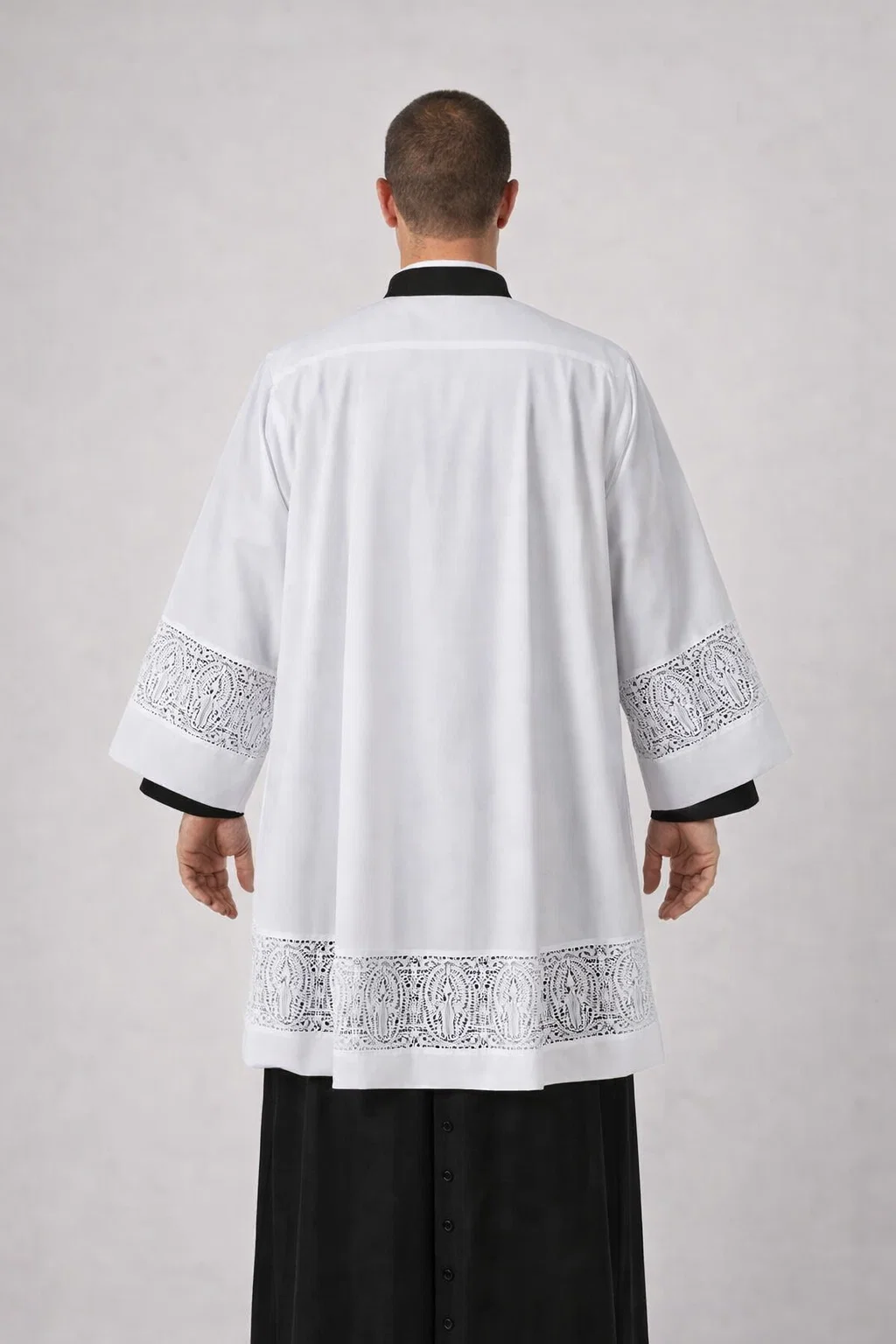
The cuff lace is a single wide insertion band placed above the sleeve hem edge. The band occupies a substantial portion of the visible sleeve below the elbow, which means the lace is the first thing the eye registers when the clergyman’s arms are at rest or raised. The medallion pattern has enough openwork that the dark cassock sleeve shows through the lace, creating a white-on-black contrast effect that adds depth and visual interest.
The hem lace is a single wide band matching the cuff motif, placed above the bottom hem edge. Because the surplice is short, the lace band occupies a proportionally larger area of the visible body than it would on a longer garment. The effect is a surplice where the lace is a defining feature rather than a finishing detail.
Construction and Proportion
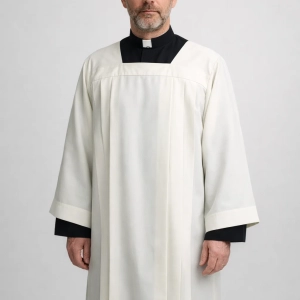
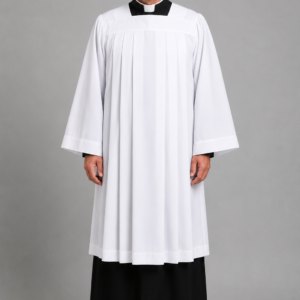
The body is box-pleated from a flat yoke panel across the chest and upper back, matching the yoke construction on Choralis and Gratian. The square neckline has the standard V-notch at center front. The pleats carry through to the lace band at the hem without interruption.
The sleeves are three-quarter length and wide, ending above the wrist. The cassock sleeve shows below the surplice cuff, and the black cassock fabric is visible through the openwork lace above the cuff edge, which is part of the intended visual layering.
The shorter body length means Pastoris is lighter and less voluminous than the longer surplices, which makes it easier to move in and less likely to catch on objects during altar work. For clergy who find a knee-length or longer surplice cumbersome, the shorter proportion is a practical advantage as well as a stylistic choice.
Fabric and Care
Pastoris is made from a high quality cotton-rich fabric in a true white. The cotton-rich ground takes the crochet lace insertion cleanly at the seam lines, and the two textures (smooth woven body, open crochet lace) create a contrast that reads well under sanctuary lighting. The matte cotton body and the textured crochet lace catch light differently, which gives the surplice depth without adding any color.
Care: machine wash cold or warm with whites only. Hang to dry while aligning the pleats and smoothing the lace bands flat. Do not tumble dry; heat can distort the crochet tension and pull the medallion motif out of shape. Steam rather than press. If pressing is necessary, press on the reverse side only and avoid running the iron directly over the lace panels. No chlorine bleach.
Sizing and Made to Measure
Pastoris is available across a range of sizes for clergy. Because the surplice is short, length sizing is less critical than on the longer models, but shoulder width still matters; the yoke should sit square on the shoulders without slipping. Size by shoulder width and chest.
Made to measure is available with a 3 to 4 week lead time. For parish clergy teams or cathedral chapters ordering matching surplices, we can cut all garments from the same fabric and lace lot so the white shade and medallion motif match across the group.
FAQs
Is Pastoris a surplice or a cotta?
Pastoris is technically a surplice by construction: it has a square neckline, a flat yoke, and box pleats. Its shorter length is closer to the proportions of a Roman cotta, but a cotta traditionally has a round neckline. In practice, many clergy and sacristans use the terms interchangeably for short white over-garments. Pastoris works in any setting that calls for either.
How does the crochet lace on Pastoris compare to the lace on Gratian?
Gratian uses a narrow floral-motif lace in a delicate pattern. Pastoris uses a wider crochet lace in a large-scale cross-and-medallion pattern. Gratian’s lace is a finishing detail; Pastoris’s lace is a dominant design feature. The crochet on Pastoris also has more openwork, so the dark cassock shows through the lace for a layered effect.
Does the dark cassock showing through the lace look intentional?
Yes. The openwork in the crochet medallion is designed to let the underlying cassock colour show through. On a black cassock, this creates a white-on-black contrast within the lace itself. On a red or purple cassock, the cassock colour tints the lace panels. The effect is part of the design and is consistent across all the lace-trimmed surplices in the line.
Is Pastoris practical for clergy who move frequently during a service?
More so than the longer surplices. The short body length keeps the garment above the knees, which means it does not catch when walking between the altar and the ambo, and it does not bunch in the lap when seated. For active presiders and preaching clergy, the shorter proportion is often more comfortable than a mid-calf or ankle-length surplice.
There are no reviews yet. Be the first one to write one.