
Description
What This Robe Is
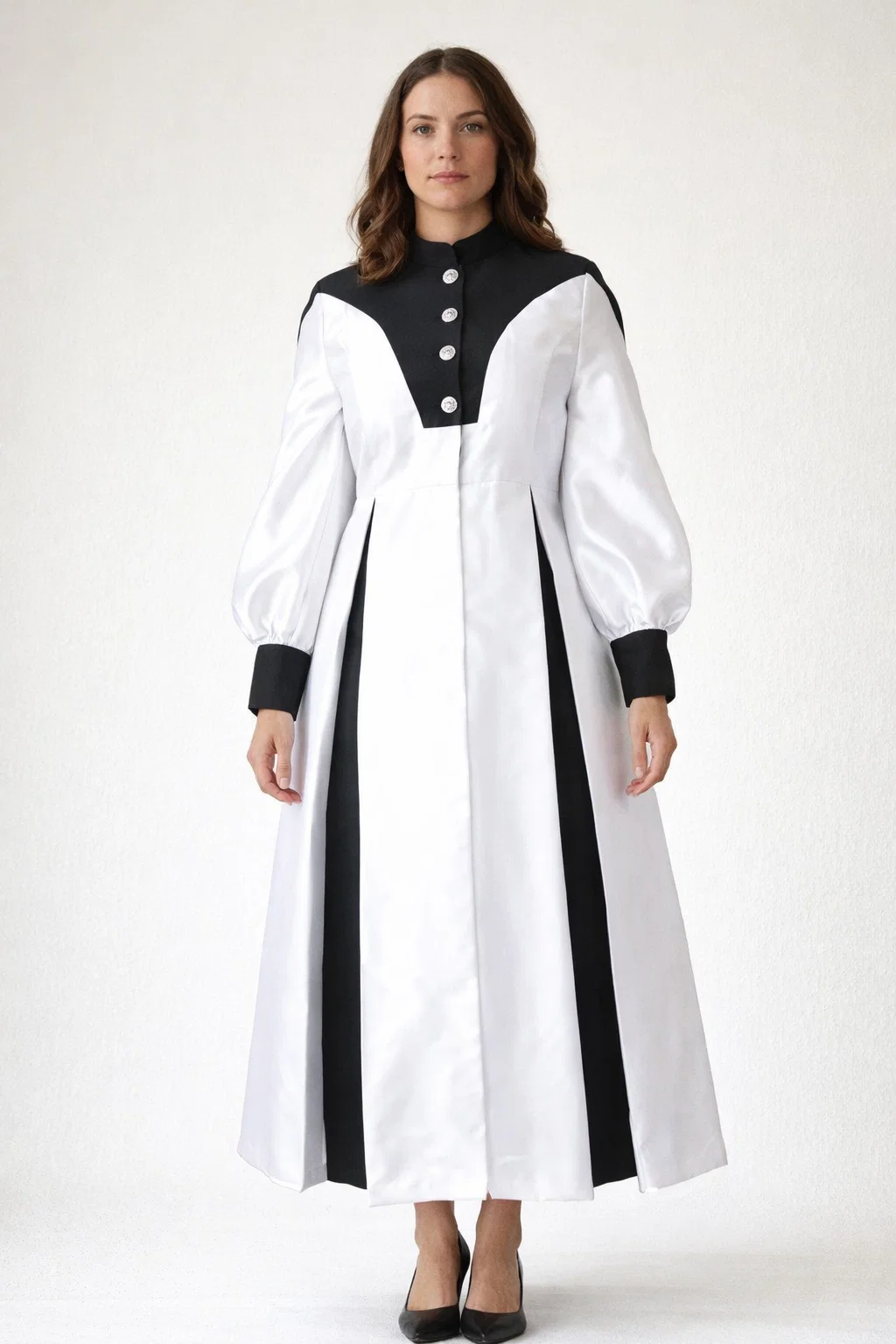
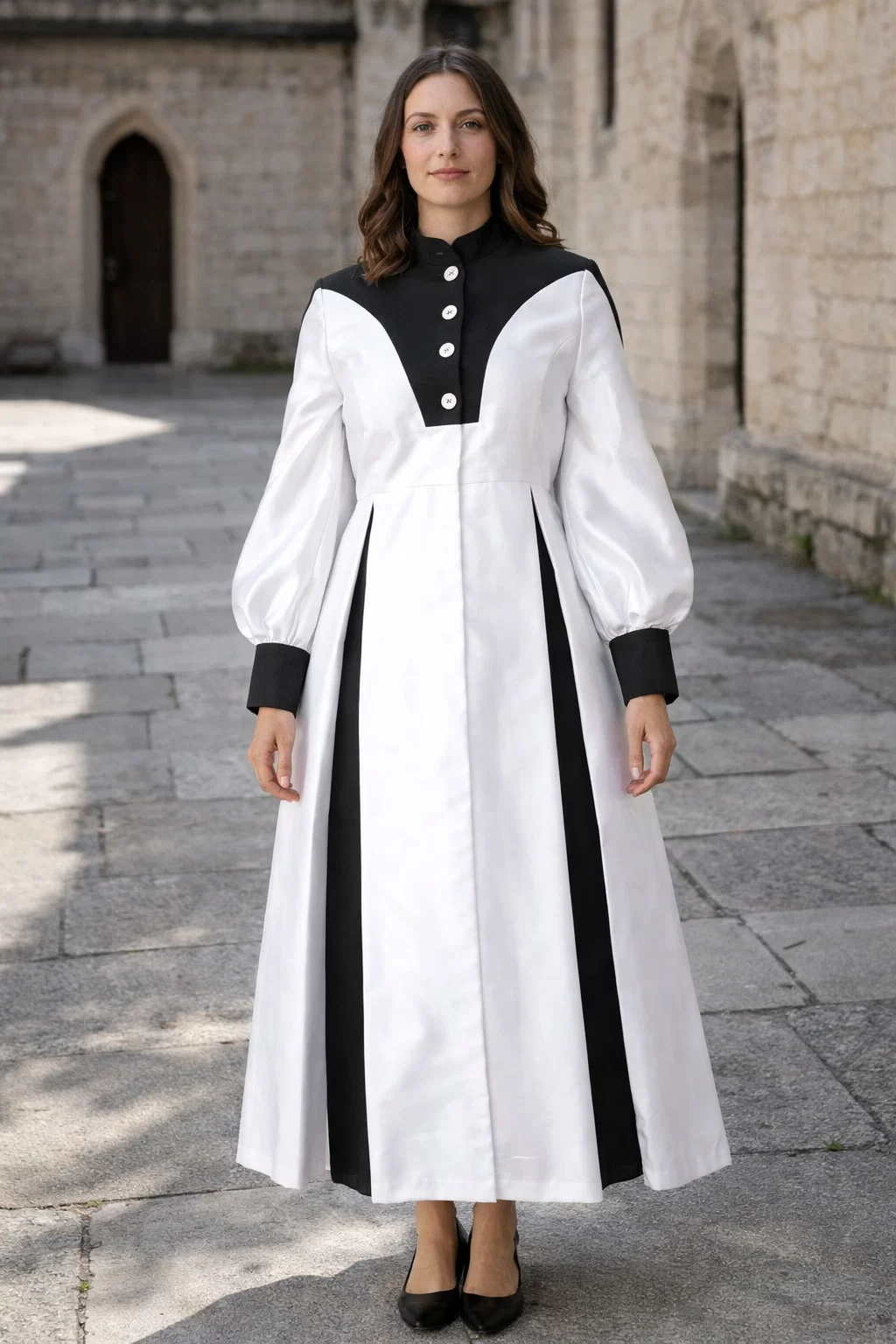
The Sancta is the most architectural piece in the white clergy line. Two elements set it apart from the other robes: the shaped black yoke that covers the shoulders and comes to a deep V at the sternum, and the full bishop sleeves gathered through the arm and closed into a deep black cuff at the wrist. Both details are drawn directly from the traditional preaching robes of the historically Black Pentecostal and Baptist churches, where the yoke and the full sleeve together mark the vesture as episcopal or apostolic rather than as ordinary clergy dress.
This is the piece for women bishops, apostles, senior pastors and evangelists whose office is expected to be visible from any position in a full sanctuary. It carries formal authority for anniversary services, consecration services, ordination services, holy convocation and any occasion where the vesture itself is expected to declare rank without a word being said.
The Yoke and Its Structure
The yoke is the defining design element. Cut in solid matte black, it sits across both shoulders and drops in a shaped curve on each side that meets at a point at the sternum. The shape reads as a chevron or a shield, and it is that architectural line, rather than any embroidery or trim, that carries the visual weight of the robe.
Four large round white covered buttons run down the exact center of the yoke, from the base of the black stand collar to the point of the V. Because they sit only on the yoke rather than running the full length of the front, the buttons form a compact vertical rhythm inside the shape of the yoke, framing the tab position at the throat and drawing the eye to the top third of the body.
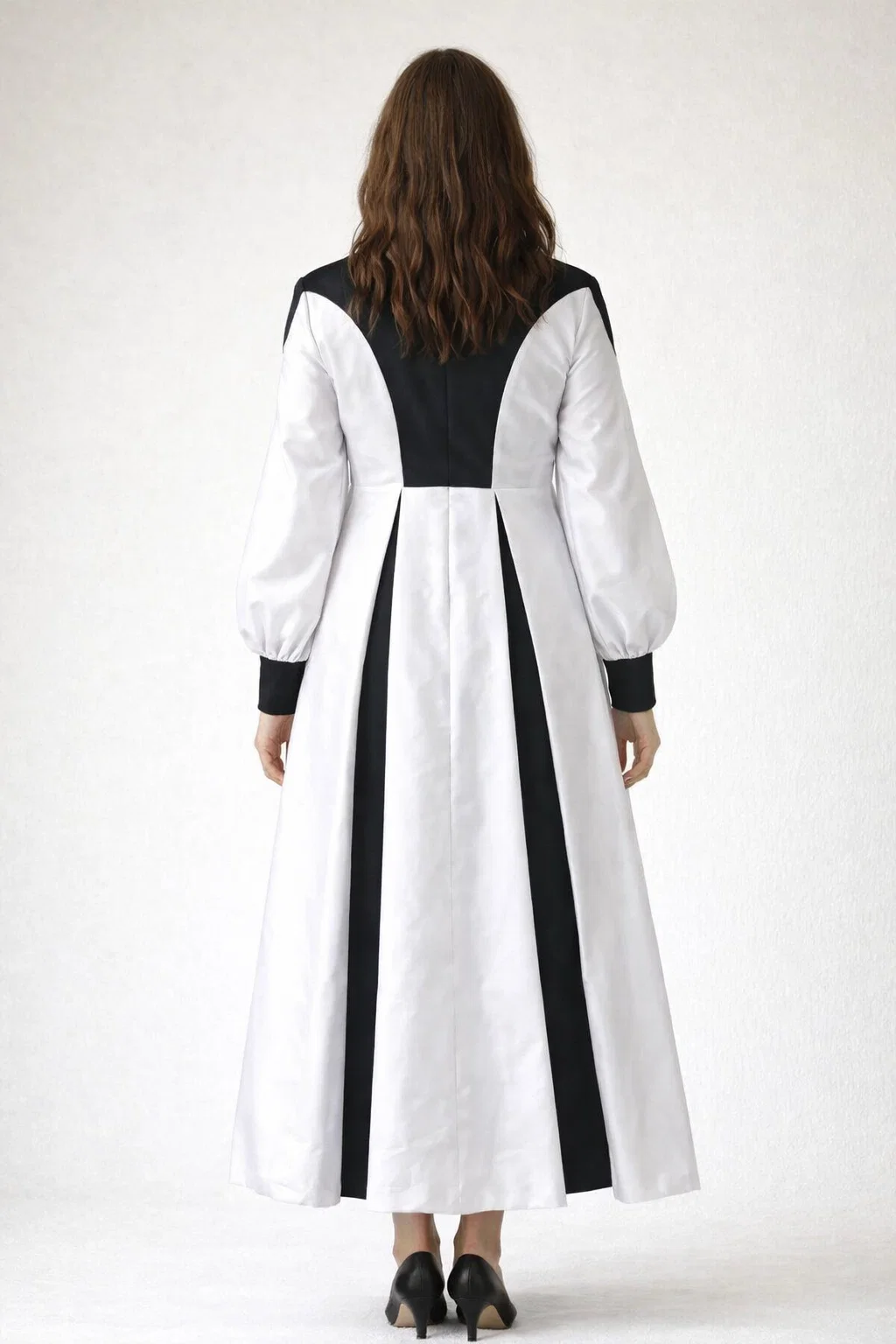
Below the yoke, the front of the robe releases into a plain white bodice with a soft center pleat, and the two vertical black skirt panels are inset behind that pleat. The relationship between the yoke at the top and the panels at the bottom is what gives the robe its full architectural reading: black at the shoulders framing the head, white through the body, black returning at the skirt to frame the walk.
The Sleeves and Cuffs
The bishop sleeves are the second defining element. Cut wide and full through the upper arm and forearm, they gather at the wrist into a deep matte black cuff that fastens with a single white button matching those on the yoke. When the arms are lowered at the side, the fullness of the sleeve drops in soft folds and the cuff frames the wrist in solid black. When the arms are raised in prayer, benediction or preaching, the full volume of the sleeve moves with the gesture and gives the vesture presence in motion.
Bishop sleeves are the traditional pulpit sleeve of the preacher’s robe. They read as authoritative in a way that a slim tailored sleeve cannot, and they hold the reading of the robe as ecclesiastical vesture rather than as tailored clothing.
Cut, Length and Fit
The bodice is shaped through the front and back by seaming that runs from the yoke down through the natural waist, releasing the skirt into a full A line with generous sweep to the ankle-length hem. Length is deliberately full to the ankle to hold the vertical black panels at the correct proportion and to give the robe its full vesture reading.
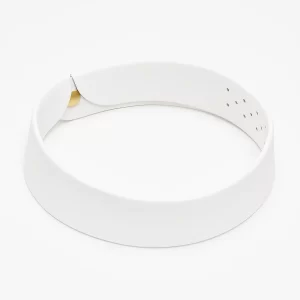
The stand collar is cut in solid matte black at the traditional height, holding a standard preaching tab. Against the shaped black yoke, the collar reads as a continuous piece of ecclesiastical structure framing the face.
Fabric and Care
Cut from a lightweight tropical fabric. In a full length white robe with black yoke, bishop sleeves and skirt panels worn under sanctuary lighting for extended services, the weave matters twice over. It moves air, which keeps a robe with volume through the arms and skirt wearable through anniversary services, ordinations and warm summer worship. And it drops creases on the hanger, so the white cloth holds against wrinkles that show far more on white than on black.
The white face is matte. The black pieces are cut in the same weave in a true deep black. Under sanctuary lighting the white stays soft and the black stays deep, and the pair reads clean on camera at any distance.
Care: dry clean recommended, both to protect the white against staining and to prevent the black from bleeding into it. If you launder at home, wash cold on a gentle cycle with a color-safe detergent, and never wash with lighter or darker colored garments. Steam lightly on a hanger. The bishop sleeves hold their fullness best when hung on a padded hanger between wears.
Sizing and Made to Measure
Standard sizing runs in four paired bands, XS/S through L/XL, with Plus 1X and Plus 2X for extended fit. Because the yoke shape, sleeve gather and skirt panels all sit at fixed positions on the body, fit is more important on this robe than on plainer pieces in the line. If you sit between two bands, size to the smaller for a closer fit through the shoulder so the yoke point lands at the intended height on the chest. Made to measure is the safer choice for a robe you will wear at your most important services.
Made to measure accepts bust, waist, hip, shoulder, sleeve length and full length, with a lead time of about 3 to 4 weeks from confirmed measurements.
FAQs
What is the yoke for, and why is it shaped rather than straight?
The yoke is the traditional design element that marks a preacher’s robe as episcopal or apostolic vesture in the historically Black Pentecostal, Baptist and Apostolic churches. The V shape draws the eye to the center of the chest where the tab and cross would sit, and the black-on-white contrast holds that reading from any distance in a full sanctuary.
Why bishop sleeves rather than slim sleeves?
Bishop sleeves are the traditional pulpit sleeve. They give the vesture presence in motion when the arms are raised for prayer, benediction or preaching, and they carry the reading of the robe as ecclesiastical vesture rather than as tailored clothing. Slim sleeves would place this robe in the ordinary clergy dress category rather than in the vestment category.
Does the collar take a standard clerical tab?
Yes. The black stand collar is cut at the traditional height and holds a standard preaching tab. The white tab shows sharply against the black yoke and collar. Tabs are not included, since most women in ministry already own their own.
How does the paired sizing work, and which side of a band should I choose?
Each band serves two adjacent conventional sizes. Because the yoke, sleeve gather and skirt panels sit at fixed positions, size to the smaller for a closer fit through the shoulder so the yoke point lands at the intended height on the chest. Made to measure is the safer choice on a full vesture piece.
There are no reviews yet. Be the first one to write one.