A Rabat That Reads as Tailoring
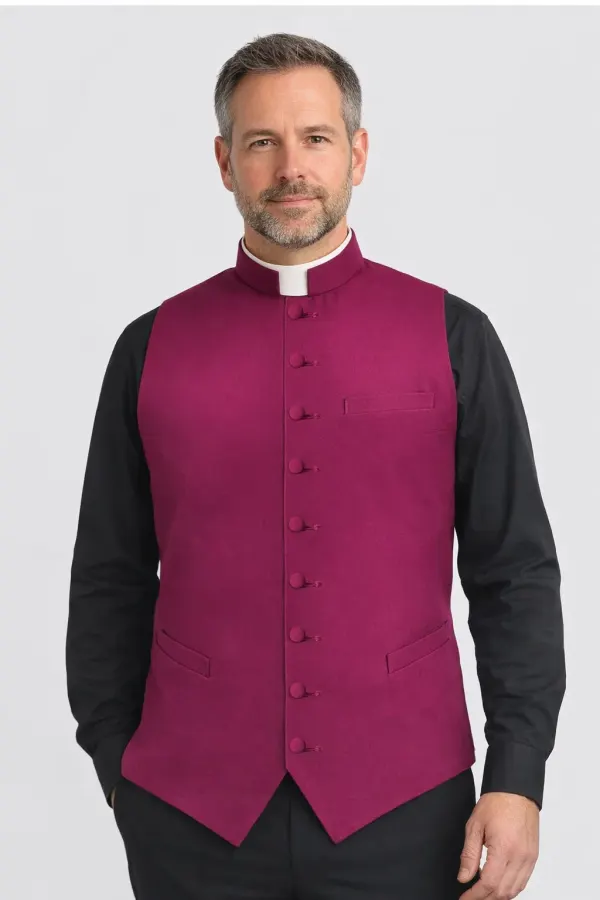
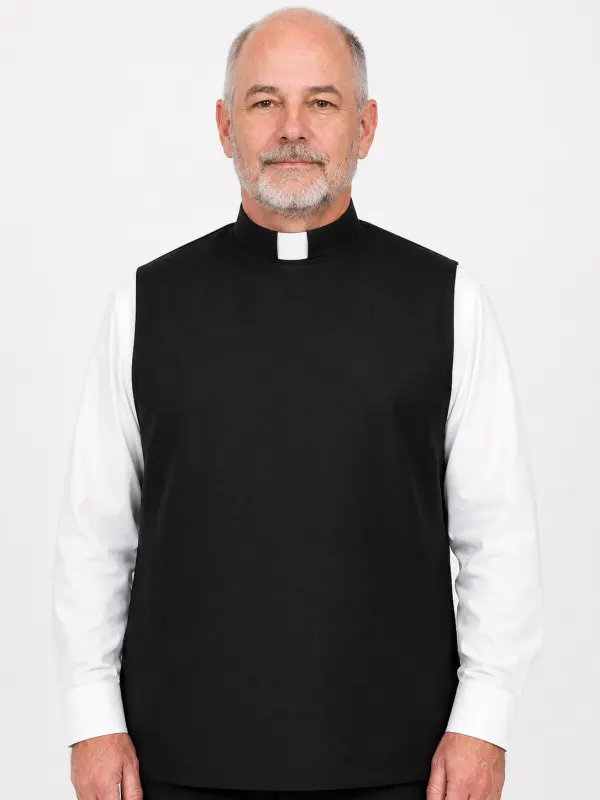
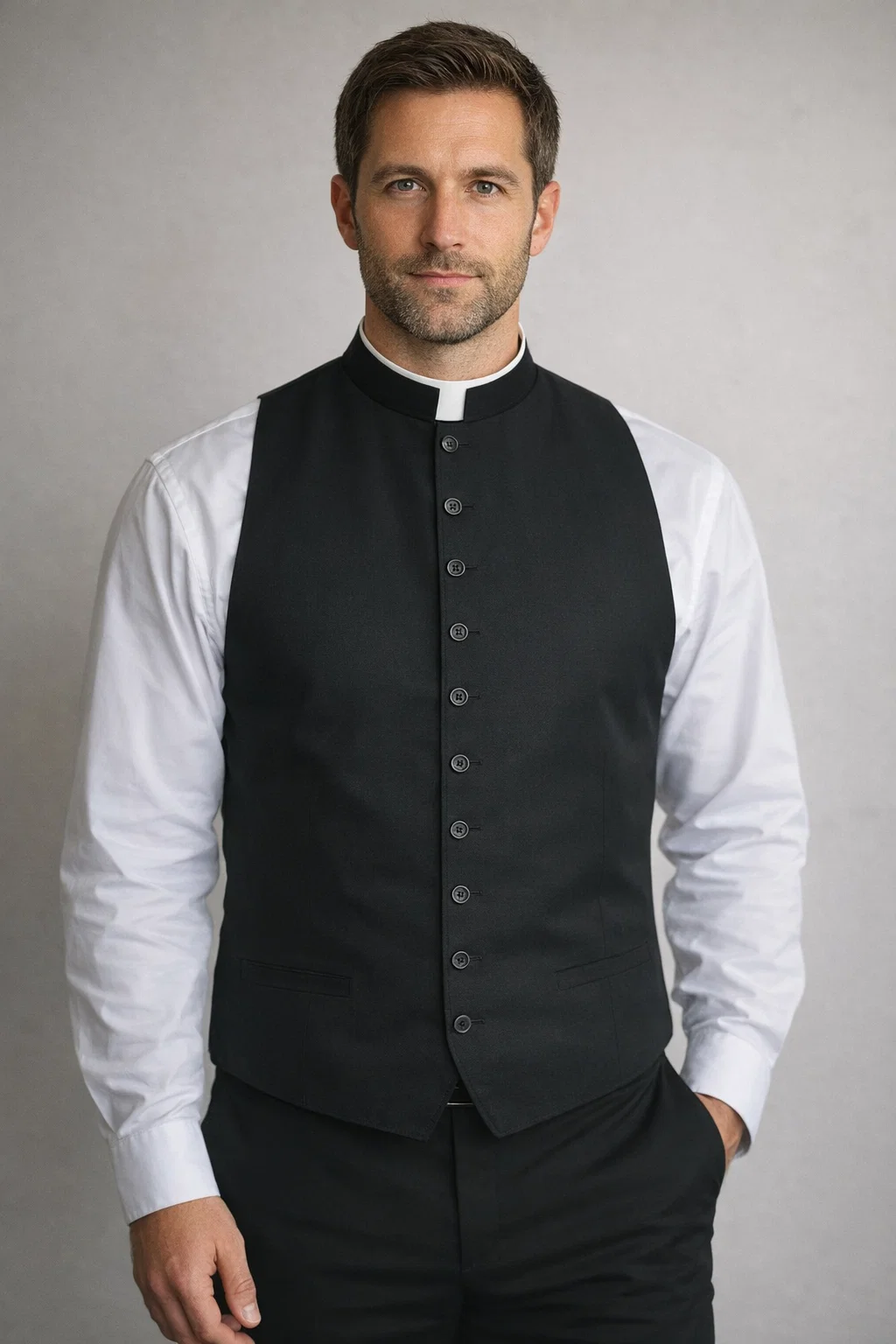
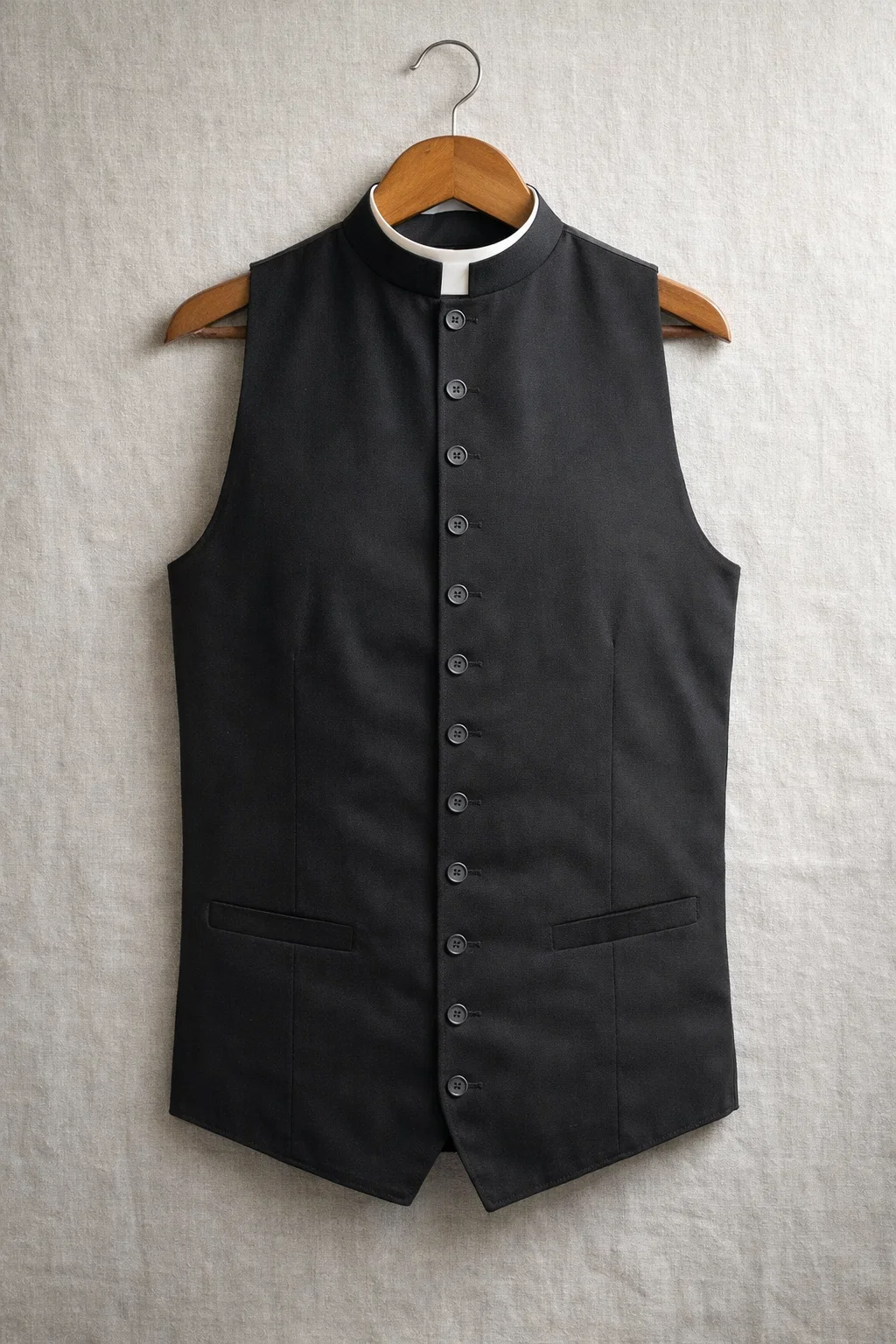
The other pieces in this line are pull-on panels: clean, quick, minimal. This one is deliberately the opposite. It is cut and detailed as a waistcoat, with a full row of functioning buttons down a centered placket, a shaped hem that comes to a soft point, and two welt pockets set at the waist. Worn over a white shirt with the collar in place, it reads as a proper clerical vest rather than an overlayer.
That styling is the whole reason to reach for it. Where a plain rabat says understated, a buttoned waistcoat says formal and considered. It is the piece for occasions that carry weight, ordinations and installations, formal evening services, weddings and funerals where you are presiding, cathedral and civic events where the dress code leans traditional.
Still a Rabat Underneath
For all the tailoring, the practical logic is unchanged. This is still a front garment with the collar built into it, worn over a shirt you already own. Your own sleeves and cuffs show at the sides, the vest covers the chest and carries the collar, and from the front you present as fully vested clergy in a waistcoat, without owning a single specialist shirt.
That is what makes it a genuinely useful thing to travel with. A tailored clerical waistcoat that packs as flat as a rabat, goes over the plain white shirt already in your bag, and turns it into formal clerical dress in one step.
The Black
Measured, the cloth sits at #212325, a true black carrying only the faintest cool undertone, with no brown or green cast to muddy it. That matters more on black than on any other color, because a black that drifts warm or green announces itself the moment it sits beside black trousers or a black cassock. This one stays true.
The face is matte. On a formal black garment that is deliberate: a black with sheen photographs with hot highlights under stage lighting and can look cheap, while a matte black holds as a clean, deep, even panel from any angle. Black is also the one color that works everywhere, in and out of the liturgical calendar, as the default of clerical dress across every tradition.
Collar, Buttons and Cut
The banded stand collar is built into the vest, encircles the neck fully and is cut to hold a standard clerical insert. The front placket runs a full row of matte buttons from collar to hem, functioning rather than decorative, so the vest opens completely and sits flat. Two welt pockets are set at the waist. The hem is shaped to a soft point at center front, the way a tailored waistcoat is finished. Both short and long sleeve shirts work underneath.
Fabric and Care
Soft quality tropical fabric, lightweight and breathable, which is what a layer worn over a shirt should be, and welcome under the formal conditions this vest is built for. The weave sheds creases on a hanger and keeps a clean line through a long service.
Care: dry clean recommended. If you launder at home, wash cold on a gentle cycle and hang to dry. Steam on low. Black holds its depth longest when kept out of prolonged direct sun, which fades a true black toward grey over time.