Description
The Gap This Fills
The cassock is the foundation of formal clergy dress: full length, sleeves, front closure, worn as a base layer. But a cassock is not always right. In many traditions, the cassock belongs under other vestments at the altar, and wearing it alone for hospital visits, pastoral calls, or administrative work reads as either over-formal or incomplete.
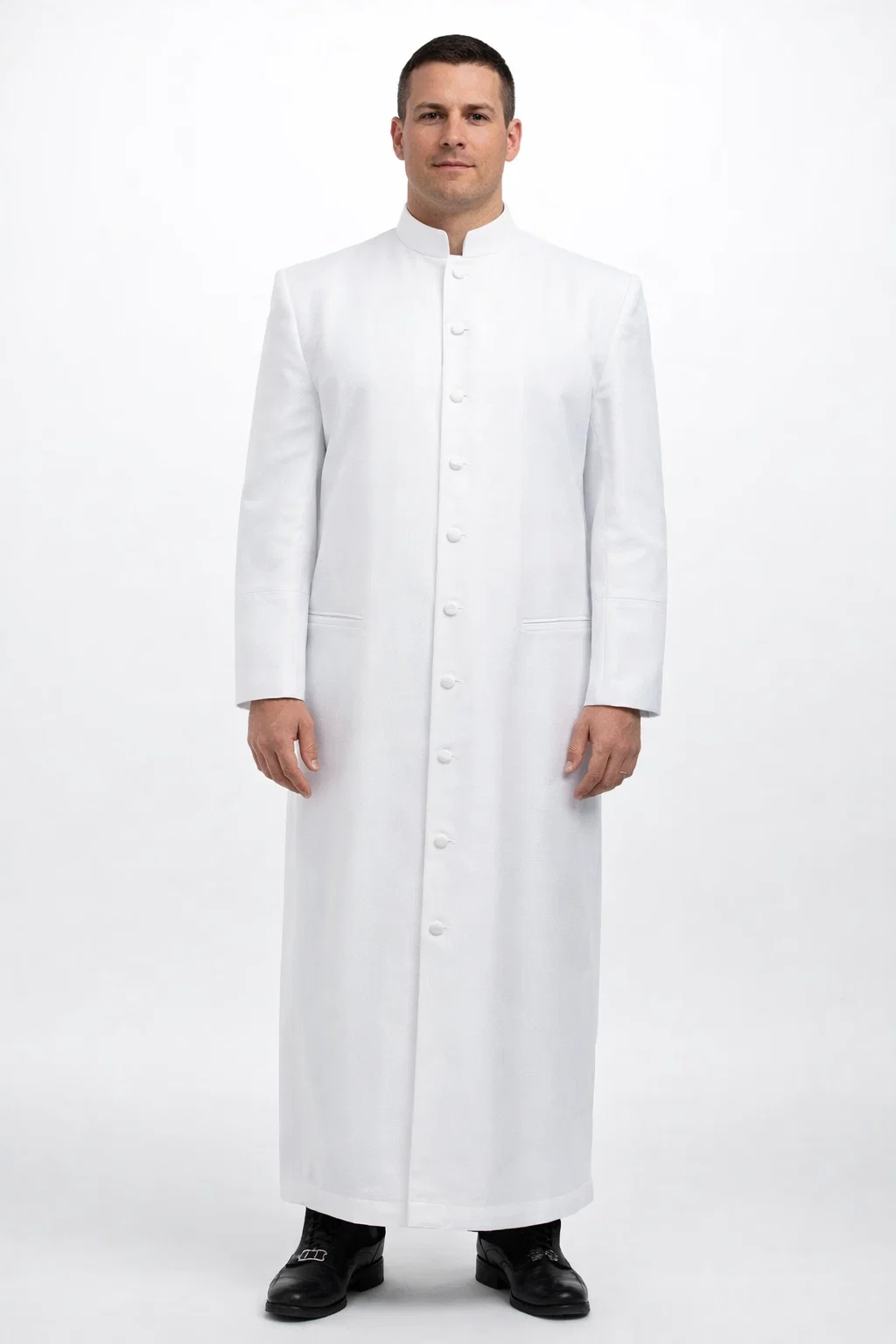
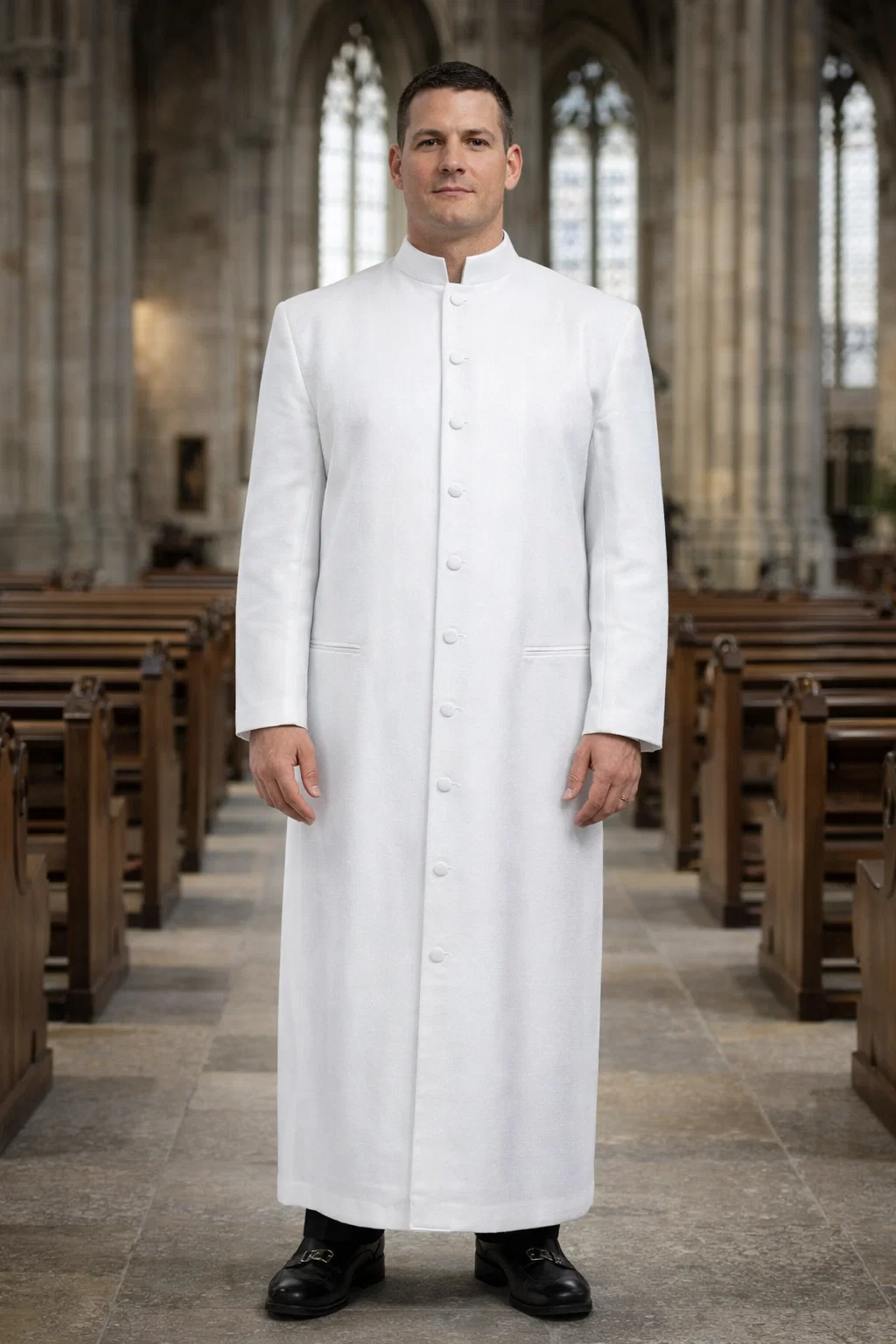
The Albaris fills that gap. It is a complete garment on its own: formal enough to stand at the altar or lead a procession, practical enough to wear for a full day of ministry without the layering and heat of a cassock. It presents as intentional vestment, not as a colored overlay. The mandarin collar and button front read as liturgical dress in any context.
The White, Specifically
This is a clean, true white. No cream, no ivory, no warmth. The brightness holds steady under strong sanctuary lighting. It will not yellow on camera or read dingy beside the altar cloth. Against dark trousers it cuts a sharp vertical line. Beside gold or silver altar furnishings it carries weight and presence without competing for visual space.
White is the color of Christmas, Easter, Epiphany, weddings, baptisms, and many ordination and confirmation rites. It is the working white of hospital and prison chaplaincy, where clean and professional matters more than symbolic color. It is worn year-round in many traditions as the default formal vestment when no specific liturgical color applies.
Fabric, Cut and Details
The Albaris is made from a tropical suiting fabric: a blend that combines the structure of suiting with the breathability of tropical weave. The result is a robe that holds a crisp drape, resists wrinkles even through a full day of wear, and moves air so it does not cling or bind across the shoulders and back.
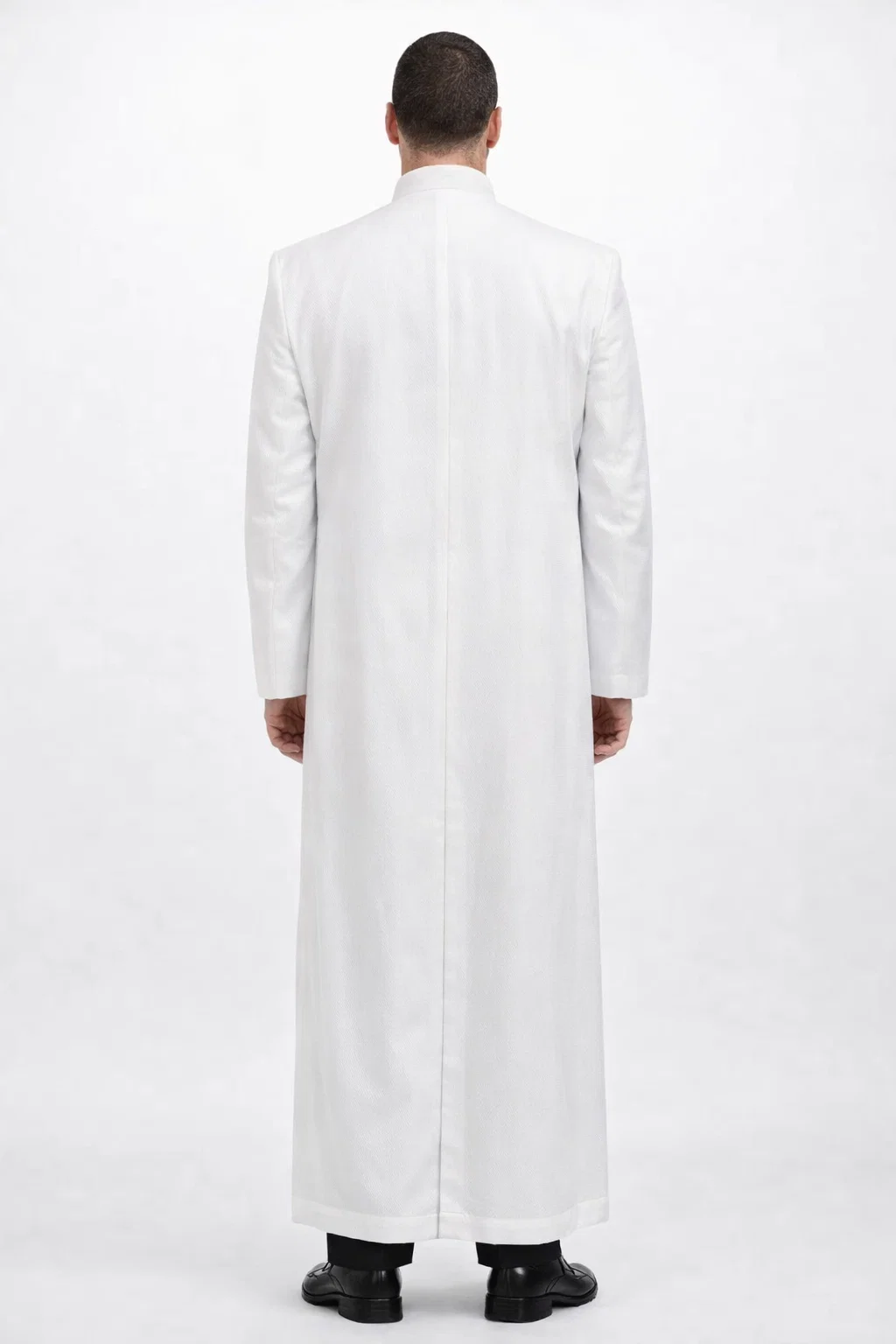
The body is cut with a tailored silhouette that follows the line of the body without clinging. The mandarin collar stands upright and structured, finished with a satin facing on the underside for comfort against the neck. The front closure is full button, with buttons spaced to sit flush and even from neckline to hem. Armholes are cut deep and finished cleanly, so the sleeves drape without pulling. The side seams are matched for a clean line, and deep pockets sit at both sides: functional for hands or for small items during service.
The hem falls to the ankle, with a center back vent cut deep enough for chancel steps and sitting without the fabric dragging. The construction throughout uses flat fell seams where they show, so the interior finish matches the exterior quality.
Care: dry clean recommended for formal wear. If you launder at home, wash cold on a gentle cycle, hang to dry, and steam lightly. The tropical weave sheds wrinkles quickly and rarely needs pressing.
Where It Belongs
White clergy robes belong in every tradition and season. At the altar for Christmas, Easter, and all feast days when white is appointed. In the pulpit for ordinations, installations, and confirmations. For weddings and funeral services where formal white is called for. In hospitals and prisons where the robe signals clergy presence and pastoral authority. At community events, civic functions, and formal ministerial occasions.
The robe is worn as a complete vestment on its own, or as a base for other vestments: under a stole at the altar, under a cassock-alb combination in traditional settings. Because it is sleeveless and built to layer, it works in any configuration your tradition requires.
Worth saying plainly: a robe is formal vestment, not casual wear. The Albaris is built for ceremonies, services, and formal ministry occasions where your presence matters. It will not feel right for a quick pastoral visit or hands-on work like food ministry. For those, the apron stays lighter and faster. The robe is for when you mean to be dressed as clergy.
Sizing and Fit
Sizing runs chest 38 through 60 in a single length that fits wearers from 5’10” to 6’2″ to the ankle. The chest is cut with a tailored fit, closer to the body than the apron, so the robe drapes with intentional line rather than as an overlay. The mandarin collar is sized for a standard neck without gap or tightness.
Made to measure accepts chest, shoulder, sleeve, front length and back length, with a lead time of about 3 to 4 weeks from the day your measurements are confirmed. Made to measure is especially useful if you fall outside standard sizing or need the hem exactly at your ankle for formal photography.
FAQs
Do I need a clergy shirt underneath?
No. The mandarin collar is structured to stand on its own, and the robe is designed as a complete garment. Most wearers wear it over a plain undershirt for comfort, but it presents correctly on its own.
How does this compare to a cassock?
A cassock is full length with sleeves and a front closure, worn as a base layer under other vestments. The Albaris is sleeveless, built to wear as a complete formal garment on its own. The Albaris is faster to put on and easier to work in. A cassock is more traditional for certain liturgical settings.
Can I wear this for hospital chaplaincy and pastoral work?
Yes, absolutely. White is the standard color for hospital and prison chaplaincy, and the clean tailored look signals pastoral authority. The button front and side pockets make it practical for moving around. It is formal enough for any occasion where you need to look like clergy.
Is the white warm or cool?
It is a cool, true white with no cream or ivory. It will photograph cleanly and will not yellow beside altar whites or church linens.
How long does made to measure take?
About 3 to 4 weeks from the day your measurements are confirmed, plus shipping. If you need it for a specific occasion, order early.
Can this robe be worn under a stole or over a cassock?
Yes. The sleeveless design makes it layer easily. You can wear it as a complete robe on its own, or under a stole at the altar, or over a cassock in a traditional setting.