
Description
The Rochet as an Episcopal Vestment
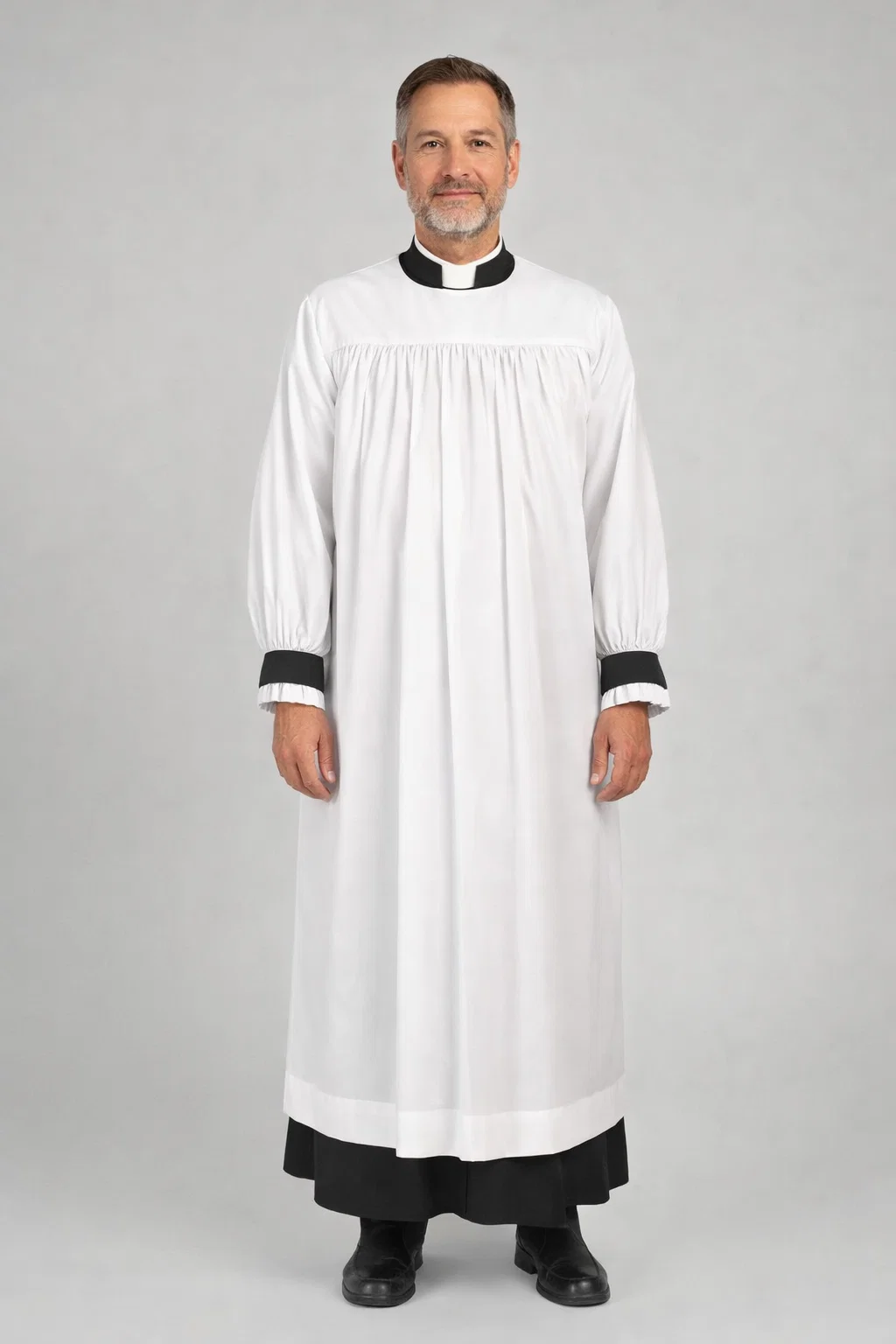
A rochet is not a surplice. The two garments look similar at a glance, but they serve different liturgical functions and signal different levels of authority. A surplice is worn by any clergy, server, or choir member over a cassock. A rochet is traditionally reserved for bishops, deans, canons, and certain other cathedral dignitaries in Anglican and Roman Catholic traditions. The visible difference is the sleeve: a surplice has a wide, open sleeve, while a rochet has a full bishop sleeve gathered into a tight cuff band at the wrist.
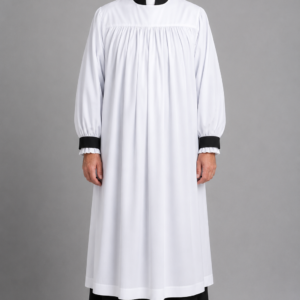
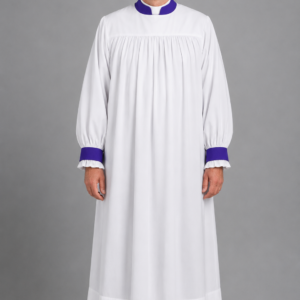
Custodis follows the Anglican rochet tradition, where the cuff bands and hem band are black. In the Roman Catholic tradition, the cuff colour varies with rank (black for most prelates, red for cardinals). Custodis is built for the Anglican convention, though it works in any tradition that uses a rochet with dark cuffs and hem.
The Bishop Sleeve
The defining construction detail of a rochet is the sleeve. On Custodis, the sleeves are cut very full through the upper arm and forearm, creating a billowed, blouson shape that holds volume when the arms are at rest. At the wrist, the full fabric is gathered into a snug black cuff band that cinches the sleeve closed. The effect is a sleeve that balloons between the shoulder and the wrist, which gives the rochet its distinctive silhouette.
The bishop sleeve is not a decorative choice. It is the feature that identifies the wearer as a bishop or dignitary at a distance, before the congregation can see a pectoral cross or episcopal ring. When a bishop processes down the nave or stands at the altar, the billowed sleeves are visible from every angle and from the back of even a large cathedral.
Black Cuffs and Hem Band
The black cuff bands sit tightly at the wrist, holding the gathered sleeve in place. Below the cuff band, a small ruffle of white fabric extends past the black band, giving the cuff a finished edge. This white ruffle below the black band is a traditional Anglican rochet detail; it prevents the black band from being the terminal edge of the sleeve and adds a final white accent at the hand.
The black hem band runs across the full width of the rochet at the base, matching the cuffs. The band sits above a narrow white strip at the very bottom edge, mirroring the cuff construction. Between the two black lines (cuffs and hem), the entire body of the rochet is white, which creates a strong visual frame.
Body Construction
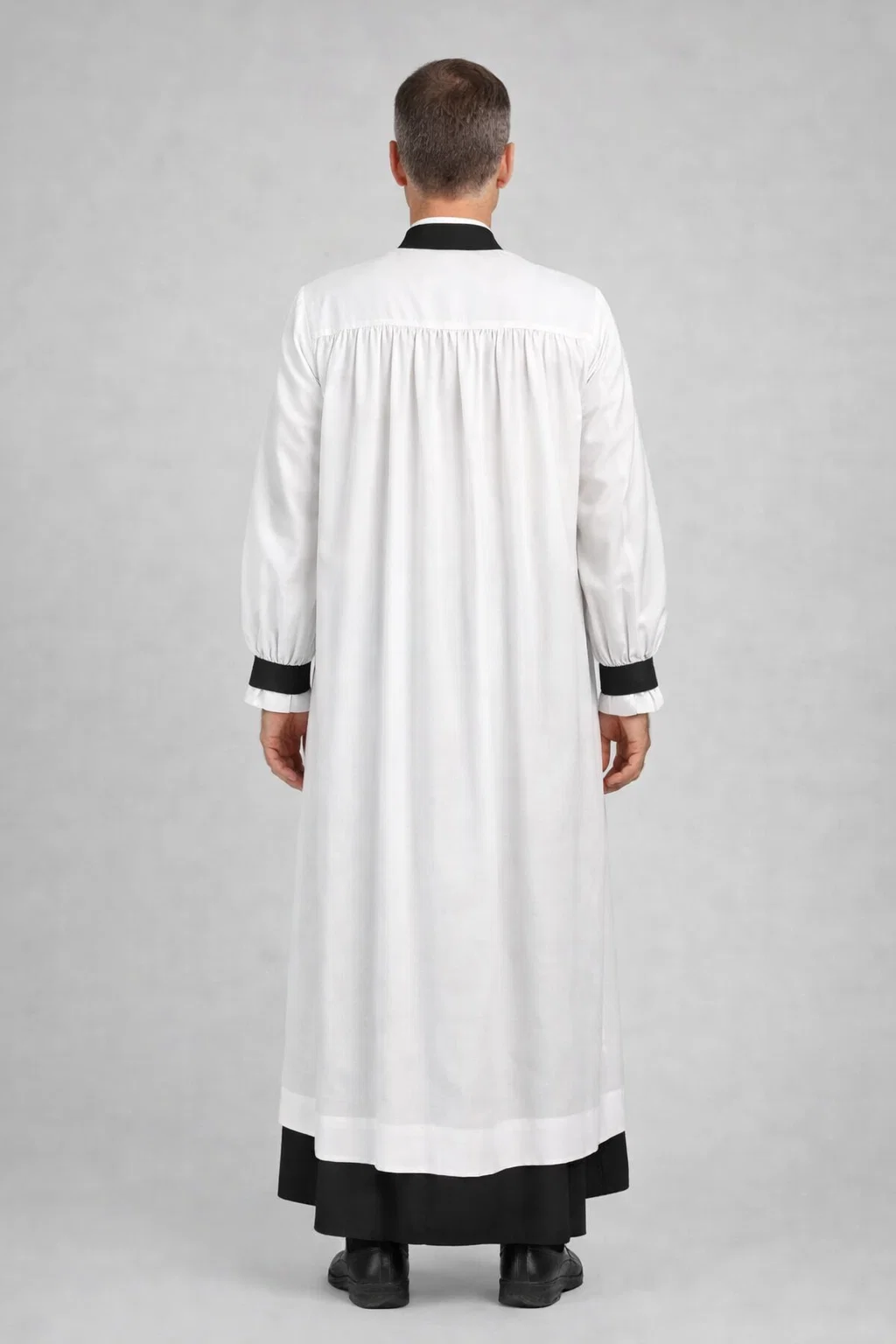
The body is gathered from a flat yoke that sits across the chest and upper back. Below the yoke seam, the fabric falls in soft, irregular gathered folds to the hem. The overall length is near-ankle, covering almost all of the cassock beneath. The round gathered neckline sits at the base of the throat, showing the cassock’s stand collar and clerical tab above.
The rochet is a pull-on garment with no closure. It goes over the head and sits on the shoulders, held in place by its own weight and the gathered neckline. Because it has no buttons or fastenings, the only visible construction details are the yoke seam, the gathered neckline, and the contrasting black bands.
Fabric and Care
Custodis is made from soft Toyobo fabric, a lightweight woven with a smooth, matte finish. Toyobo has a subtle lustre that reads as polished rather than shiny; it gives the white body a richness that a plain cotton would not achieve, while staying flat enough under altar lighting to avoid the glare that a satin or sateen fabric would produce.
The fabric takes gathering well without becoming stiff at the pleat points, which matters for the bishop sleeves where a large volume of fabric is cinched into a narrow cuff band. A stiff fabric would bunch at the wrist and refuse to billow correctly; Toyobo drapes into the blouson shape and holds it.
Care: dry clean recommended for the best finish, particularly to keep the black cuff bands and hem band crisp against the white body. If home laundering, machine wash cold with whites only and hang to dry. The black bands are colourfast when washed cold, but hot water can cause dye migration from the black into the white ground. Steam rather than press; a hot iron on the gathered sections will flatten the bishop sleeve volume.
Sizing and Made to Measure
Custodis is available across a range of sizes for clergy. Size by height and shoulder width. Because the rochet is a full-length garment with gathered construction, accurate height sizing is important; a rochet that is too long will pool at the floor around the feet, and one that is too short will expose too much cassock at the hem and undercut the intended proportions.
Made to measure is available with a 3 to 4 week lead time. For episcopal households, cathedral chapters, or diocesan ordination ceremonies where multiple rochets are needed, we can cut all garments from the same fabric lot so the white shade and black band placement match across the group.
FAQs
Who wears a rochet and how does it differ from a surplice?
A rochet is traditionally worn by bishops, deans, canons, and certain cathedral dignitaries. A surplice is worn by any clergyperson, server, or choir member. The key difference is the sleeve: a rochet has full bishop sleeves gathered into cuff bands, while a surplice has open, wide sleeves. The rochet is also typically longer than a surplice and signals a higher level of liturgical authority.
Are the black cuff and hem bands specific to the Anglican tradition?
Black is the standard cuff and hem colour in Anglican usage. Roman Catholic rochets for bishops traditionally use white lace at the cuffs and hem, though some prelates use coloured bands (red for cardinals, purple for certain monsignori). Custodis is built with black bands, following the Anglican convention.
Can a priest or deacon wear Custodis?
In strict Anglican and Roman Catholic usage, the rochet is reserved for bishops and certain canons or dignitaries. In practice, some traditions have relaxed this distinction. If your diocese or parish reserves the rochet for bishops, a surplice (Choralis, Gratian, or Oratoris) is the correct alternative for priests and deacons.
Why does the white fabric extend below the black cuff band?
The small white ruffle below the black band is a traditional Anglican rochet detail. It finishes the sleeve with a white accent at the hand rather than letting the black band be the terminal edge. The ruffle also protects the black band from abrasion against the hand and wrist during wear.
There are no reviews yet. Be the first one to write one.