
Description
The Chimere as an Episcopal Over-Vestment
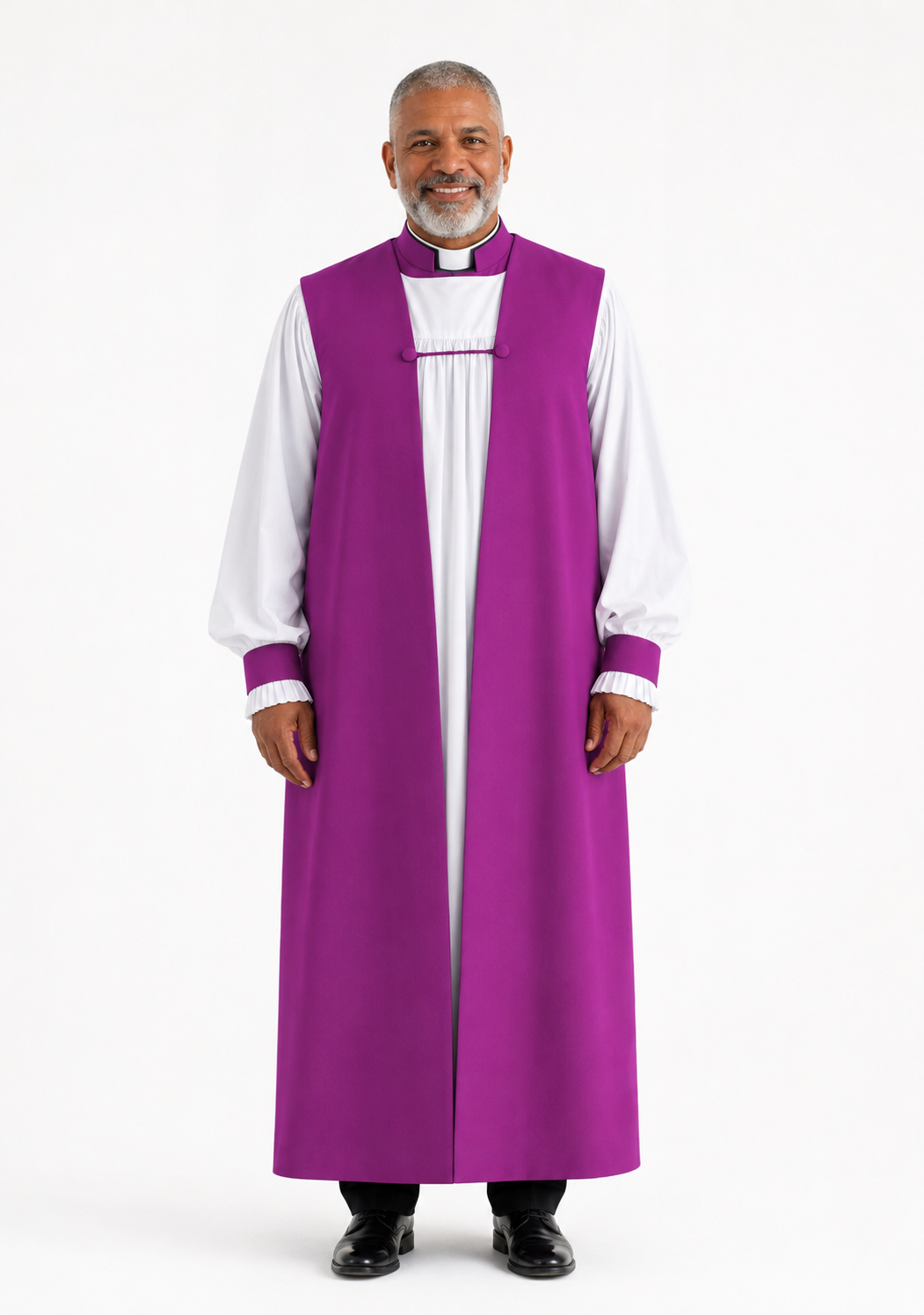
The chimere is worn over a rochet as the outermost piece of Anglican and certain Roman Catholic episcopal choir dress. It is sleeveless by construction, cut to be worn over the rochet’s bishop sleeves rather than replacing them, which is why the chimere images show the white rochet sleeves with their ruffled cuffs extending past the chimere’s armholes. The chimere signals episcopal or dignitary rank and is not worn by priests, deacons, or lay ministers.
This magenta chimere is built for occasions where the wearer’s cassock and accompanying garments are already in a rank-specific violet, and the chimere continues that color statement as the top layer of the ensemble. The open front is a deliberate design choice: it displays the white rochet body running down the center of the wearer, framed on either side by the magenta chimere panels.
Open Front and Closure
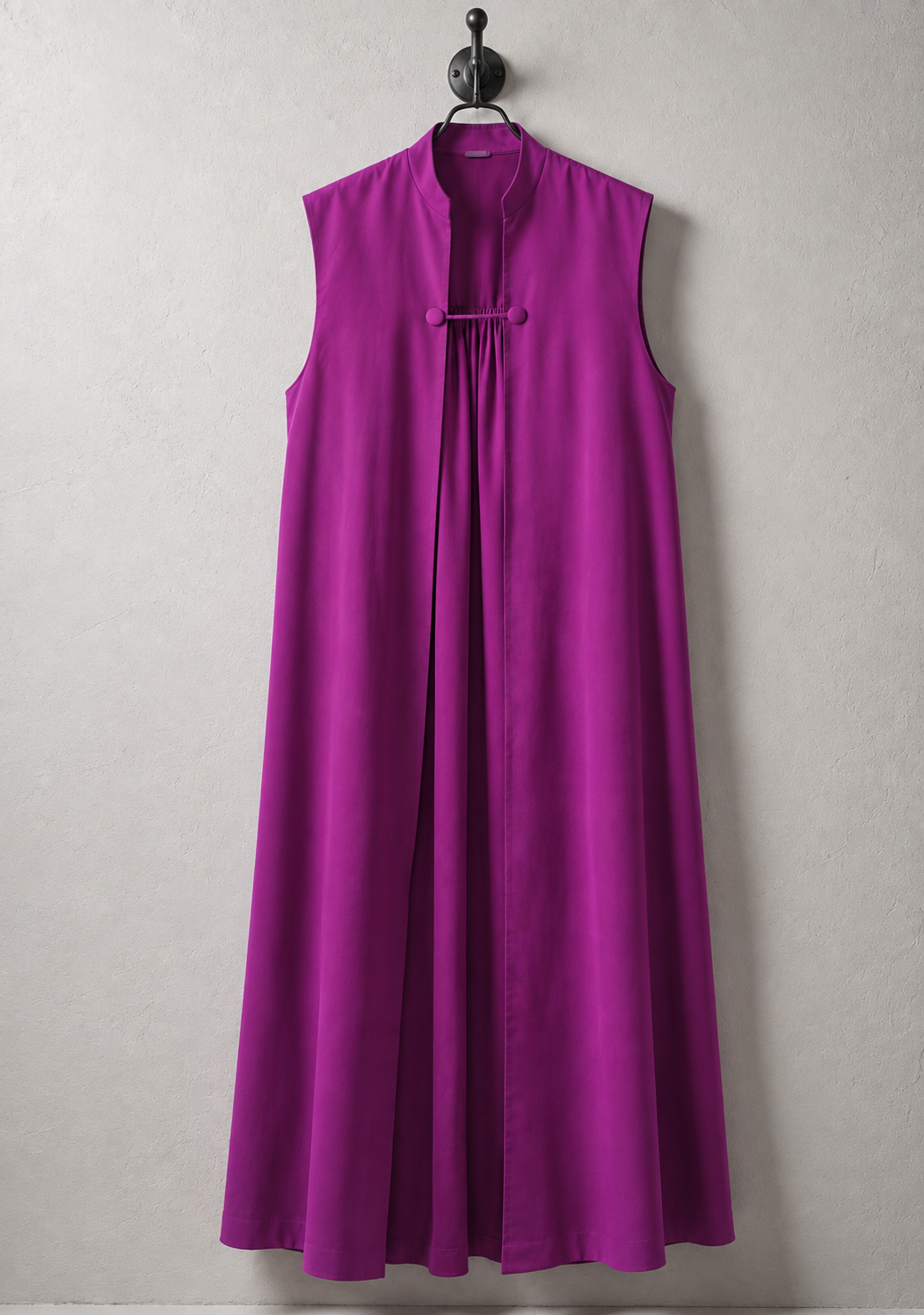
The chimere is fully open down the front rather than closing with a continuous button row. At the throat, a small notch collar sits above a two-button closure: two fabric-covered ball buttons joined by a gathered loop of fabric, sitting just below the collar at the top of the chest. Below this single closure point, the chimere falls open for its entire remaining length, showing the rochet beneath from the upper chest to the floor.
This construction is standard for the classic Anglican chimere shape. The single closure at the throat is functional rather than decorative; it keeps the chimere from sliding off the shoulders while allowing the garment to hang open and show the rochet, which is the intended visual effect. A chimere that closes fully down the front would defeat this purpose by concealing the rochet.
Back Construction and Silhouette
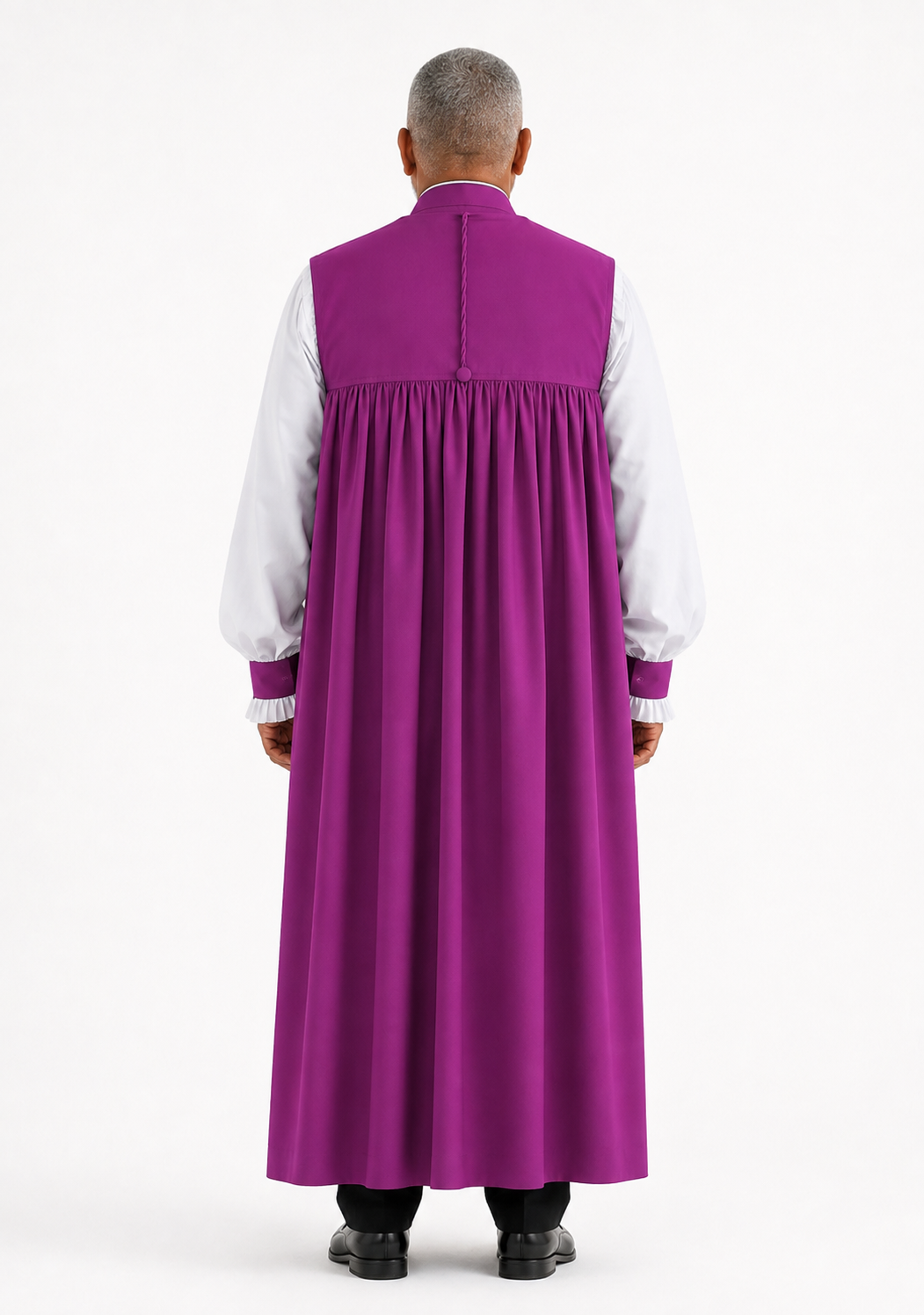
The back of the chimere is gathered below a flat yoke panel across the shoulders, with a covered button and a decorative twisted cord trim running vertically down the center back to the yoke seam. This is the same yoke-and-gather construction used on the surplices and rochets already in the catalog, applied here to a sleeveless silhouette.
The gathered back gives the chimere volume and movement when the wearer processes or turns, echoing the fullness of the rochet beneath it. Because the chimere has no sleeves, the shoulder line is defined entirely by the yoke, which sits flat and structured across the top before releasing into the gathered skirt below.
Fabric and Color
The chimere is made from a soft tropical suiting fabric, a lightweight woven with enough body to hold the chimere’s A-line drape without collapsing, while remaining breathable enough to wear over a rochet during long services. Tropical suiting fabric is commonly used for warm-weather formal wear because it balances structure and airflow, both of which matter for a garment layered on top of another full-length vestment.
The magenta is a saturated, true violet-red rather than a deep episcopal purple or a pink-leaning fuchsia. In Roman Catholic and certain Anglican usage, magenta and episcopal purple are two distinct rank-associated colors, and this chimere is cut specifically in the magenta shade to pair with a matching magenta cassock, such as Reverentia’s coordinating rochet trim.
Care: dry clean recommended to preserve the fabric’s structure and the twisted cord trim at the back. If home laundering is necessary, use cold water and a gentle cycle, and hang to dry; do not tumble dry, which can distort the gathered back panel. Steam rather than press directly over the cord trim.
Sizing and Made to Measure
The chimere is available across a range of sizes for clergy. Because it is worn over a rochet, sizing should account for the added bulk of the rochet’s bishop sleeves and gathered body underneath; a chimere sized only to the wearer’s body measurements without allowing for the rochet layer will sit too tight at the shoulders and armholes.
Made to measure is available with a 3 to 4 week lead time, and is recommended for this piece given the layered fit requirement. For episcopal households ordering a complete magenta ensemble (cassock, rochet, and chimere), we recommend ordering all pieces from the same production run to ensure the magenta shade matches exactly across garments.
FAQs
Why does the chimere have no sleeves?
The chimere is designed to be worn over a rochet, and the rochet’s bishop sleeves are meant to remain visible below the chimere’s armholes. A sleeved chimere would conceal the rochet sleeves entirely, which defeats the layered visual effect that defines episcopal choir dress.
Is the chimere worn instead of a cope or a chasuble?
No. The chimere is choir dress, not a Eucharistic vestment. It is worn for non-Mass occasions such as diocesan meetings, evensong, ordinations outside the Mass itself, and formal episcopal appearances. A cope or chasuble is worn for liturgical functions where a Eucharistic or processional vestment is called for.
Can this chimere be ordered in a different color to match a different cassock?
Yes, through made to measure. The construction (open front, two-button closure, gathered back with cord trim) stays the same; the fabric color can be matched to episcopal purple, black, or another rank-specific shade. Provide a swatch or reference sample for the closest dye match.
How do I keep the twisted cord trim on the back from fraying?
Avoid direct contact with a hot iron, which can loosen the cord’s twist over time. Dry cleaning is the safest option for long-term care. If the cord shows early fraying at the button end, a tailor can resecure it without needing to replace the entire trim.

There are no reviews yet. Be the first one to write one.