


Structure Through the Cincture
Albanus takes its name from Saint Alban (the first recorded British martyr) and carries in its construction a similar quality: directness, without pretension. The black cincture at the waist is the single defining element that distinguishes the Albanus from a plain white cassock, and it does so with precision rather than decoration. A cincture (historically a cord or belt worn at the waist of a liturgical garment) has been part of clerical dress for centuries. On the Albanus, it is realised as a structured black waist belt or cinch that defines the body and signals deliberate construction.
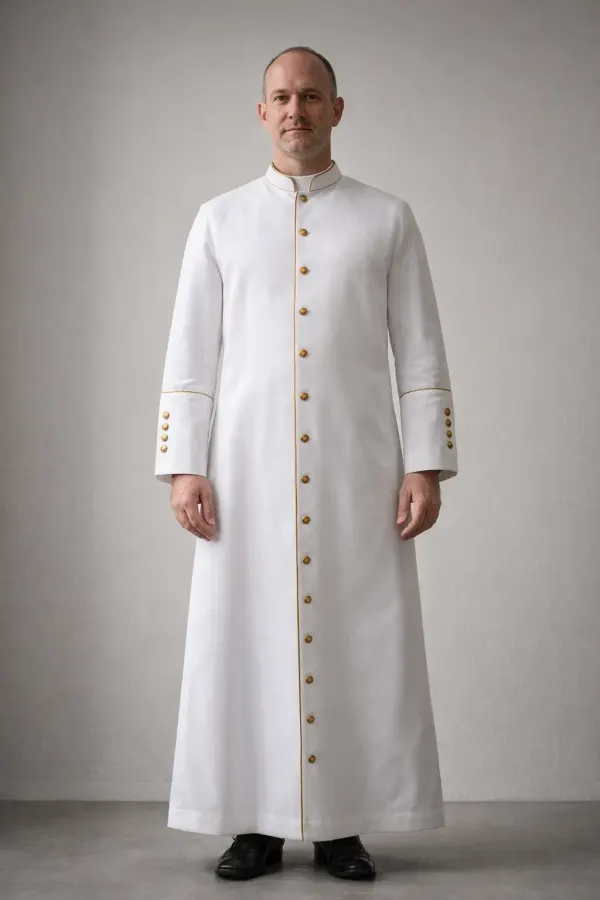
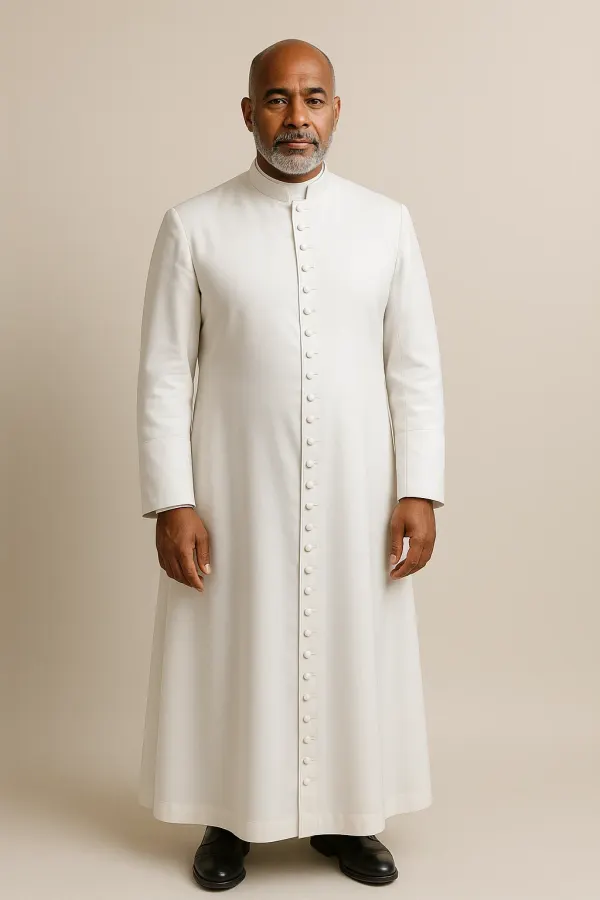
The rest of the cassock is pure Roman form: standing collar, long button-front placket from collar to hem, full floor-sweep skirt with the ease appropriate for movement in procession and at the altar. The black cincture provides a single horizontal accent that divides the white field into upper and lower registers, giving the garment a visual sharpness that plain sashless cassocks lack.
Black Cincture Construction
The cincture of the Albanus is constructed as an integrated element of the cassock rather than a removable accessory: it is fitted to the garment at the waist and lies flat against the body when worn. The black fabric provides clear contrast against the white ground and is finished at its edges without raw hems.
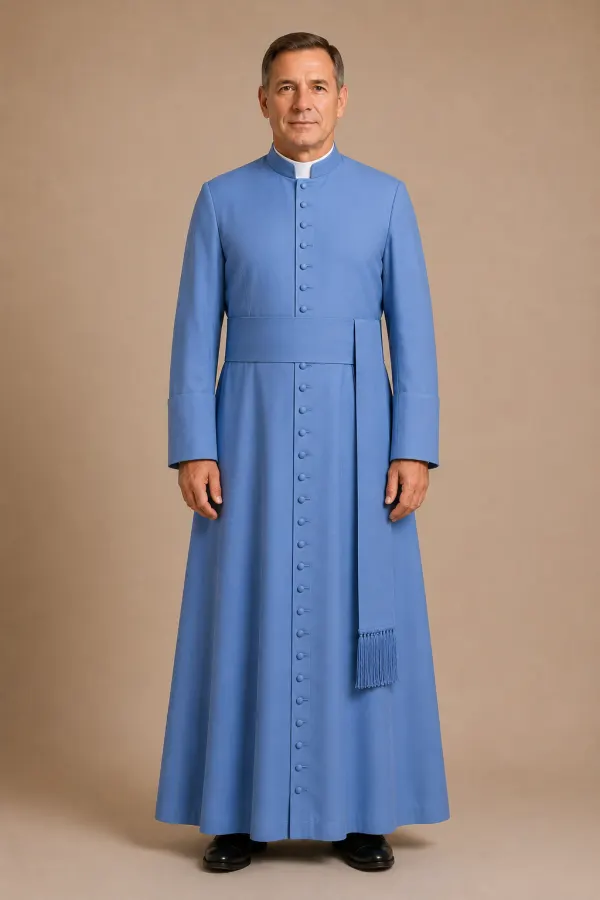
The cincture sits at the natural waist, positioned to create a clean horizontal division of the cassock’s silhouette. It is secured at the front centre. The rest of the cassock’s button placket runs above and below the cincture’s line, keeping the fastening orderly and symmetrical.
Fabric, Construction and Care
The Albanus body is constructed in a suiting fabric in a clean white ground. The black cincture is constructed in a contrast fabric.
Seams are finished to standard. For care guidance, see our Care Instructions. The cincture should be pressed separately to maintain its flat profile.
Who This Cassock Is For
The Albanus is designed for clergy who want a white cassock with more visual structure than a plain unbelted garment, but without the rank-signalling of prelatial trim colours. The black cincture is a neutral accent that carries no specific denominational or rank-colour meaning, making the Albanus appropriate for clergy across Catholic, Anglican, Orthodox, Lutheran, and independent traditions who wish to wear white with a defined silhouette.
It is an especially practical choice for clergy who move frequently between indoor and outdoor liturgical settings: the cincture keeps the cassock body controlled and tidy in wind and movement in a way that a loose-hanging plain cassock does not.
There are no reviews yet. Be the first one to write one.