
What a Rabat Is For
A clergy shirt in every color you need is an expensive wardrobe and a crowded closet. Red for Pentecost, purple for Advent and Lent, blue where your tradition uses it, plus black and grey for the rest of the year. Five shirts, five collars, five more things to launder.
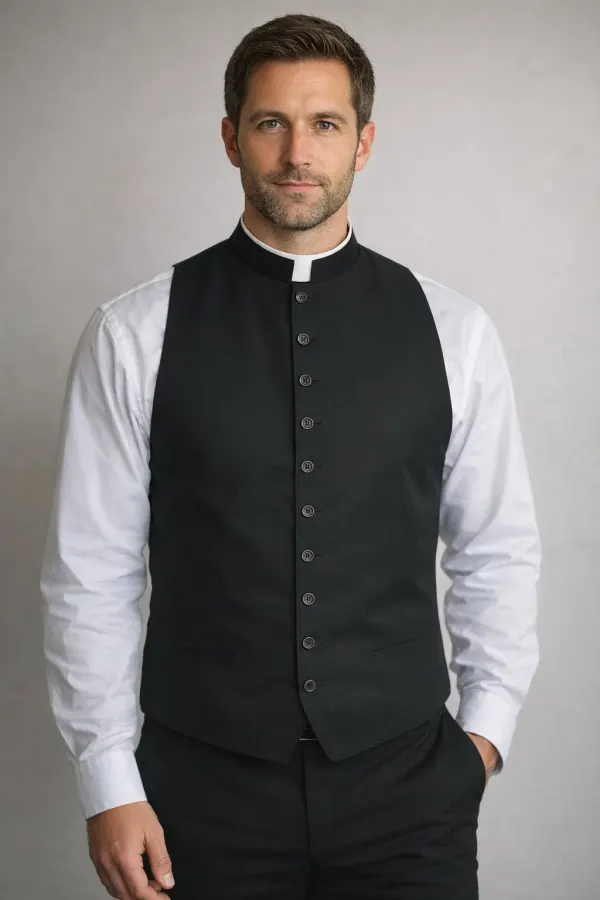
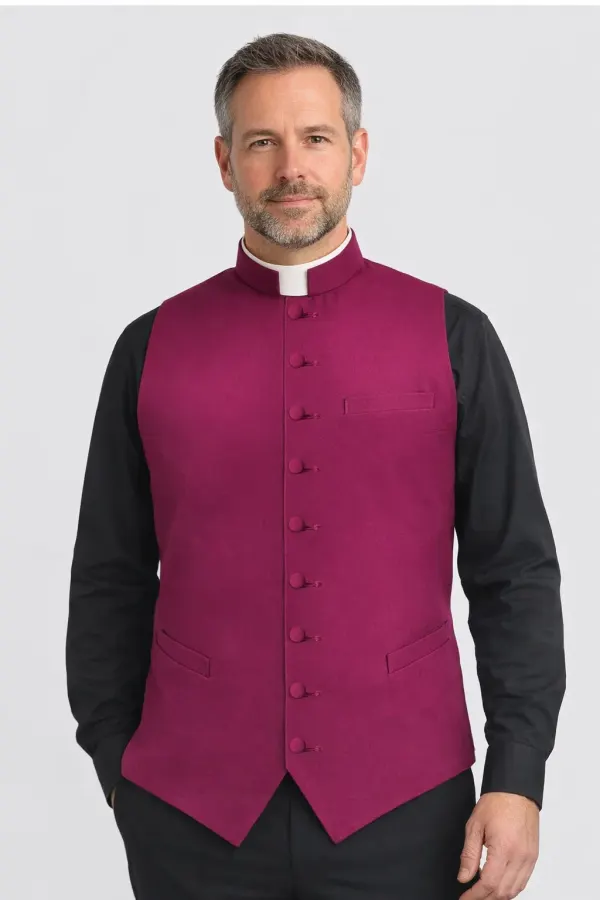
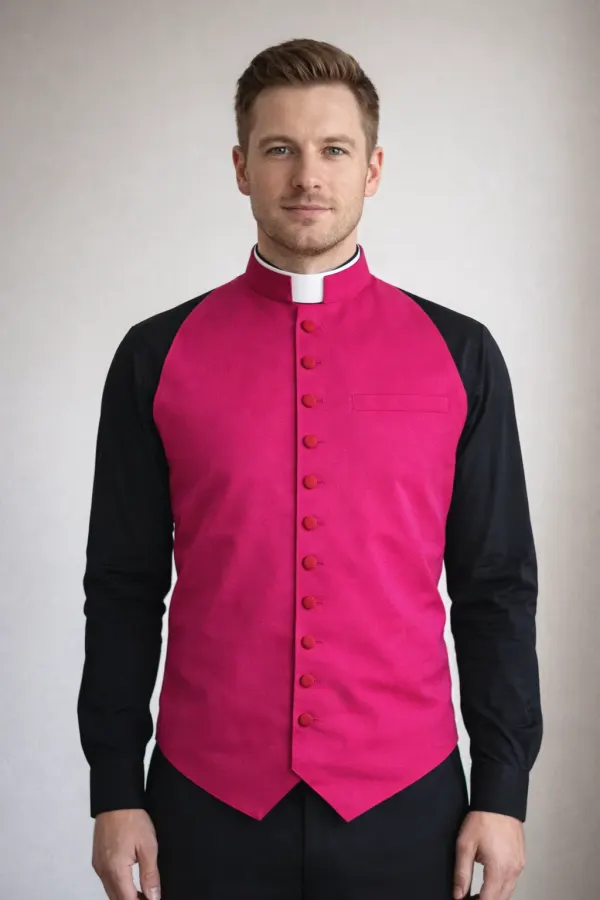
A rabat solves the same problem from the other direction. It is a front panel with the collar built into it, worn over a shirt you already own. Your own sleeves and cuffs show at the sides, the rabat covers the chest and carries the collar, and from the front you read as fully vested clergy. Change the rabat and you change color. One white shirt underneath does the work of an entire wardrobe.
Two further advantages are worth knowing. A rabat uses a fraction of the fabric of a full clergy shirt, so it wears cooler through a long service in a warm room. And four rabats fold into roughly the space of one shirt, which matters if you move between churches, hospitals and conferences in a week.
The Blue, and What It Is Not
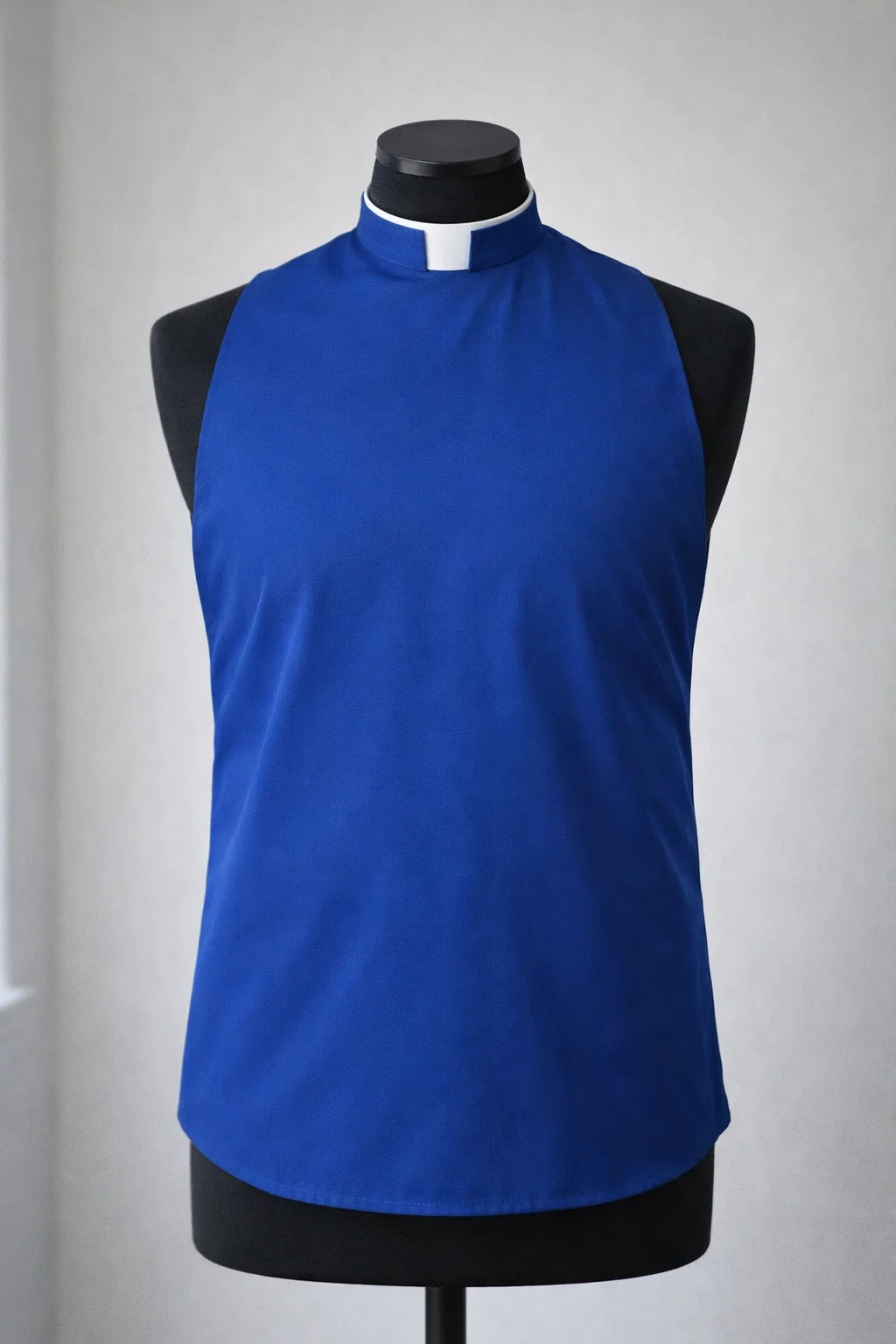
Measured, the cloth sits at #163E95. That is hue 221, with saturation running near seventy four percent and the value held well down. In practice, a deep royal blue that keeps the vividness of a royal while sitting about twenty points darker, which puts it closer to sapphire in depth and still royal in character. It is not navy, which runs both darker and bluer than this.
The distinction worth flagging, because it costs people money, is that this is not Sarum blue. Sarum, sometimes called Marian blue, is the muted, greyed, dusty blue used for Advent in some Anglican and Lutheran traditions, and it measures around forty four percent saturation. This runs at seventy four. Placed together they do not read as the same color at all. If you are buying to match a Sarum blue frontal or stole, this will not sit with it.
What it does suit is everything else blue is worn for. It works as everyday clerical color in place of black, and vivid blues in this register are used widely across COGIC, Pentecostal and independent churches for choir, ceremonial and anniversary occasions.
Collar, Coverage and Cut
The banded stand collar is built into the rabat, encircles the neck fully and is cut to hold a standard clerical insert. That is the entire reason a rabat works. Because the collar belongs to the garment, the shirt underneath never has to be a clergy shirt.
The panel is cut wide across the chest and tapers up toward the collar, with the armhole edges curved deep so your own sleeves sit clean at the shoulder instead of bunching under the edge. The hem is finished on a curve rather than cut straight across, which is the detail that keeps it lying flat when you sit down and stops a hard horizontal line showing through a jacket.
Fabric and Care
Soft quality tropical fabric, lightweight and breathable, which is what you want in a garment worn as a second layer over a shirt. The face is matte, so a saturated blue holds even under sanctuary and stage lighting rather than flaring at the highlights.
Care: dry clean recommended. If you launder at home, wash cold on a gentle cycle and hang to dry, keeping strong colors separate for the first few washes. Steam on low. Because a rabat is small it dries quickly and settles back into shape on a hanger, which is one more reason it travels well.