Description
The Gap This Fills
There is a difference between a robe and a vestment. A robe is a garment. A vestment is a statement. The Candoris is built for moments when what you wear carries meaning beyond the fabric.
A full cassock with alb is the traditional foundation, but it requires layering and takes time to put on properly. A simple white robe covers the essentials but reads plain for high feast days and formal processions. The Candoris sits between them. It is formal and intentional enough for the altar, ornate enough to signal the significance of the occasion, practical enough to wear for a full day when you need to look like clergy without the weight of multiple layers.
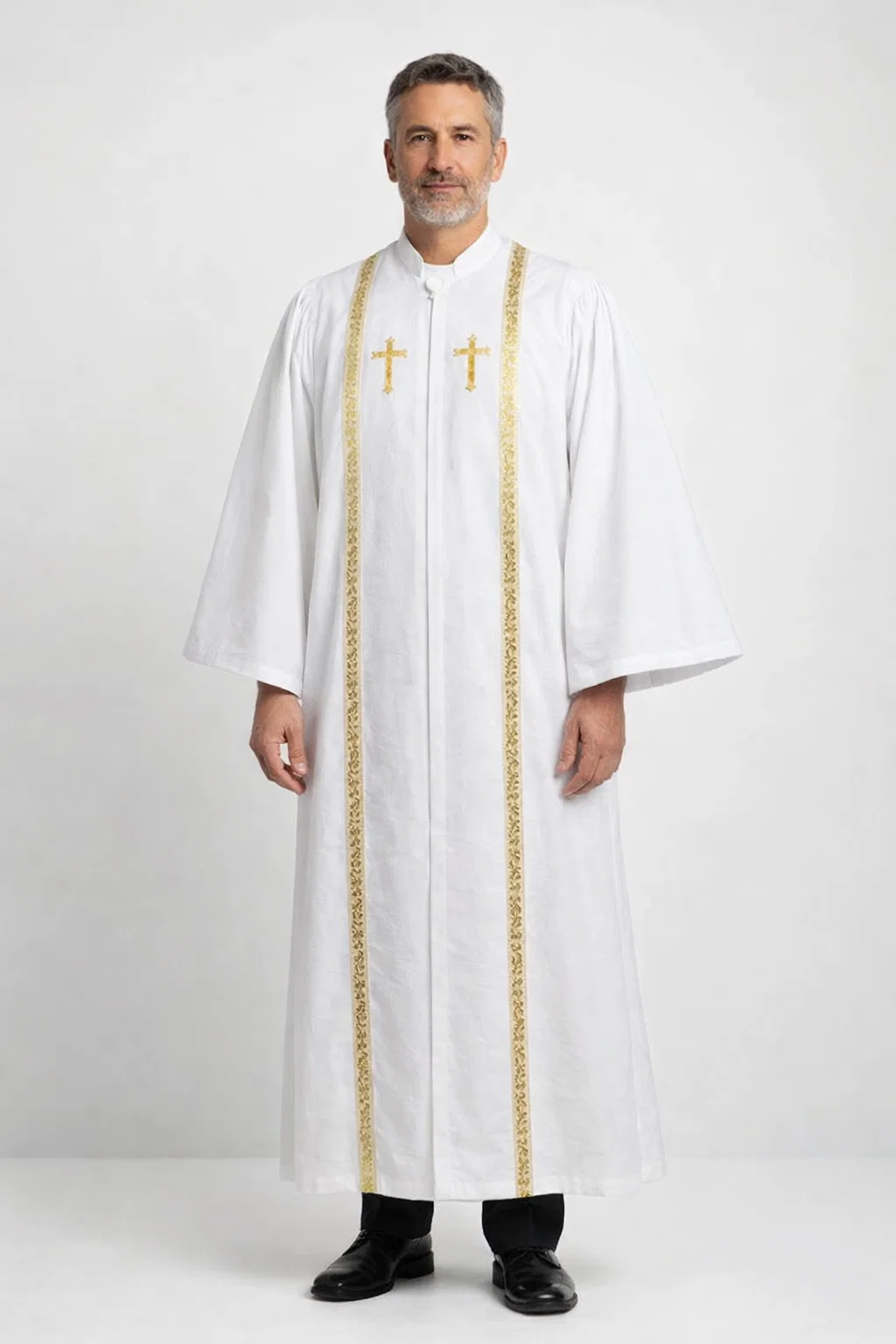
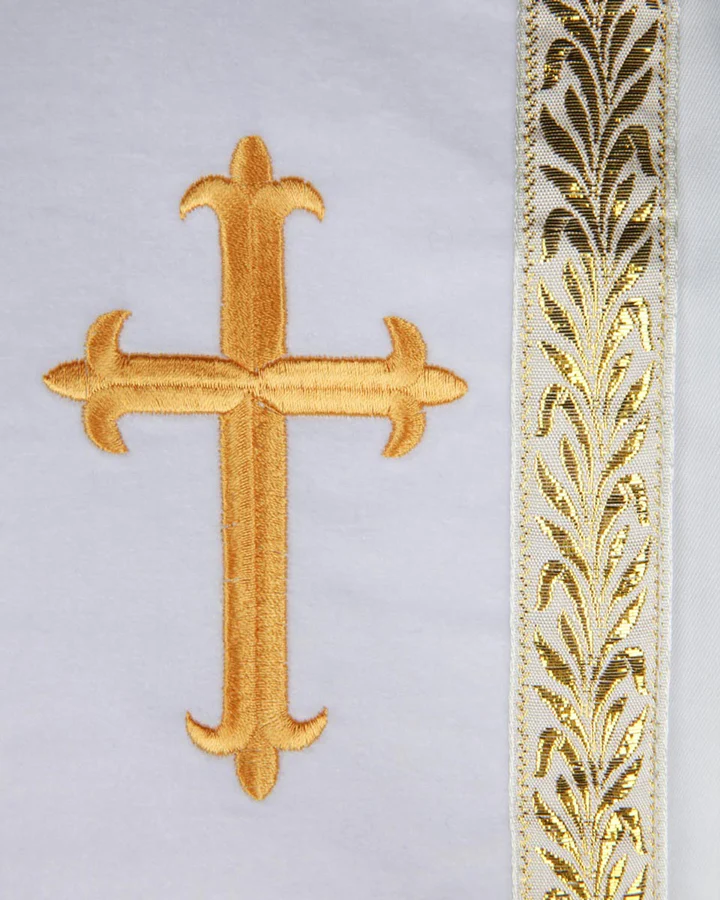
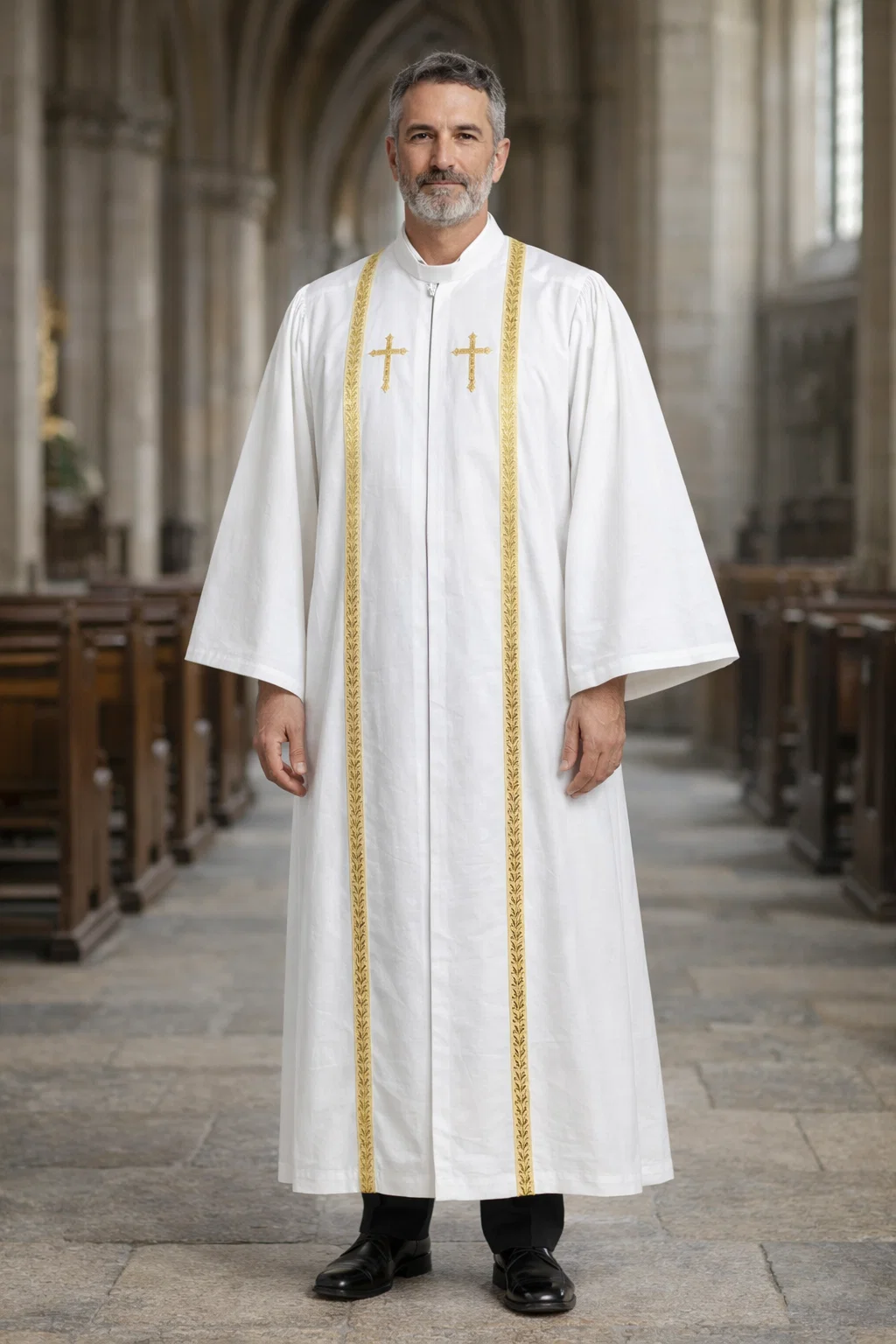
The gold crosses and braid are not decoration. They are liturgical markers. The crosses signal the faith at the center of the office. The braid frames the garment and adds visual weight. Together, they make clear that this is vestment, not just clothing.
The White and Gold, Specifically
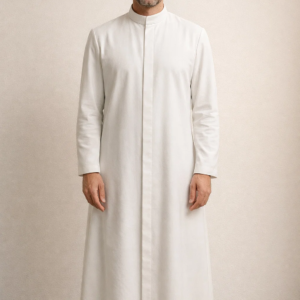
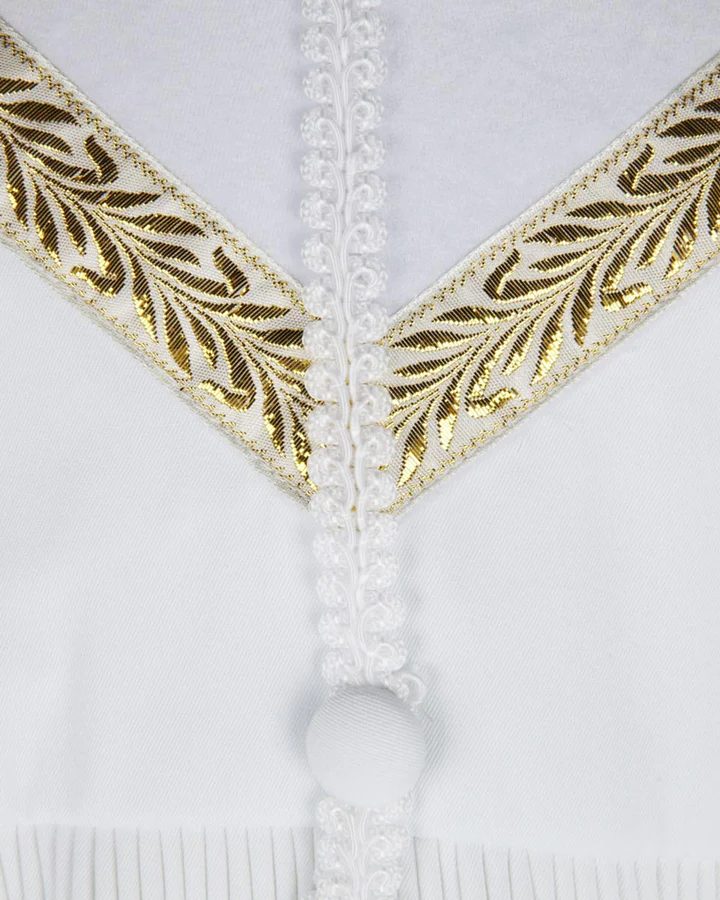
The white is a clean, true white. No cream, no ivory, no warmth. It holds steady under sanctuary lighting and photographs cleanly against stained glass and stone. The gold braid is a warm metallic gold, neither too bright nor too muted, so it reads rich beside candles and catches light without flaring on camera. The embroidered crosses are worked in the same gold thread, giving them depth and texture.
Gold is the color of glory, celebration, and Easter. It marks the highest feast days: Christmas, Easter, Ascension, major saints’ days. The gold on this robe makes it right for those occasions. The white ground keeps it usable year-round in traditions that appoint white for feasts, confessions, and formal occasions beyond the gold days.
Fabric, Cut and Details
The Candoris is made from a linen blend that combines the structure of linen with a small amount of cotton for durability and ease of care. The weave is tight enough to hold a crisp drape, but soft enough that the fabric moves and breathes. This is a robe meant to be worn for hours at a stretch: linen blend lets you do that without overheating or stiffness.
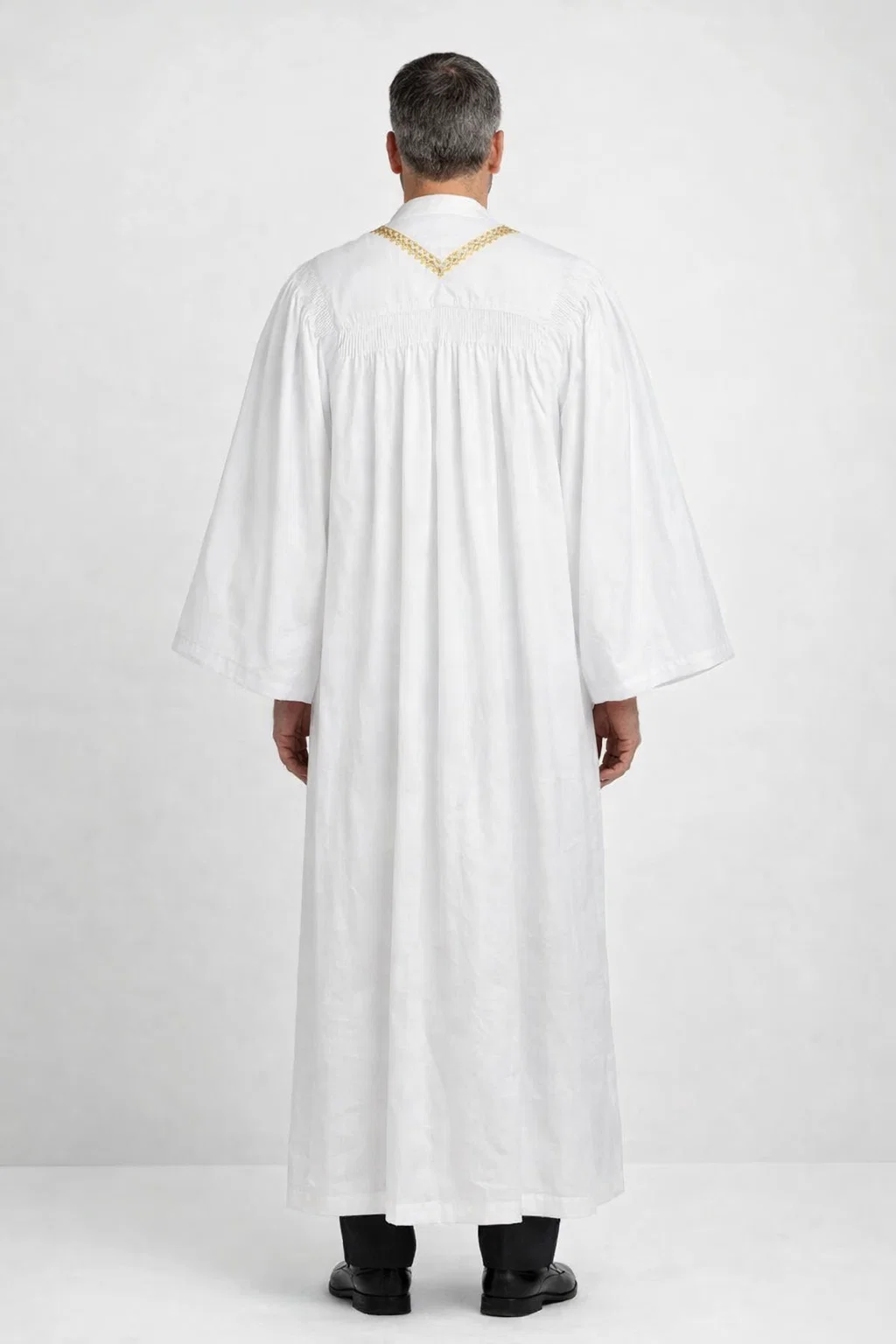
The body is cut with gathered fullness through the front and back, so the robe hangs with presence and movement. The sleeves are true bell sleeves: cut wide at the shoulder and tapering from elbow to wrist, so they frame the arms and hands without restricting movement when you raise your arms for blessing or at the altar.
The front closure runs from neckline to hem with a row of buttons spaced evenly. The neckline is cut in a V, faced with a coordinating trim, and edged with the gold braid that runs the full length of the front. The gold braid continues around the neckline and frames the collar opening. Paired crosses in gold thread are embroidered at the chest, positioned so one sits at each shoulder when the robe is closed.
The hem falls to the ankle, with side seams that hang straight and weighted so the fullness of the skirt drapes rather than swings. The center back vent is cut generous enough for sitting and movement without the fabric dragging.
Care: dry clean recommended. If you launder at home, wash cold on a gentle cycle, hang to dry, and steam lightly. The linen blend wrinkles naturally: that is part of the beauty. Light pressing after air drying restores the drape without stiffening the fabric.
Where It Belongs
Gold and white belong at the heart of the liturgical year. Christmas and Easter above all: the Candoris reads at home on those high feasts. Epiphany, Ascension, Pentecost, and major saints’ days. Confirmations, ordinations, and formal commissioning services. Wedding ceremonies and renewal of vows. Any occasion where the formality of the day calls for vestment that carries weight.
The robe is worn at the altar, in processions, and for formal ministry occasions where presence and intention matter. It pairs well with a stole, worn with the stole hanging from the shoulders and the ends draped front and center. It can be worn alone or under a cope for even more formal occasions.
The Candoris is not a working garment. It is not meant for hospital rounds or casual pastoral visits. It is vestment for moments that matter: the liturgy itself, formal processions, occasions where your dress makes the occasion more intentional, not less. If you need a robe for daily work, the Albaris is built for that. The Candoris is for when you mean to be in full vestment.
Sizing and Fit
Sizing runs chest 38 through 60 in a single length that fits wearers from 5’10” to 6’2″ to the ankle. The chest is cut full with gathered fabric, so the robe layers comfortably over a cassock, alb, or the clothing underneath. The bell sleeves are sized so the hem hits at the wrist whether you are wearing a under-sleeve or not.
Made to measure accepts chest, shoulder, sleeve length, front length and back length, with a lead time of about 3 to 4 weeks from the day your measurements are confirmed. Made to measure is especially useful if you need the hem exactly at your ankle or if the standard sleeves do not hit your wrist correctly.
FAQs
Can I wear this robe with a stole?
Yes. The robe is designed to wear with a stole draped from the shoulders. The fullness of the body accommodates the stole without bulk, and the bell sleeves frame it nicely.
What is the difference between this robe and a cassock-alb?
A cassock-alb is two garments: the cassock worn as a base and the alb worn over it, typically with a cincture at the waist. The Candoris is a single garment, worn alone or under a cope. It is faster to put on and easier to move in, though a cassock-alb is more traditional in some liturgical settings.
Will the gold embroidery hold up to dry cleaning?
Yes. The crosses are worked in metallic thread and sewn securely. Dry clean without worry. The gold braid is machine-stitched and will hold through repeated cleaning.
Does this robe work for non-denominational churches?
The gold crosses make it most at home in traditions that use liturgical vestment and mark the church calendar with color and symbol. If your church keeps white for all formal occasions without specific symbolic meaning, it will work well. If your tradition does not use vestment, the ornament may not fit.
How do I care for the linen blend?
Dry clean is recommended. Home laundering is fine on a gentle cold cycle, hang to dry, and steam lightly. The fabric will wrinkle: that is natural to linen. The wrinkles settle and soften with gentle pressing or steaming.
Can the robe be hemmed shorter?
No. The Candoris is designed to fall to the ankle as part of its formal presence. If the standard length does not work for your height, made to measure will get the hem exactly right.