The Gap This Fills
A cassock with sleeves is the traditional foundation of clergy dress, but a full cassock requires layering underneath and takes time to vest properly. A sleeveless robe covers the basics but leaves the arms bare and reads incomplete for high liturgical occasions. The Claritas is a complete vestment on its own: formal enough for the altar and processions, practical enough to wear for a full day of ministry without multiple layers, built with sleeves so you are dressed as clergy from collar to wrist.
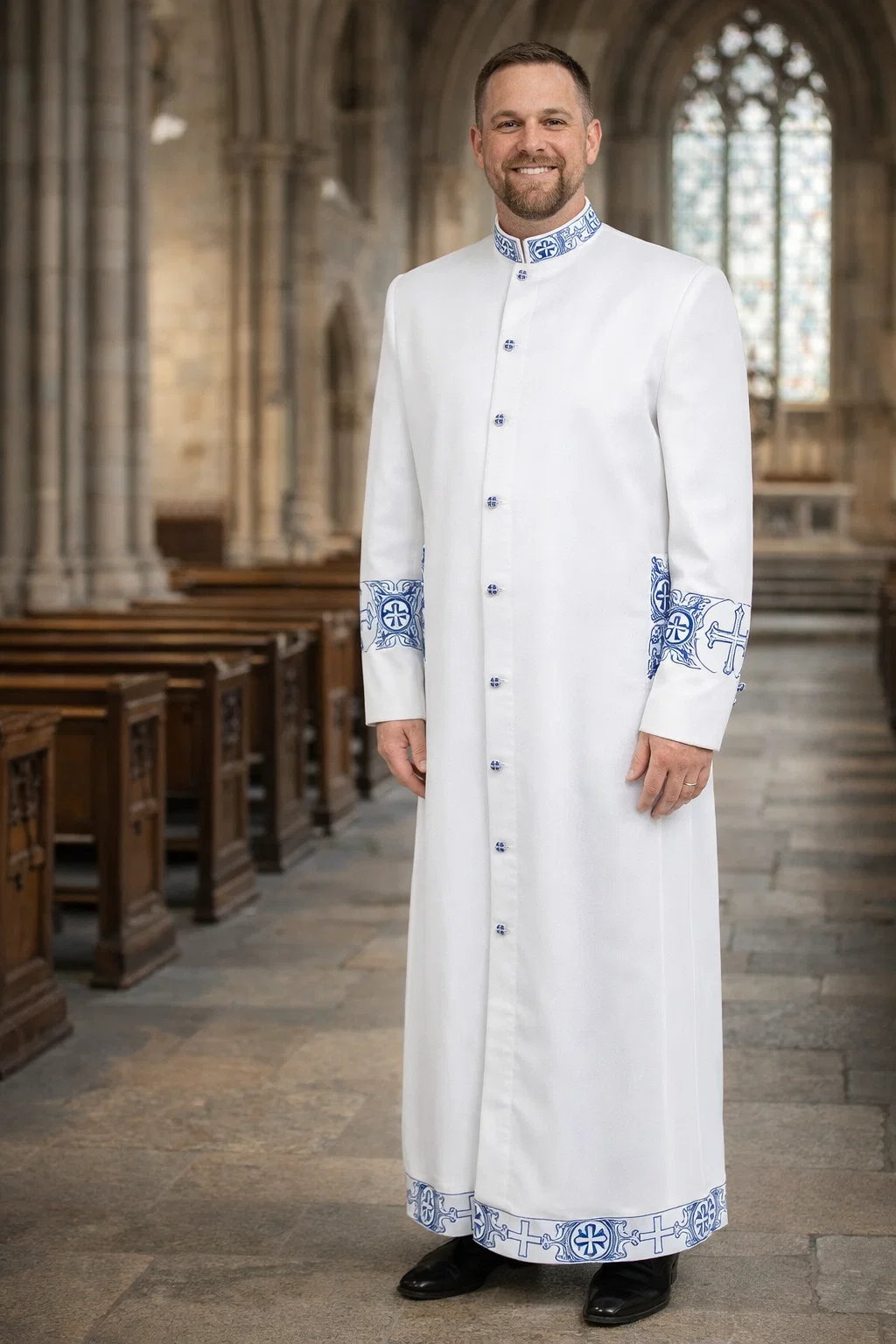
The Claritas is the choice for traditions that keep the cassock at the altar and need a formal single garment for everything else. It presents as intentional vestment, not as a colored overlay. The blue embroidery signals liturgical formality. The long sleeves and fitted cut read as proper clergy dress in any setting.
The White and Blue, Specifically
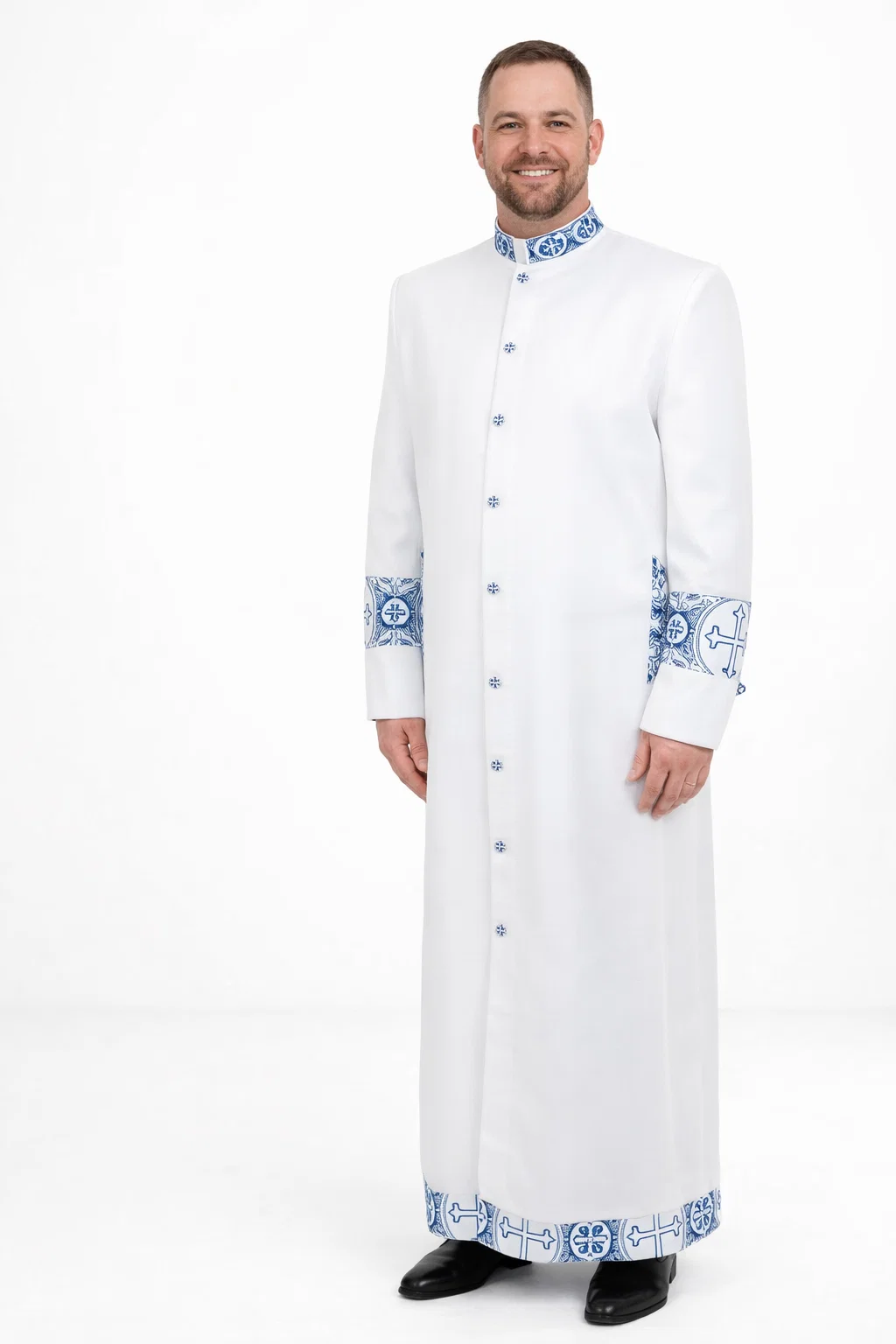
The white is a clean, true white. No cream, no ivory, no warmth. It holds steady under sanctuary lighting and photographs cleanly. The blue is a strong, clear blue: neither navy nor pale, so it reads rich beside white and holds its color under lights. The embroidered crosses are worked in the same blue thread with precision and depth.
White is the color of Christmas, Easter, Epiphany, weddings, baptisms, and ordinations. In traditions that appoint white for all formal occasions when no specific liturgical color applies, the Claritas works year-round. The blue embroidery adds formality and signals the solemnity of the occasion without competing with other vestments or altar furnishings.
Fabric, Cut and Details
The Claritas is made from a cotton blend that combines the smoothness of cotton with a small amount of synthetic fiber for durability and ease of care. The weave is tight and structured, so the fabric holds a crisp drape and resists wrinkles even through a full day of wear. This is a robe built for hours at the altar and in the chancel: the cotton blend keeps the fabric fresh and the drape true without the weight of heavy linen.
The body is cut with a straight line from shoulder to hem, tailored close enough to read as formal without clinging. The long sleeves are fitted through the forearm, tapering to the wrist so they sit clean under the embroidered cuff without excess fabric. The cuffs are faced with the blue embroidered band, finished so they sit smoothly at the wrist.
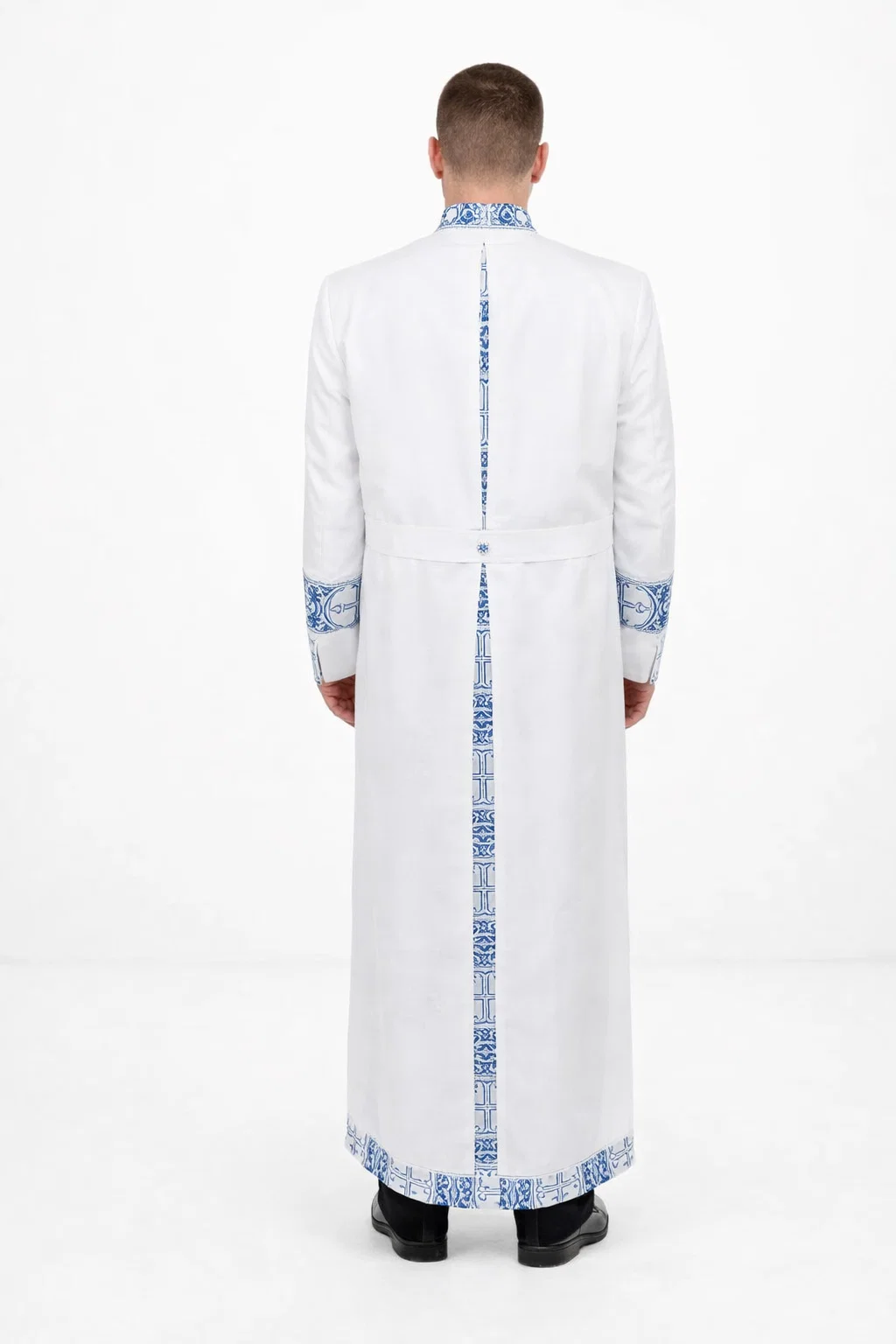
The mandarin collar stands structured and clean, faced with the coordinating blue embroidered pattern. The button front runs from neckline to hem with small blue cross buttons spaced evenly. The center back stripe runs the full length, worked in blue embroidered crosses and geometric motifs that frame the center seam.
The hem falls to the ankle and is framed with an embroidered band that matches the collar and cuffs. The center back vent sits between the stripe so you can sit and move without the fabric dragging. All seams are finished cleanly with flat fell construction where they show.
Care: dry clean recommended for formal wear. If you launder at home, wash cold on a gentle cycle, hang to dry, and steam lightly. The cotton blend sheds wrinkles quickly and holds its shape well.
Where It Belongs
The Claritas belongs in traditions that keep formal vestment at the altar and need a complete garment for every occasion. At Christmas, Easter, and high feast days when white is appointed. For ordinations, installations, confirmations and formal commissioning services. In the pulpit, at the altar, and in formal processions. At weddings, funerals, and community services where your presence and dress signal the formality of the occasion.
The robe is worn as a complete vestment on its own, or paired with a stole draped from the shoulders. It can be worn under a cope for even more formal occasions, or in traditions where the robe serves as the base layer under other vestments.
The Claritas is not a working garment. It is not meant for hospital rounds or casual pastoral visits. It is vestment for formal occasions where you mean to be in full dress: the altar, processions, ceremonies that call for intentional formality. If you need a robe for daily work, the Albaris is built for that. The Claritas is for when you need to be fully vested.