
Description
The Habit Most People Picture
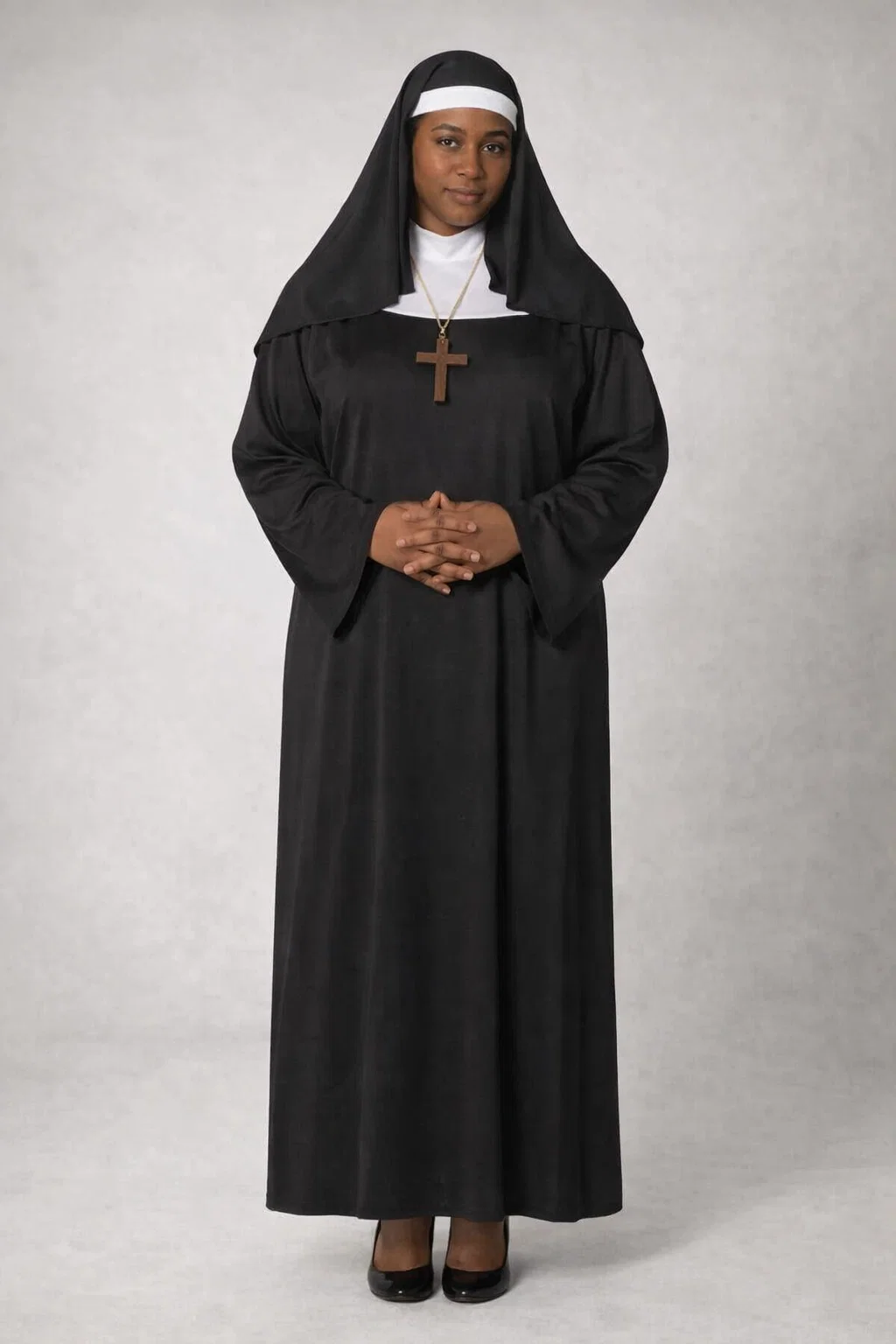
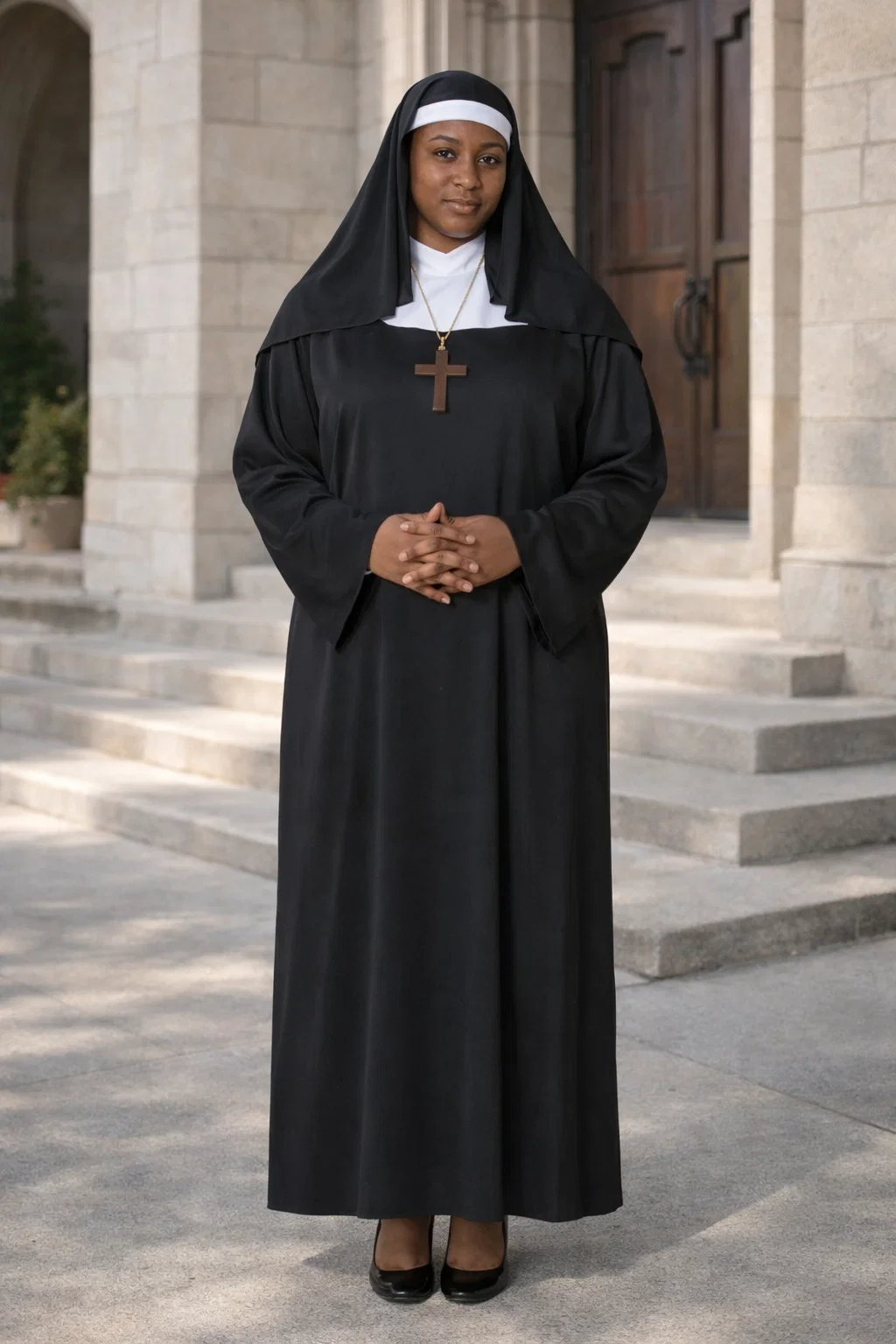
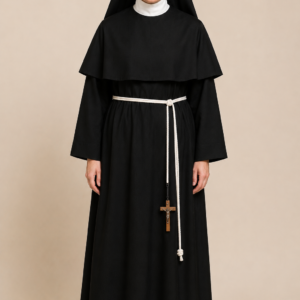
This is the traditional habit. Full length black tunic, long black veil, white bandeau across the forehead, white guimpe at the neck. It is the silhouette that older Benedictine, Dominican, Carmelite, Franciscan and countless active congregations wore for centuries, and that many communities returned to after the reforms of the 1980s and 1990s when a new generation of sisters asked for the full habit back.
Choose this if you are outfitting for a community that keeps the traditional habit, if you are a Catholic parishioner sewing for a religious sister, or if you are a consecrated woman, private oblate or third order affiliate whose rule of life calls for full religious dress. The cut is deliberately unspecific to any single order, since the details that mark one community from another, the shape of the guimpe, the color of the scapular, the width of the veil, are usually finalised through the community’s own formation.
The Four Pieces and How They Work
The tunic is the base garment. Full length to the ankle, cut with a natural A line through the skirt so it moves cleanly for walking, kneeling and standing. The sleeves are wide bell sleeves cut long enough to cover the wrists in choir, which is the traditional length. For work with the hands they fold back at the forearm without needing a cuff button.
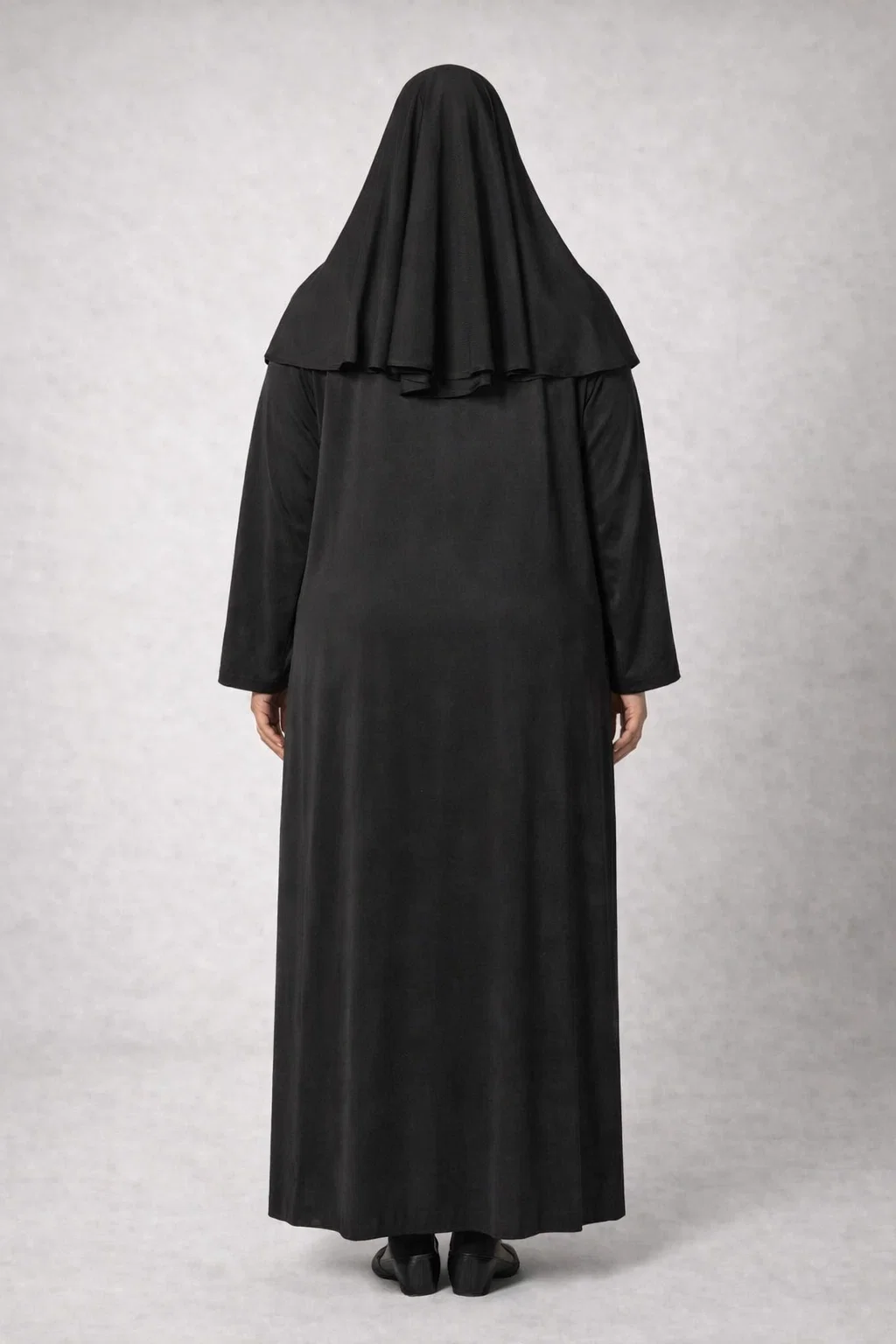
The veil is a full length rectangular veil in the same black cloth, worn from the crown of the head and falling to mid back on both sides. It is loose rather than fitted, which is the traditional shape and the one that reads correctly from any angle in chapel and procession.
The bandeau is the white band at the forehead. It sits under the veil and shows as a clean white line at the hairline, which is what frames the face and reads as habit rather than as headscarf. The guimpe is the white piece at the neck, covering the throat and upper chest under the tunic neckline. Together the bandeau and guimpe are what make the black habit read as a habit rather than as a black dress.
The pectoral cross shown is a plain wooden cross on a chain, worn over the tunic at chest height. Crosses are personal to the wearer and to the community, so it is not included with the habit.
Cut, Fabric and How the Black Behaves
The tunic is cut with ease through the bust and hip, closed shoulder and side seams, and armholes cut deep for the bell sleeve. The back is a single unbroken panel. There is no waist seam, so the garment falls straight from the shoulder in the traditional manner rather than shaping in and out at the waist.
The cloth is a lightweight tropical fabric. In a black head to toe habit that choice does most of the work: black cloth absorbs heat, tropical weave moves air through it, and the two together make the difference between a habit you can wear through Vespers on a summer evening and a habit you cannot.
The face is matte. A black in a cloth with sheen shows every crease and every shoulder shadow, and reads uneven on camera. A matte black stays deep and flat in daylight, under warm sanctuary lighting and on video, which is why matte is the traditional finish for religious dress.
Care: dry clean recommended for the tunic and veil. The bandeau and guimpe can be washed cold and hung to dry. Steam all pieces lightly on a hanger before wear. Keep the whites separated from the blacks in the wash.
Sizing and Made to Measure
Standard sizing runs in four paired bands, XS/S through L/XL, with Plus 1X and Plus 2X for extended fit. Paired sizing works on a habit because the garment is cut with ease across the body. If you sit at the edge between two bands, size to the larger so the sleeve reaches the wrist and the bell falls cleanly.
Made to measure accepts bust, waist, hip, shoulder, sleeve length and full length, with a lead time of about 3 to 4 weeks from confirmed measurements. For a community placing an order for multiple sisters, we can cut the habits together so the black matches exactly across the group.
FAQs
Is this a full four piece habit, or are the veil and guimpe sold separately?
All four pieces are included: the black tunic, the black veil, the white bandeau and the white guimpe. The pectoral cross is not included, since crosses are personal to the wearer and to the community.
Which religious orders wear a black habit like this one?
Black is the traditional habit color for Benedictine, Carmelite, Dominican and many Franciscan communities, along with a number of active congregations that returned to the full habit after the 1990s. The cut is deliberately non-specific so it works across communities.
Can this habit be worn as a working habit for teaching and apostolic service?
Yes. The lightweight tropical fabric makes head-to-toe black wearable through a full day, and the bell sleeves fold back at the forearm for work. Sisters in active apostolates often keep a plain habit for daily work and reserve a formal habit for chapel.
How does the paired sizing work, and what if I fall between two bands?
Each band serves two adjacent conventional sizes since a habit is cut with ease rather than fitted close. If you sit at the edge between two bands, size to the larger of the two. Made to measure is available if you fall outside the standard range.

There are no reviews yet. Be the first one to write one.