
Description
The Habit and Its Tradition
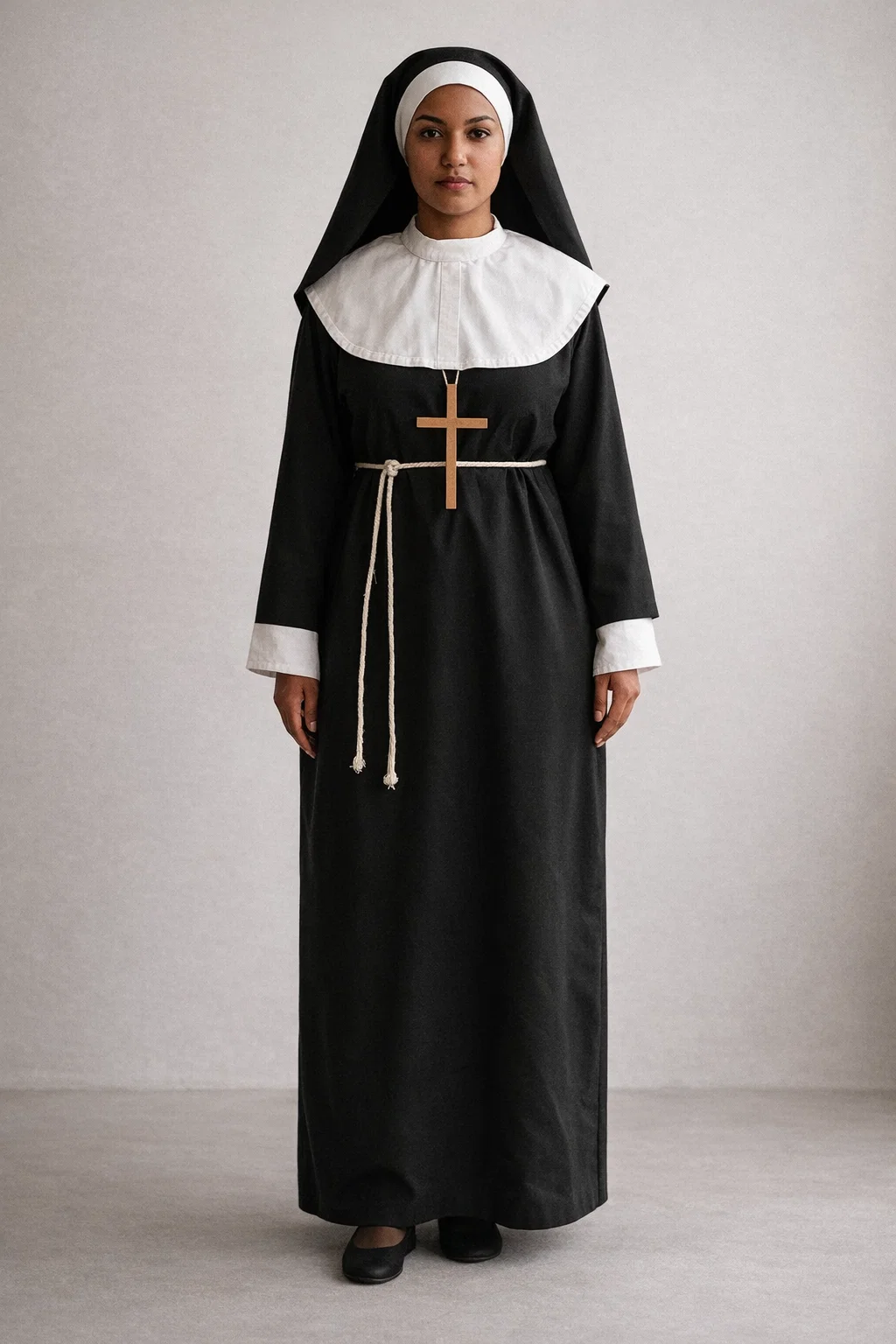
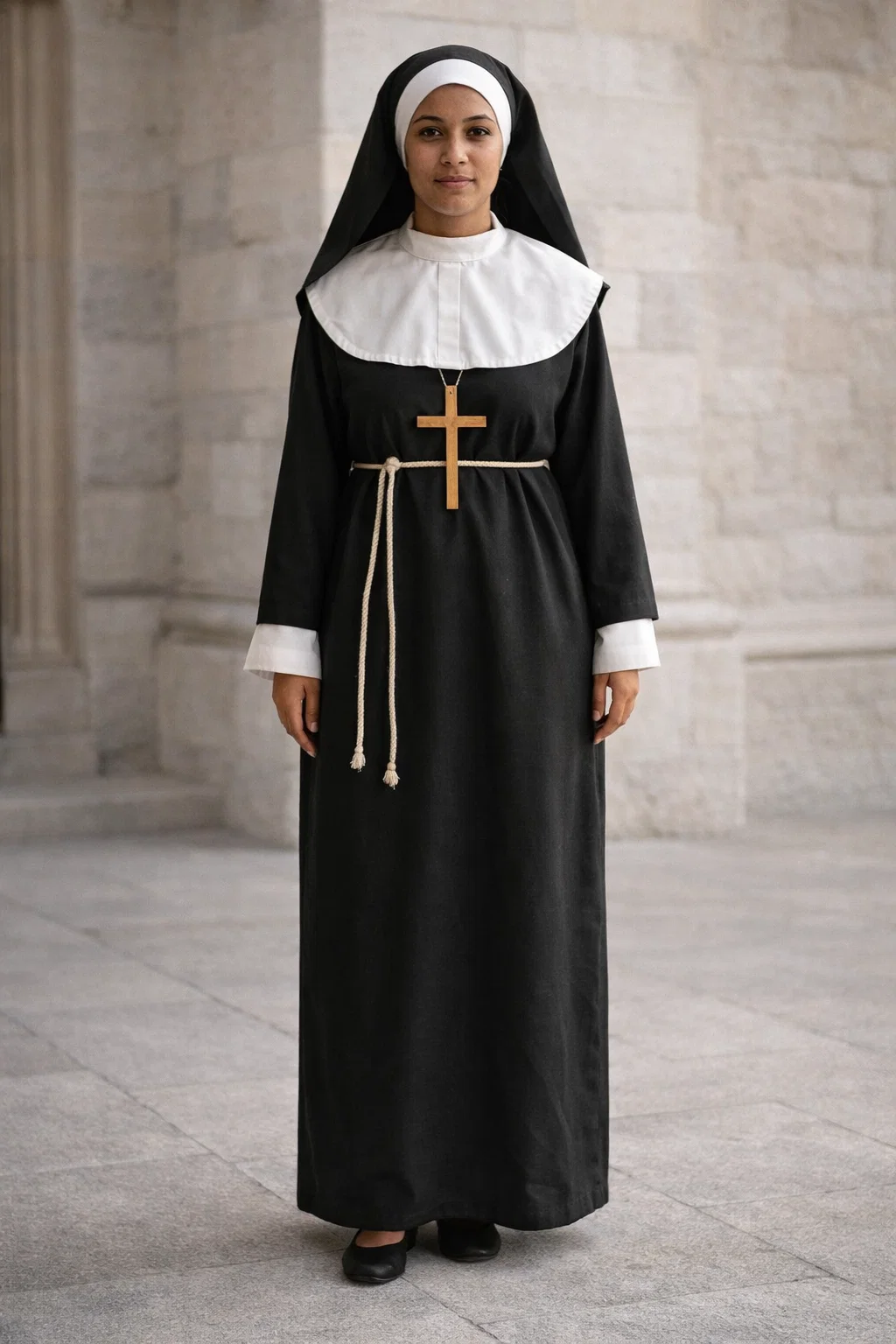
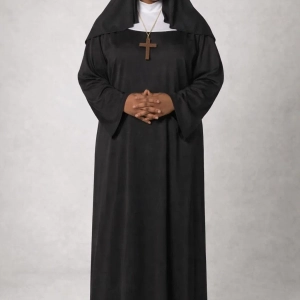
This is the older-order black habit, the silhouette that predates the streamlined post-war cuts and still marks Franciscan Poor Clare, traditional Dominican and a number of Third Order Regular communities. The wide white collar spreading across the shoulders, the turn-back cuffs at the wrists, the rope cincture at the waist and the plain full veil are all elements that go back centuries in Western religious life. The reading from across a chapel is instantly medieval, and that is deliberate.
The habit suits communities that keep this fuller white-and-black form as their choir habit, sisters in formation and novices whose community begins with a simpler version of the full habit, and consecrated women, private oblates or third order affiliates whose rule of life calls for the traditional silhouette rather than the streamlined apostolic one.
The Pieces and How They Work
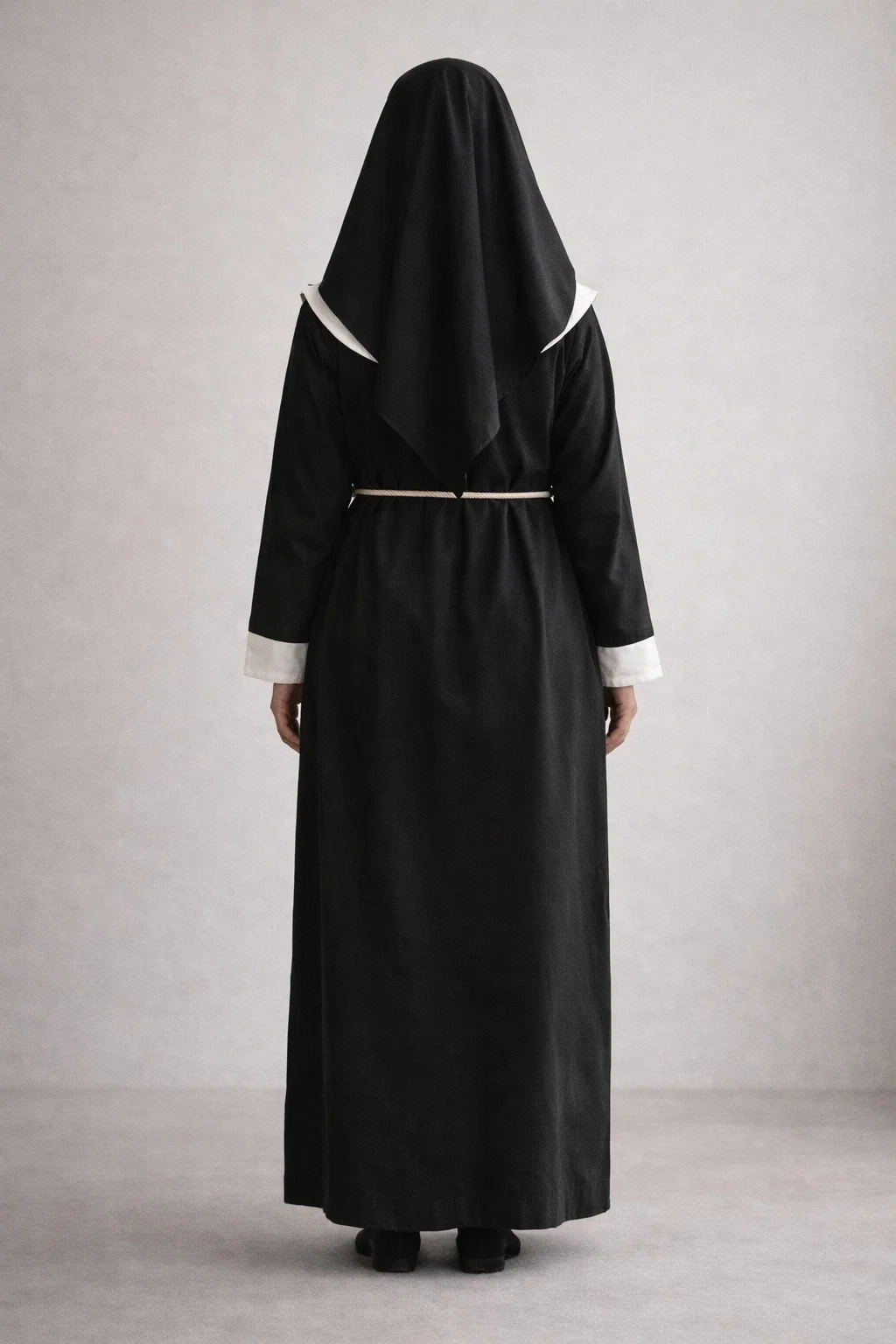
The tunic is the base garment. Full length to the ankle, cut with a natural fall through the skirt and gathered at the waist by the cincture. The sleeves are long and straight rather than bell-shaped, finished at the wrist with a wide white turn-back cuff that shows six or seven inches of white against the black. The back is a single unbroken panel with a small stand collar at the neck.
The white collar is the defining piece. Cut wide enough to spread from shoulder to shoulder and deep enough to fall over the chest to sternum height, it sits over the tunic rather than under it, buttoned at the throat and open below. This is the broad collarette of the traditional habit, and it does far more visual work than a small square guimpe: it frames the whole upper body in white and separates the head from the black tunic.
The rope cincture is a plain twisted cord tied at the waist, knotted to the front with the ends falling to mid thigh. Rope is the traditional cincture material for monastic and mendicant habits, distinguishing this habit from apostolic congregations that wear a leather belt or a fabric sash. The wooden cross on the rope shown in the photographs is worn personally by the sister and is not included with the habit.
The veil is a full-length rectangular black veil worn from the crown of the head and falling to mid back. It sits over a white bandeau that shows as a clean band at the forehead, framing the face. The bandeau is what makes the black veil read as habit rather than as scarf, and its width is set to match the depth of the collar so the head and body read as one composed silhouette.
Cut, Fabric and How the Black Behaves
The tunic is cut with ease through the bust and hip, closed shoulder and side seams, and armholes cut deep. The straight sleeve is deliberately narrower than a bell sleeve so the turn-back cuff sits cleanly at the wrist rather than falling open.
Every piece is a lightweight tropical fabric. In a black head-to-toe habit that choice does most of the work: black cloth absorbs heat, tropical weave moves air through it, and the two together make the difference between a habit you can wear through Vespers on a summer evening and a habit you cannot. The white pieces are cut in the same weave so the collar and cuffs move with the tunic rather than stiffening apart from it.
The face is matte across all pieces. A black in a cloth with sheen shows every crease and reads uneven on camera, while a matte black stays deep and even in daylight, under warm sanctuary lighting and on video.
Care: dry clean recommended for the black tunic and veil. The white collar, cuffs and bandeau can be washed cold on a gentle cycle. Wash whites separated from the blacks and hang to dry. Steam all pieces lightly on a hanger before wear.
Sizing and Made to Measure
Standard sizing runs in four paired bands, XS/S through L/XL, with Plus 1X and Plus 2X for extended fit. Paired sizing works on a habit because the garment is cut with ease across the body. If you sit at the edge between two bands, size to the larger so the sleeve reaches the wrist and the collar sits cleanly across the shoulders.
Made to measure accepts bust, waist, hip, shoulder, sleeve length and full length, with a lead time of about 3 to 4 weeks from confirmed measurements. For a community placing an order for multiple sisters, we can cut the habits together so the black matches exactly across the group.
FAQs
Is this a complete habit, or are the collar and veil sold separately?
All pieces are included: the black tunic, the wide white collar, the white turn-back cuffs, the black veil, the white bandeau and the rope cincture. The wooden cross shown is worn personally by the sister and is not included.
How is this different from the plain black habit with a smaller guimpe?
The wide white collar here spreads over the shoulders and chest, while a plain guimpe covers only the throat under the tunic neckline. This is the older Franciscan and Poor Clare silhouette, and it reads more traditional and monastic than the streamlined apostolic cut.
Can this be worn as a novice or formation habit?
Yes. Many communities begin formation in a simplified version of the full habit before the scapular and full choir dress are received at first or perpetual vows. The rope cincture and wide white collar are common formation-period elements.
How does the paired sizing work, and what if I fall between two bands?
Each band serves two adjacent conventional sizes since a habit is cut with ease rather than fitted close. If you sit at the edge between two bands, size to the larger of the two. Made to measure is available if you fall outside the standard range.
There are no reviews yet. Be the first one to write one.