
The Habit and Its Tradition
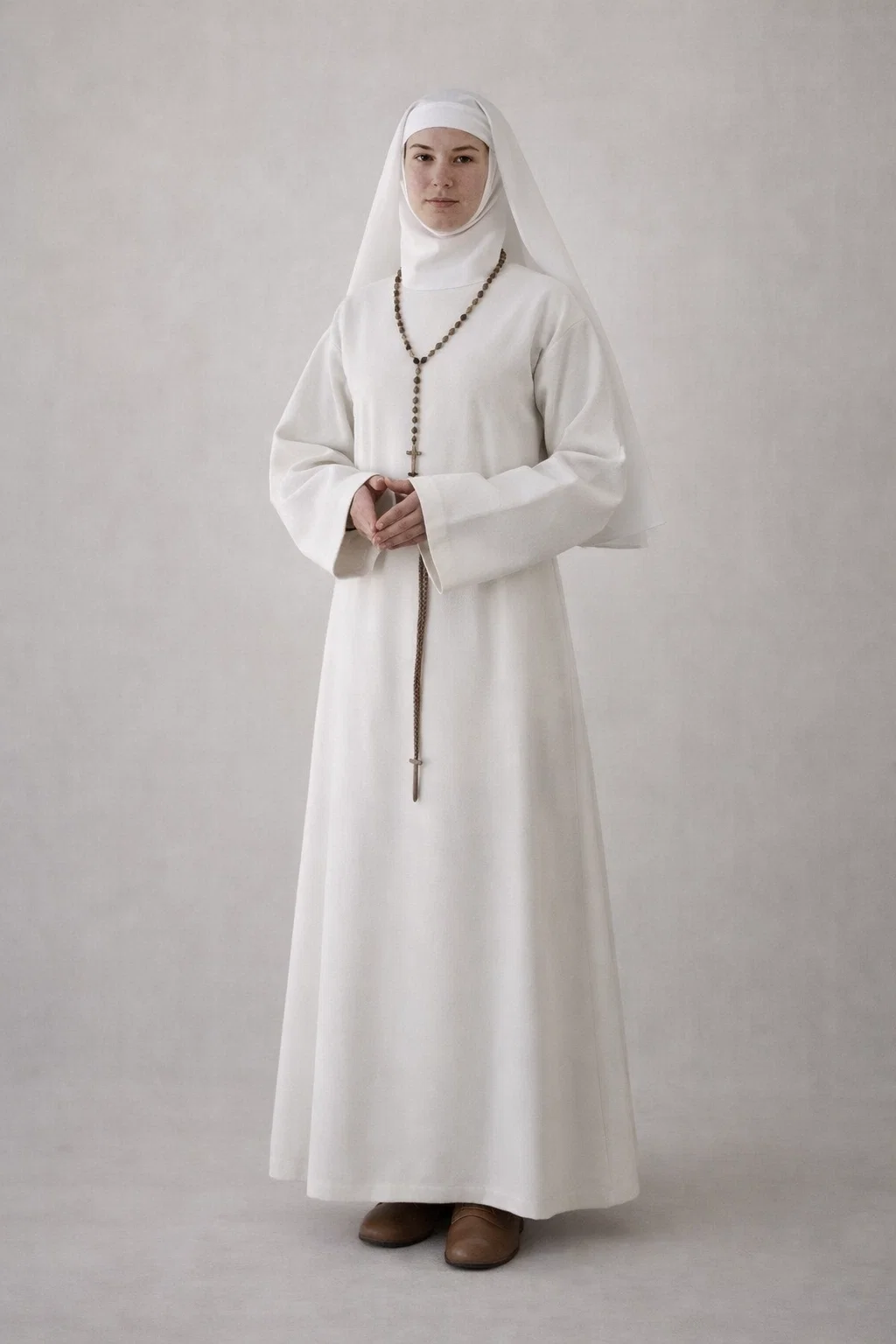
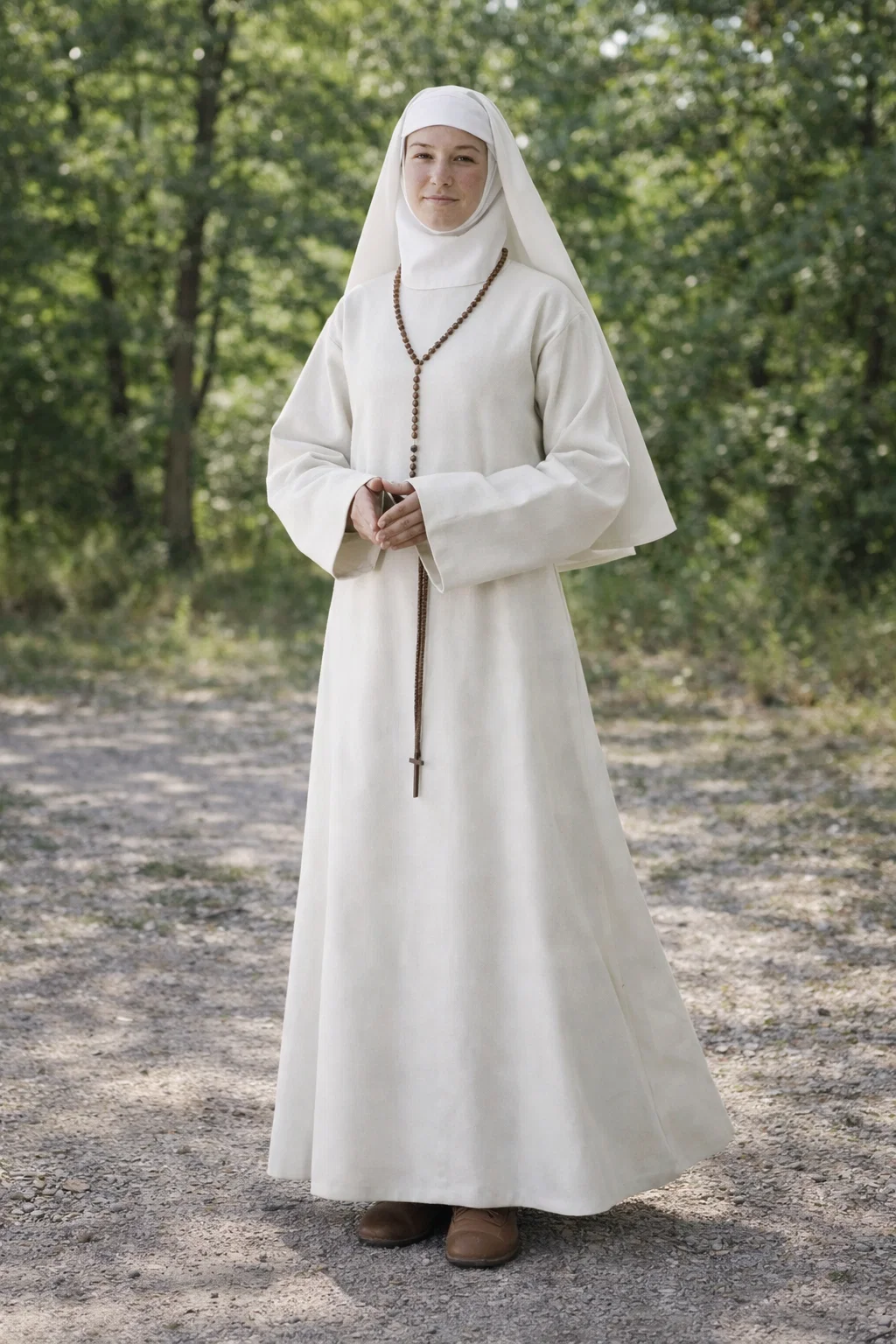
White is the color of contemplative life across much of the Western monastic tradition. Cistercian sisters, Norbertine canonesses, some Dominican nuns and a number of newer contemplative communities wear it as an outward sign of consecration and of the resurrection life the enclosure points toward. Undyed wool was the original cloth, which is why the traditional white is a warm natural rather than a bright bleached one.
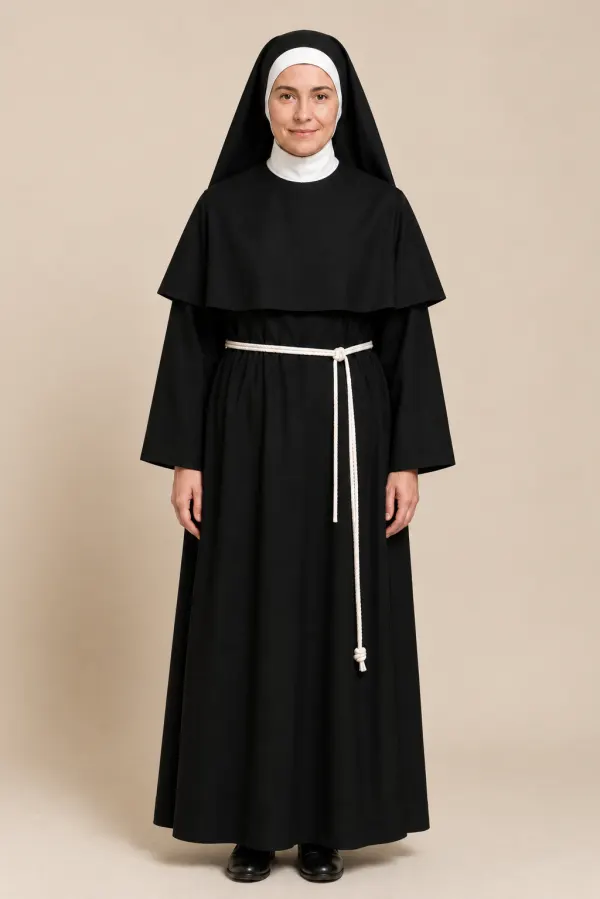
This habit is cut in that tradition, deliberately simple in the medieval manner. It suits communities that keep a white habit as their choir dress, contemplative sisters and nuns in formation, and consecrated women, private oblates or third order affiliates whose rule of life calls for a full monastic habit rather than a working single-piece garment.
The Three Pieces and How They Work
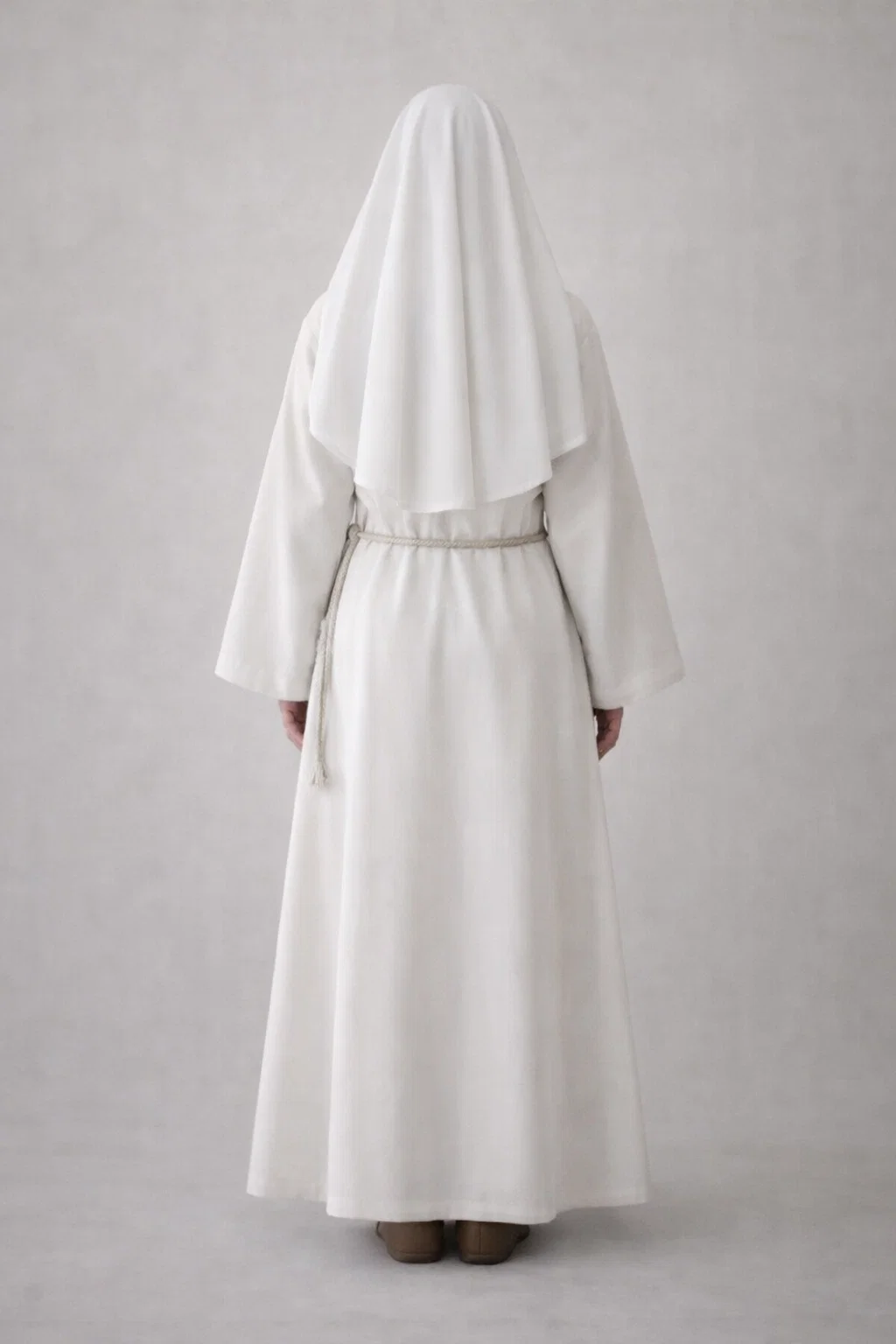
The tunic is the base garment and the main piece. Full length to the ankle, cut with a natural A line through the skirt and gathered at the waist by the cincture. The sleeves are wide bell sleeves cut long enough to cover the wrists in choir, which is the traditional monastic length. The back is a single unbroken panel, and the neckline is finished plain so the coif sits against it cleanly.
The rope cincture is a plain twisted cord tied at the waist, knotted to the left with the ends falling to mid thigh. That closure is what defines the silhouette. Without it the habit is a straight fall from the shoulder; with it there is a shape at the waist and the sleeves catch the light differently. Rope is the traditional cincture material for monastic and mendicant habits, and it is what marks this out as contemplative dress rather than as an apostolic habit.
The veil sits over the coif and falls to mid back on both sides. The coif is a fitted piece that covers the head and frames the face, showing as a clean white band at the forehead and along the jaw. Together the veil and coif keep the whole head reading as one composed silhouette in the traditional monastic manner.
The rosary shown around the neck is personal to the wearer and is not included with the habit.
Cut, Fabric and How the White Behaves
The tunic is cut with ease through the bust and hip, closed shoulder and side seams, and armholes cut deep for the bell sleeve. The back carries a single center seam. There is no waist seam in the cloth itself, since the shape at the waist is made by the cincture rather than by tailoring.
Every piece is cut from a lightweight tropical fabric. In a full-length white habit worn through the choral hours the weave matters twice over: it moves air, which keeps the habit wearable through long offices and warm summers, and it holds the white clean and even rather than picking up every shadow.
The face is matte. A white in a cloth with sheen glares under sanctuary lighting and reads uneven on camera. A matte white stays soft and even in daylight, under warm sanctuary lighting and on video, which is why matte is the traditional finish for contemplative dress.
Care: white cloth stains more visibly than dark cloth, so treat spots quickly and wash on a gentle cycle in cold water with a mild detergent. Hang to dry rather than tumbling. Steam all pieces lightly on a hanger before wear. Store separated from any dark cloth to protect the tone.


There are no reviews yet. Be the first one to write one.