
What the Cape and Fascia Are Doing
Most red cassocks are sold bare. You then spend weeks hunting a cape in a red that does not fight the cassock, and a fascia that does not fight the cape. The Ignatius removes that problem by shipping as one set, cut from a single bolt.
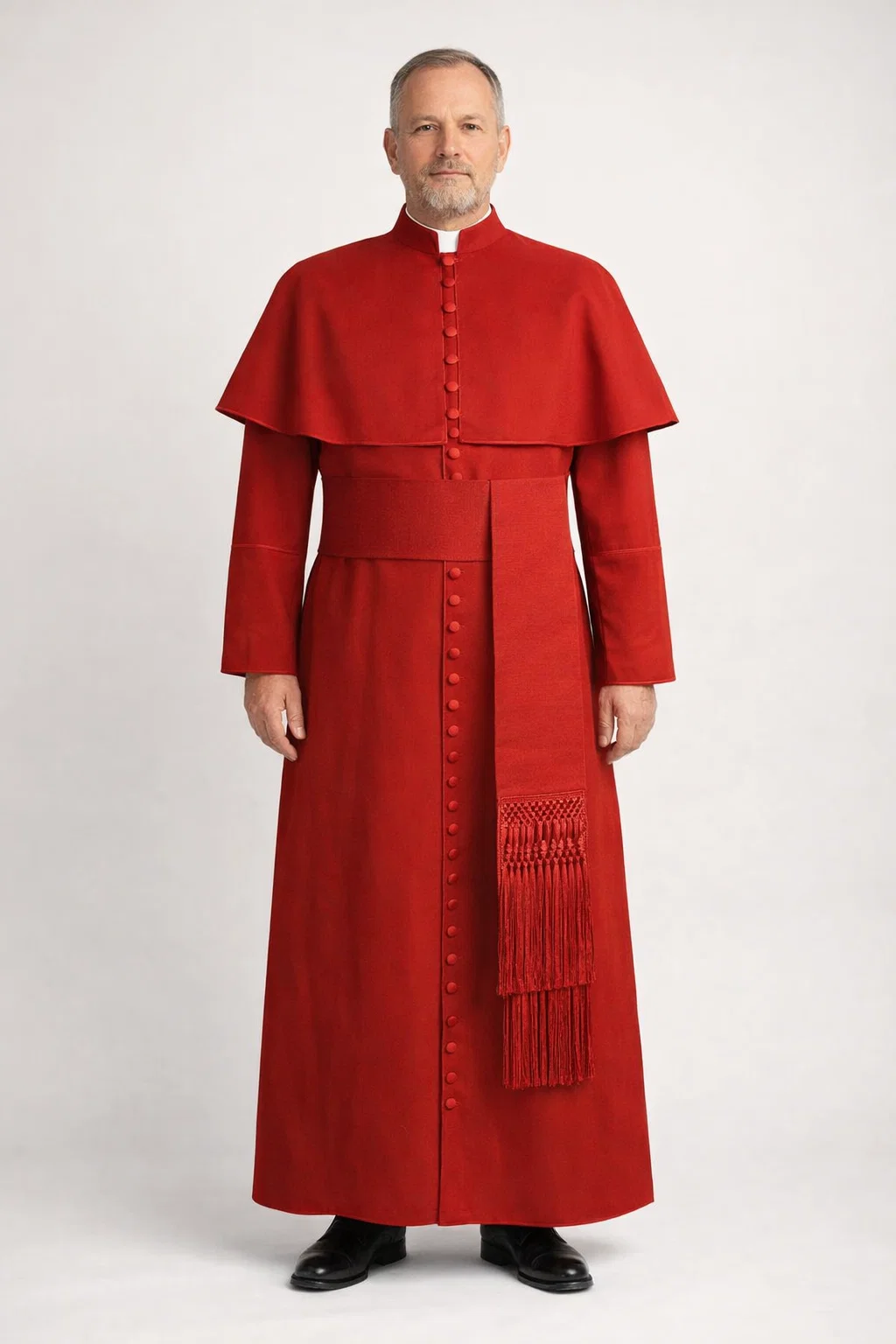
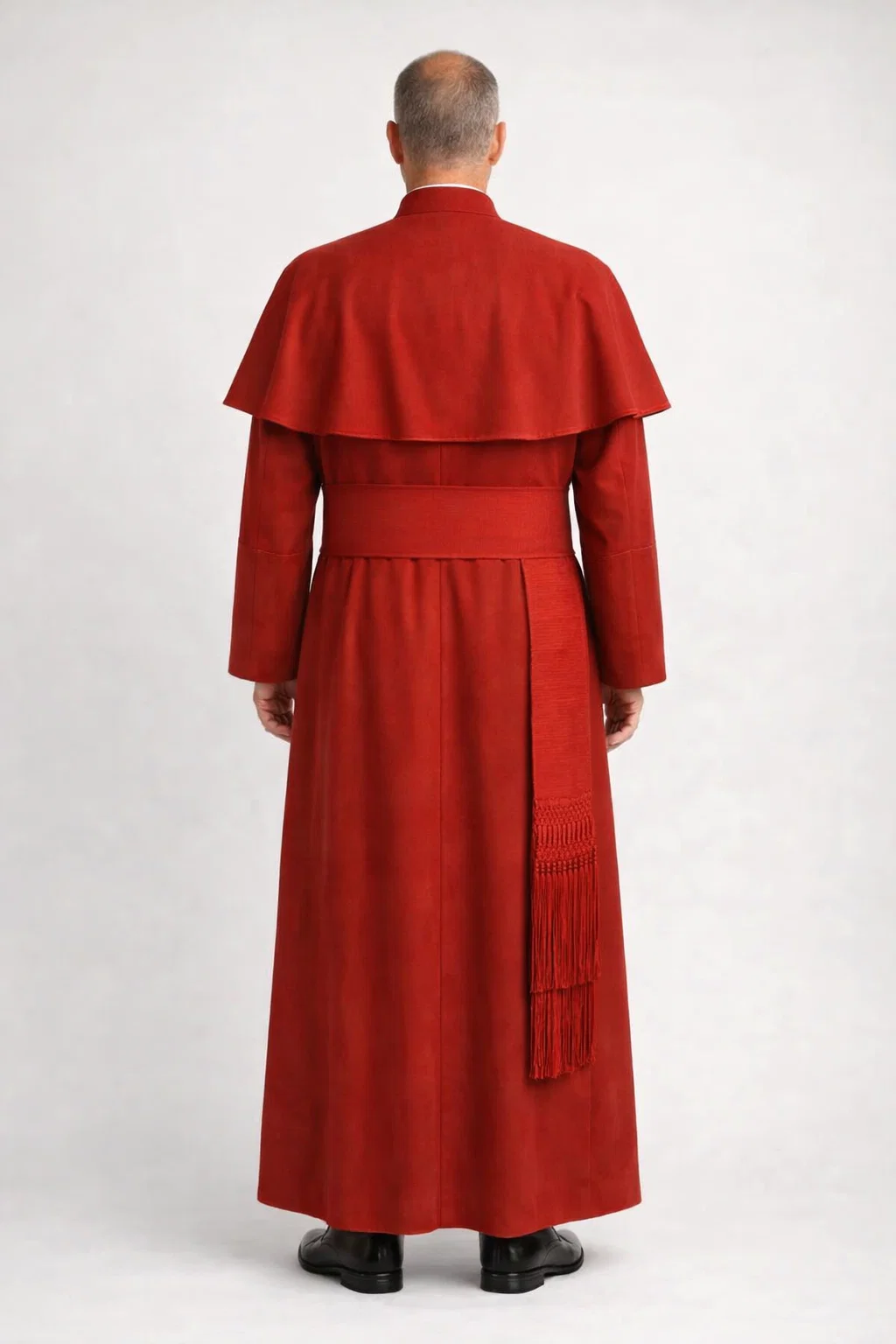
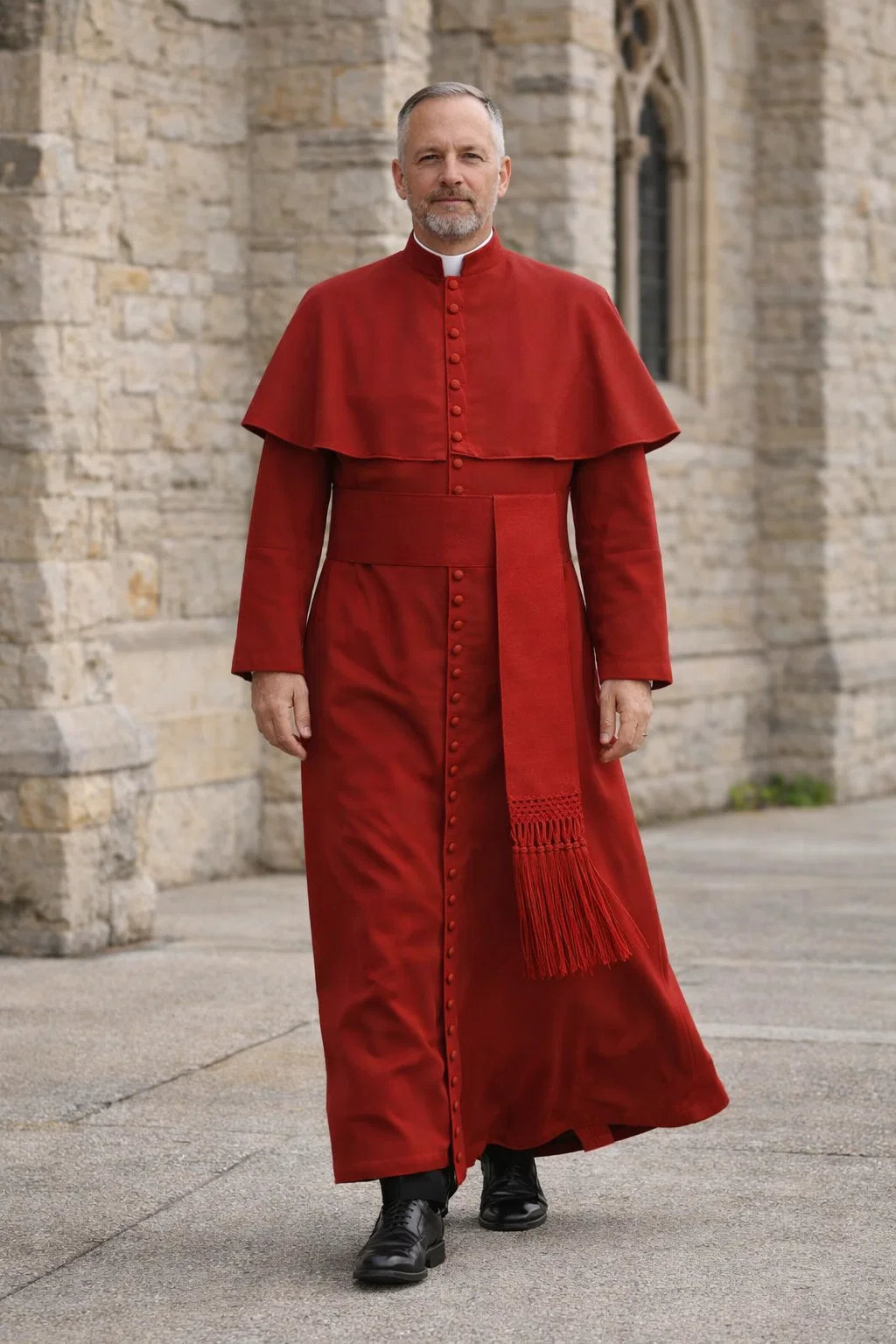
The pellegrina, the short shoulder cape, falls to mid upper arm and sits at the collar line so it moves with the shoulders instead of sliding across the back. From the nave it reads as weight and presence. It is the element that separates ceremonial dress from working dress, which is why a plain cassock and a caped cassock are not interchangeable garments.
The fascia is the wide waistband, worn with a long fringed tail falling on the wearer’s left. It is doing structural work rather than decorative work. It gives a waist to a garment that would otherwise hang as one unbroken column, and it holds the front placket flat through a procession.
Tropical Fabric, Cut and Construction
The Ignatius is made from a breathable and comfortable tropical fabric in a deep, saturated red. Tropical weight is the reason this cassock is wearable in July as well as November. The weave is open enough to move air, so it stays comfortable through a full service in a warm sanctuary, while still carrying enough body to hold the line of the skirt without constant pressing. The face is matte, so the color stays true under altar and stage lighting instead of throwing shine.
Fabric-covered buttons run collar to hem in matching red, the traditional Roman full-button front. Sleeves finish in deep turn-back cuffs. The stand-up collar is interfaced for shape retention and cut to hold a standard clerical collar insert. The bodice is lined, the skirt is panelled and released from the waist seam for processional movement, and two pockets sit in the side seams below the fascia line. Internal seams are bound and reinforced at the underarm and at the pocket openings.
Care: dry clean recommended. Steam on a low setting rather than pressing hard. Lay the fascia flat and comb the fringe out by hand.
Who Wears It, and an Honest Note on Rank
A red cassock with cape and fascia is established cathedral and ceremonial dress in the Anglican tradition, including Chapel Royal and Royal Peculiar clergy, cathedral chaplains and lay clerks, and choral foundations that use scarlet. It sits equally well in COGIC, Pentecostal and independent episcopal traditions, where red is worn for consecrations, convocations and anniversary services. For anyone following the liturgical calendar, red is the color of Pentecost, Palm Sunday, the feasts of martyrs, and ordination and confirmation rites.
One thing worth saying plainly, because most sellers leave it out. In Roman Catholic practice, a scarlet cassock worn with pellegrina and fascia is tied to particular ranks rather than being general clergy wear. If you are buying inside the Roman rite, check the form against the norms of your own diocese before ordering. At Clergyss we would rather answer that question first than process a return later.

There are no reviews yet. Be the first one to write one.