The Gap This Fills
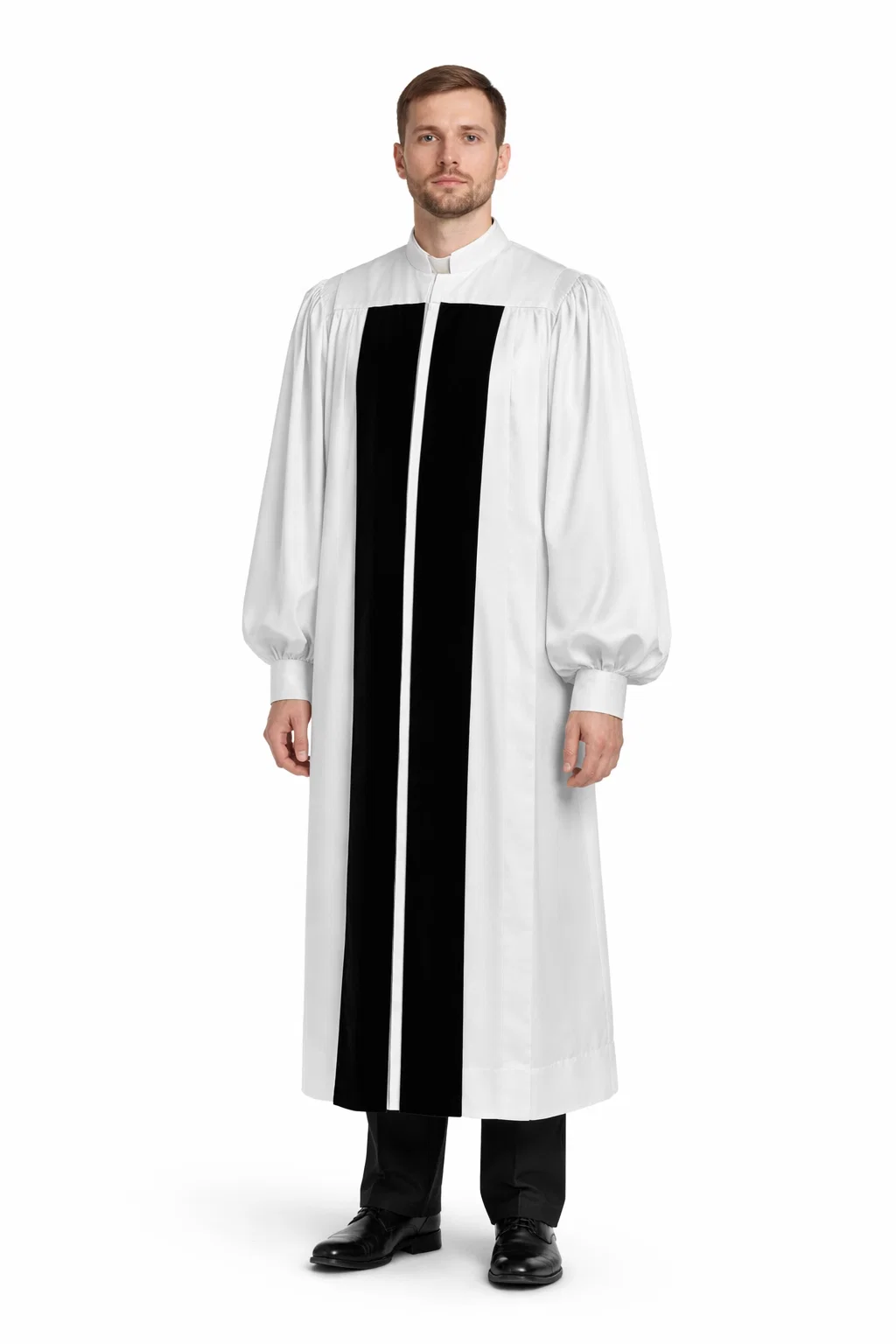
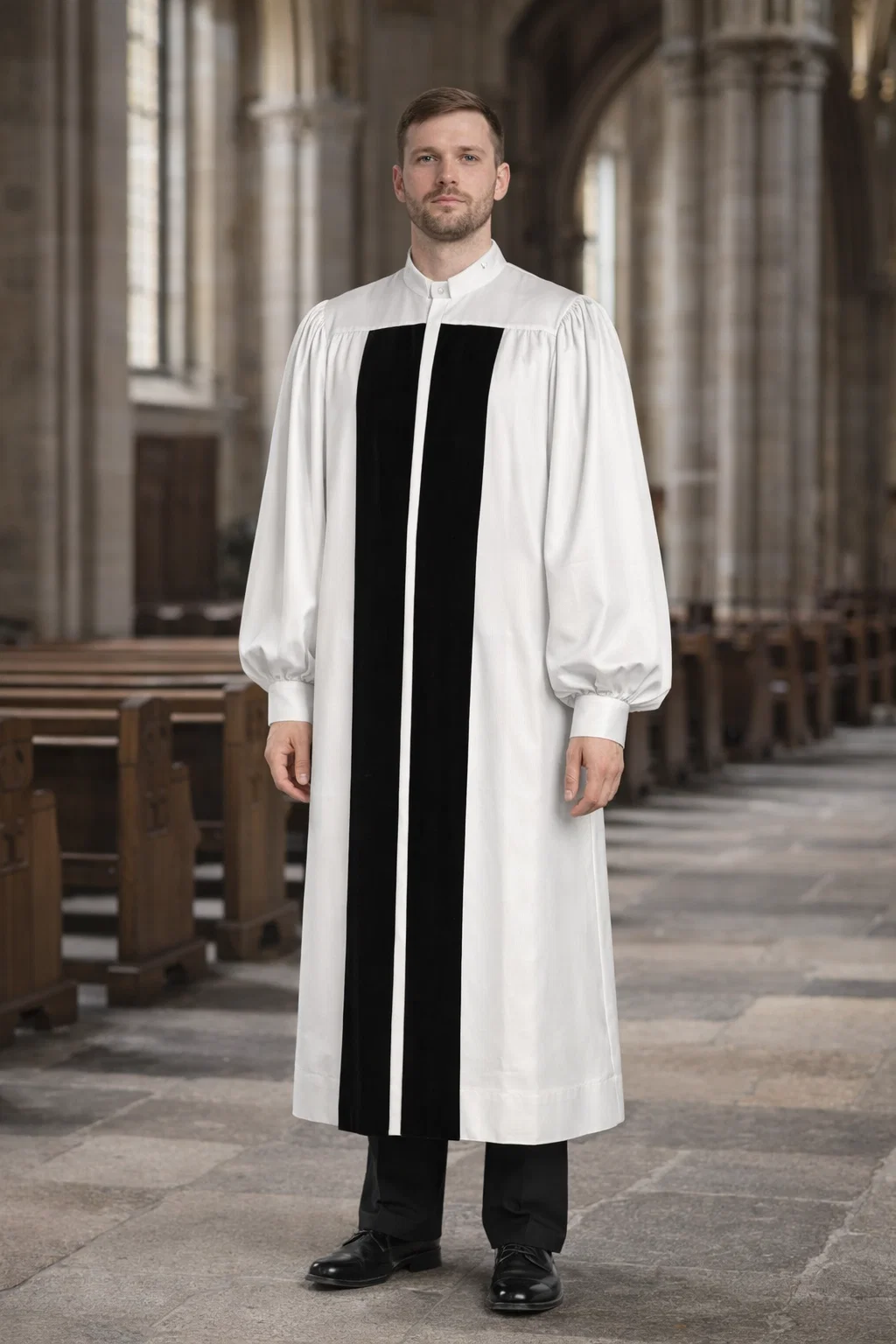
There is a difference between a robe that looks like clergy dress and a robe that reads as a statement. The Luminara is built for clergy who want formality without looking backward, who value presence and intention over ornament. The black panel is not decoration. It is a declaration: this is vestment, this is formal, this is intentional.
The Luminara fills the gap for traditions that want contemporary form with formal substance. It works at the altar and in processions. It reads as modern and confident without sacrificing the weight and presence of vestment. The flowing sleeves and gathered fullness give it movement and presence. The black panel gives it focus and clarity.
The White and Black, Specifically
The white is a pure, true white. No cream, no ivory, no warmth. It photographs cleanly and holds steady under any lighting. The black is a deep, true black: solid and unadorned, so the contrast with the white is stark and clean.
Black is not a liturgical color in the traditional sense, but black and white together read as formal, contemporary, and intentional. The Luminara works in traditions that appoint white for formal occasions and want a modern aesthetic. It works for ordinations, installations, confirmations, and formal services where the boldness of the design signals the significance of the occasion.
Fabric, Cut and Details
The Luminara is made from tropical suiting fabric: a blend that combines structure with breathability. The weave is tight and holds a smooth drape, resists wrinkles through hours of wear, and moves air so the robe stays fresh even in a packed sanctuary.
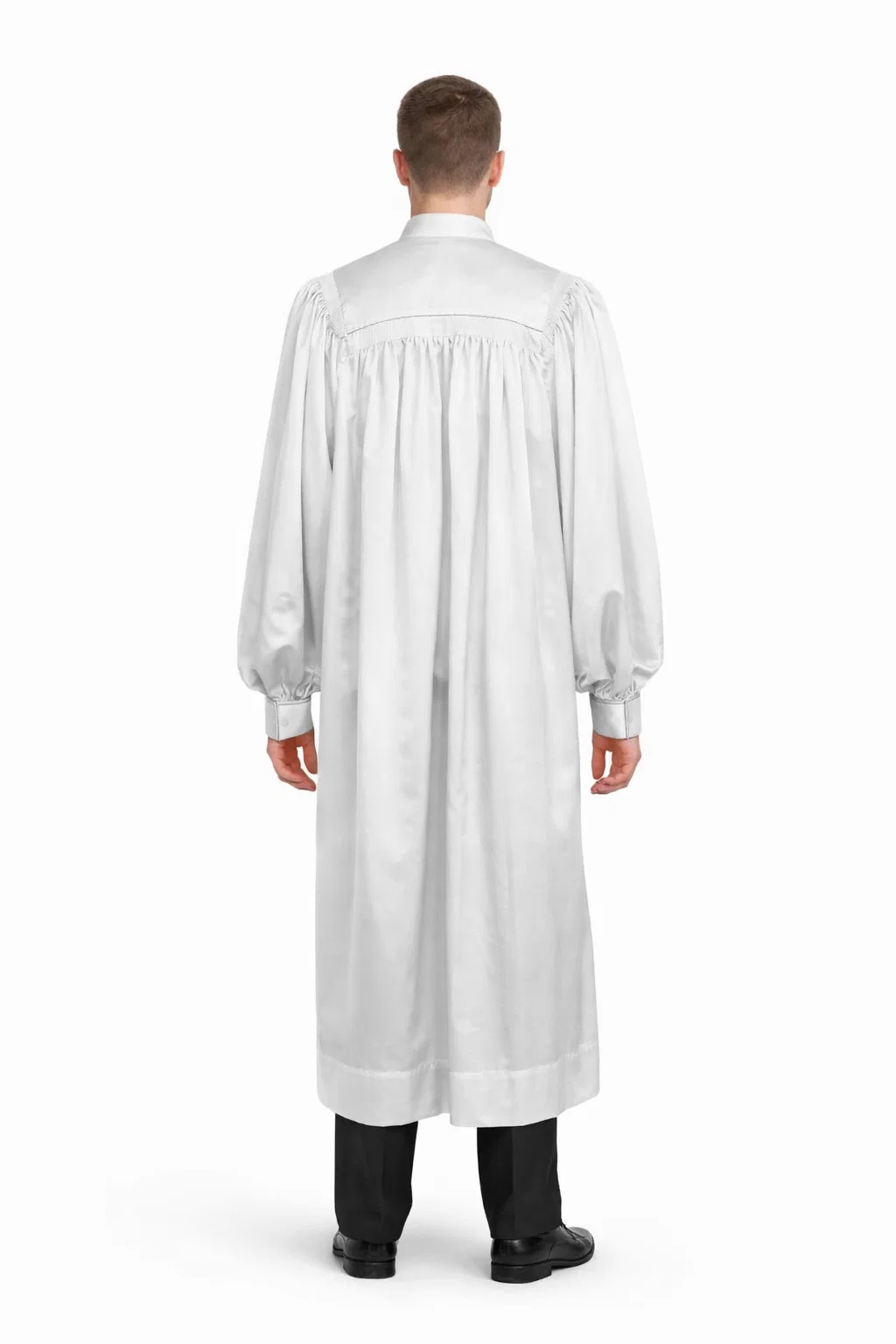
The body is cut with generous gathered fullness through the front and back, so the robe hangs with presence and movement. The black panel runs the full length from neckline to hem, centered on the front closure. The panel is cut as a separate piece and inset into the white body, so the contrast is clean and sharp.
The sleeves are true bell sleeves: cut wide at the shoulder and tapering from elbow to wrist, so they frame the arms and hands without restricting movement. The cuffs are finished with a narrow band at the wrist. The mandarin collar stands structured and clean, finished so it sits smoothly at the neck.
The front opens with a single row of buttons running the length of the black panel, positioned so they sit clean against the black. The hem falls to the ankle, with side seams that hang straight and gathered so the fullness of the back drapes rather than swings. The center back vent is cut generous for sitting and movement.
Care: dry clean recommended for formal wear. If you launder at home, wash cold on a gentle cycle, hang to dry, and steam lightly. The tropical suiting sheds wrinkles quickly and holds its shape well.
Where It Belongs
The Luminara belongs in traditions that value formal vestment with contemporary aesthetic. At the altar for Christmas, Easter, and high feast days when white is appointed. For ordinations, installations, confirmations, and formal services. In formal processions where the boldness of the design signals the significance of the moment.
The robe is worn as a complete vestment on its own, or paired with a stole. It can be worn under a cope for even more formal occasions.
The Luminara is not a working garment. It is vestment for formal occasions and liturgical services where you mean to be fully dressed as clergy. If you need a robe for daily work or pastoral visits, the Albaris is built for that. The Luminara is for the altar and formal ceremony.