
What Color Is This, Exactly
Worth answering carefully, because this one gets misidentified more than anything else in the line.
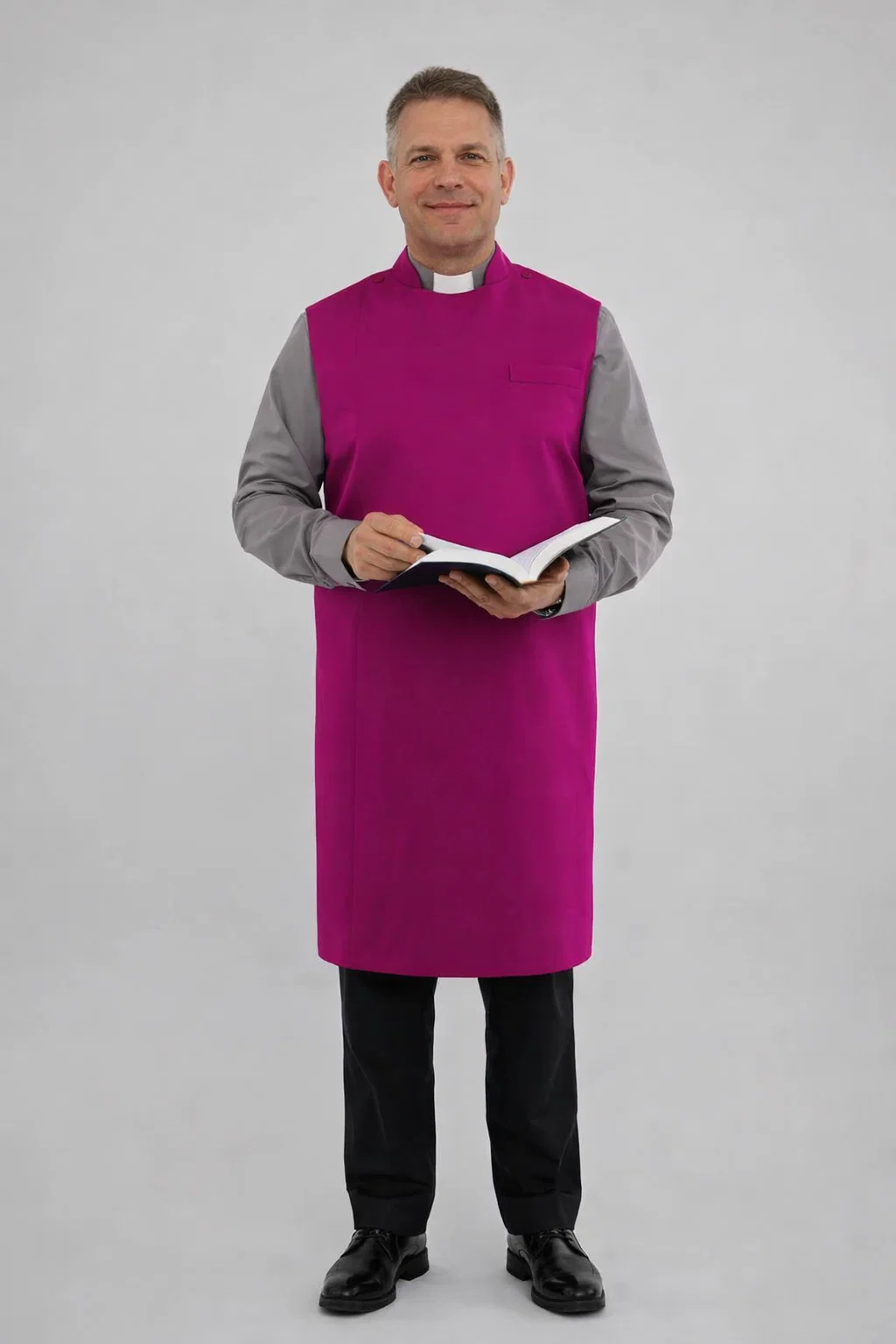
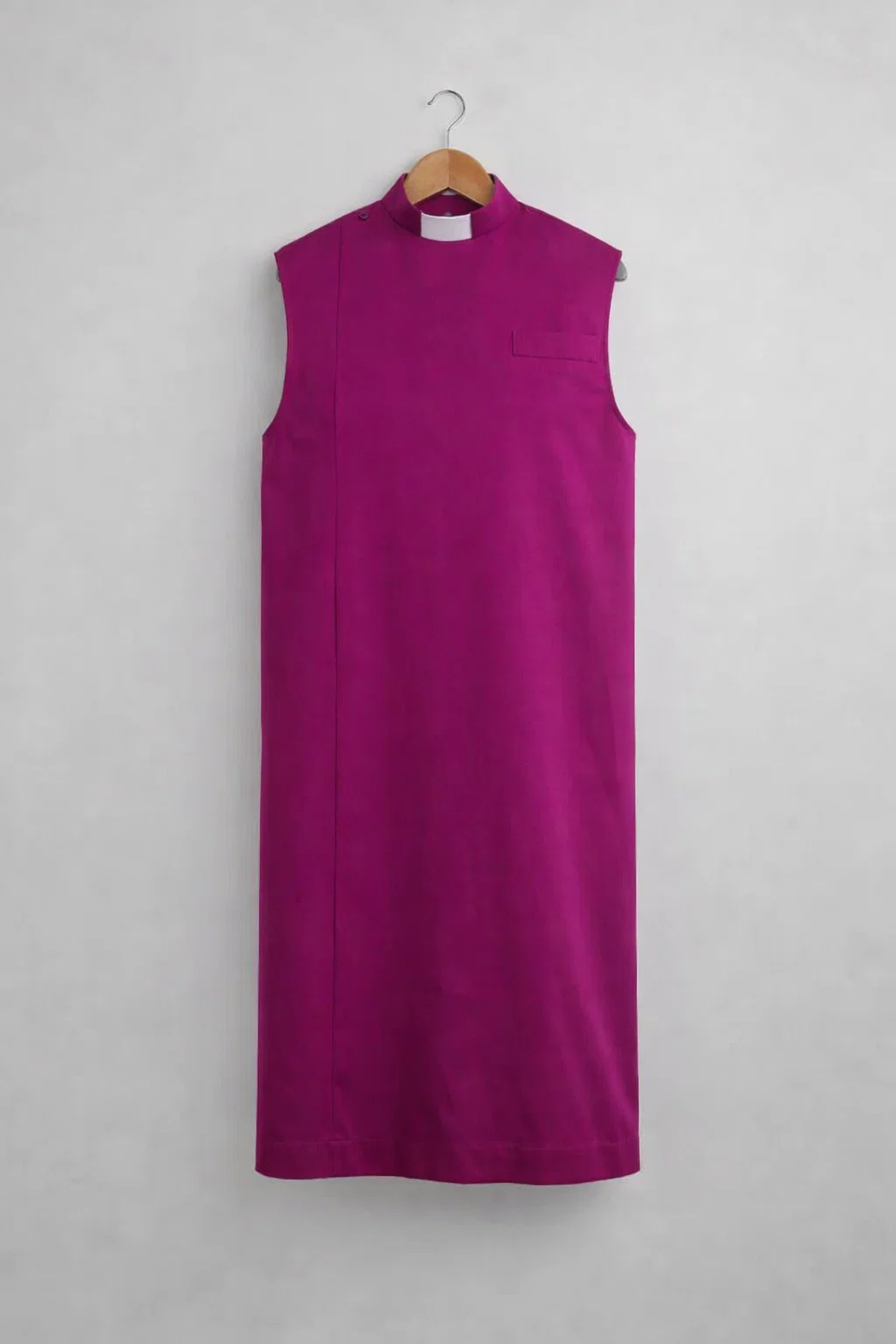
Measured, the cloth sits at #7F1055. That is hue 323, which places it between red and purple on the wheel, with saturation running near eighty percent and the value dropped well down. In plain terms, a deep fuchsia, often called magenta, closest in family to the amaranth used in some clerical dress but darker and considerably more saturated than it.
Here is what it is not, and this part saves returns. It is not liturgical rose. Rose is the pale, dusty, low saturation pink worn on exactly two Sundays in the year, Gaudete in Advent and Laetare in Lent. This is nowhere near that. Set the two side by side and the gap is not subtle. If you are buying for those two Sundays specifically, this is the wrong garment.
It is not purple either. Our violet and royal purple pieces measure at hue 256 and 273. This one sits fifty degrees further around toward red and runs close to twice as saturated. It will not read as purple in a tradition that treats purple as a season or as a rank.
So this is a deep fuchsia apron rather than a rose or a purple one, and the difference is worth settling before you order. What it does bring is presence. Colors in this register are worn widely across COGIC, Pentecostal, apostolic and independent episcopal traditions, where clergy and bishops dress outside the Western liturgical calendar and choose by impact rather than by season. In that context this sits squarely where it should.
Buttoned at the Shoulder
A small covered button sits at each shoulder beside the collar. On a garment carrying its own collar band, the shoulder is the useful place for a fastening, because it lets the neckline open instead of forcing a stiff collar and insert down over your head.
A single vertical seam runs off center down the front panel. That is a quiet detail on an otherwise plain garment, but it earns its place. It breaks up a wide flat expanse of strong color and gives the eye a line to follow, which stops the front reading as a slab.
Length, Pocket and the Back Vent
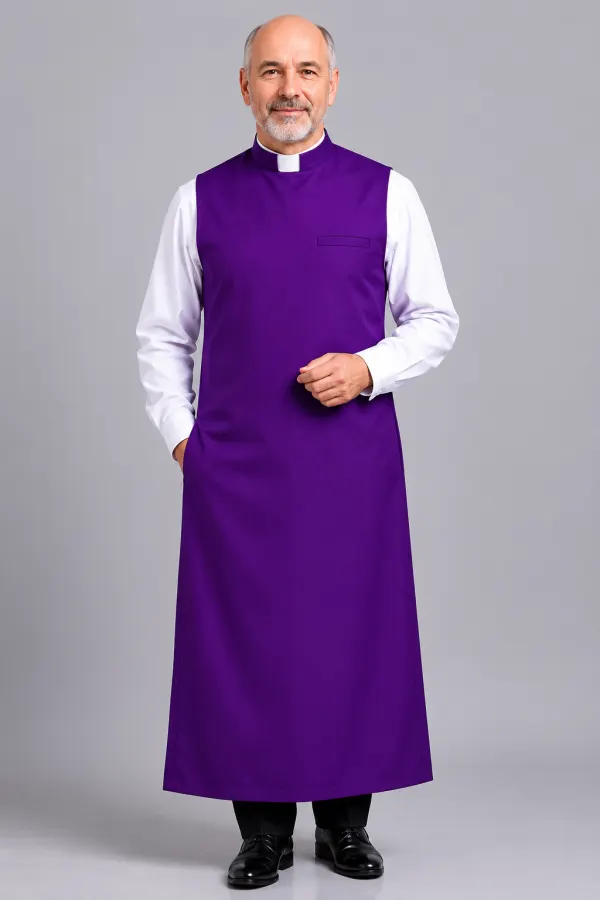
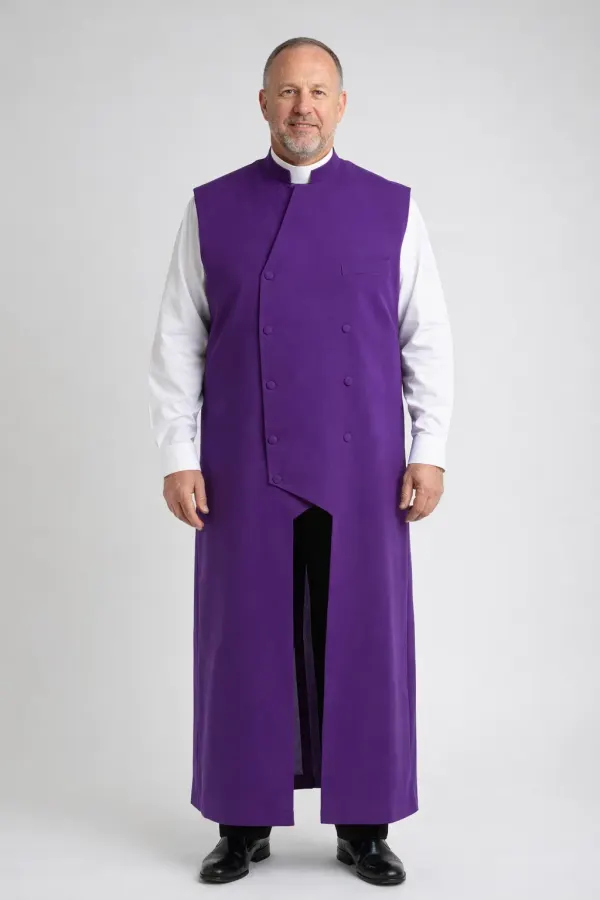
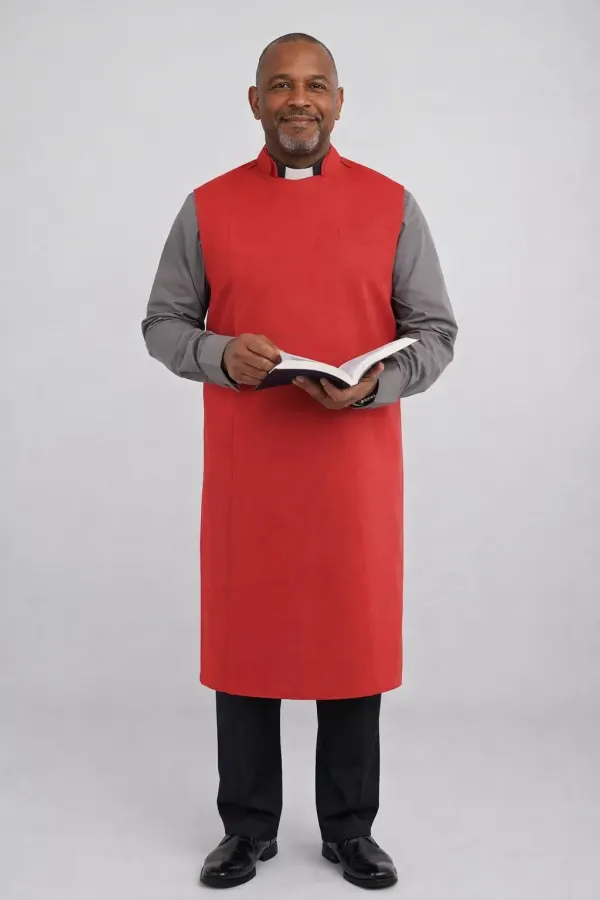
The hem falls below the knee toward mid calf. That is the length that reads as vesture from the front while staying practical for stairs, car seats and folding chairs.
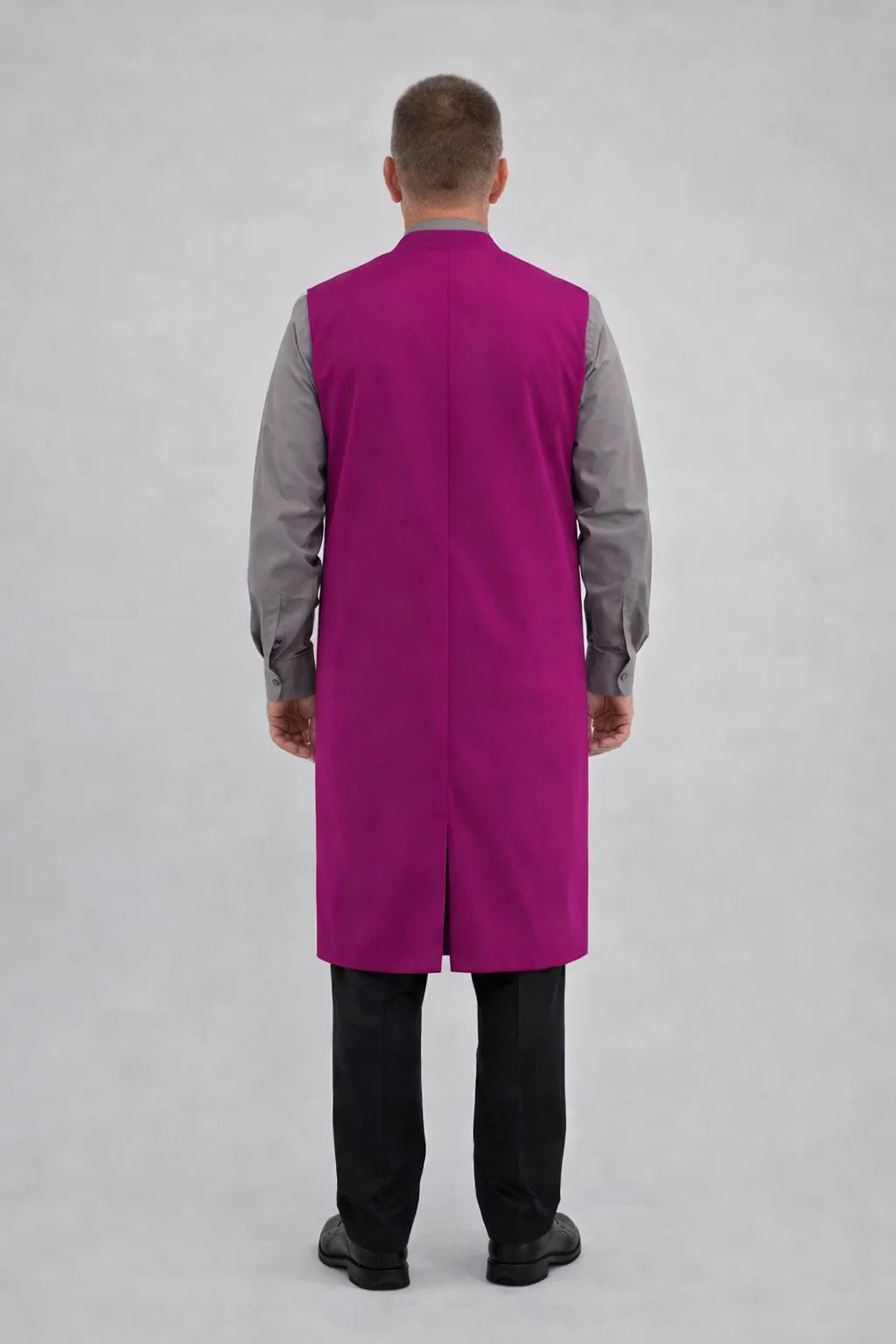
The body is cut straight, shoulder and side seams closed, armholes deep and cleanly finished. A welt pocket sits at the left chest, set into the panel rather than applied on top, which keeps the front line uninterrupted. A center back vent runs up from the hem so you can walk at pace and sit down without the panel binding across the back.
Fabric and Care
Soft quality tropical fabric, lightweight and comfortable across a long service. The face is matte, and on a color this saturated that choice does more work than it would on a neutral. Strong fuchsia in a cloth with sheen picks up every highlight and reads patchy under stage lighting. A matte surface keeps the panel even from any angle.
Care: dry clean recommended. If you launder at home, wash cold on a gentle cycle and hang to dry, and keep strong colors separate for the first few washes. Steam on low rather than pressing hard.
There are no reviews yet. Be the first one to write one.