
Description
What This Robe Is
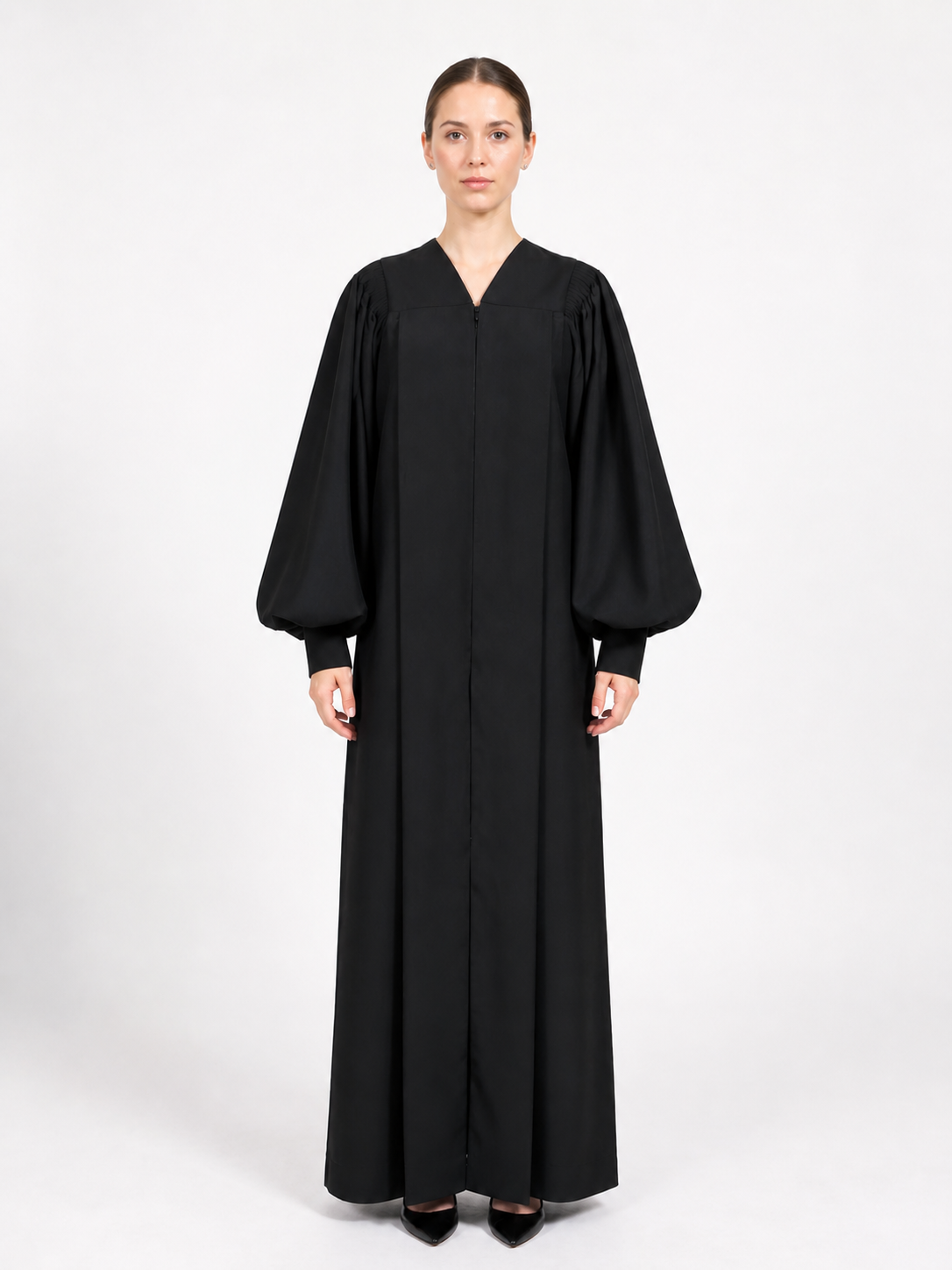
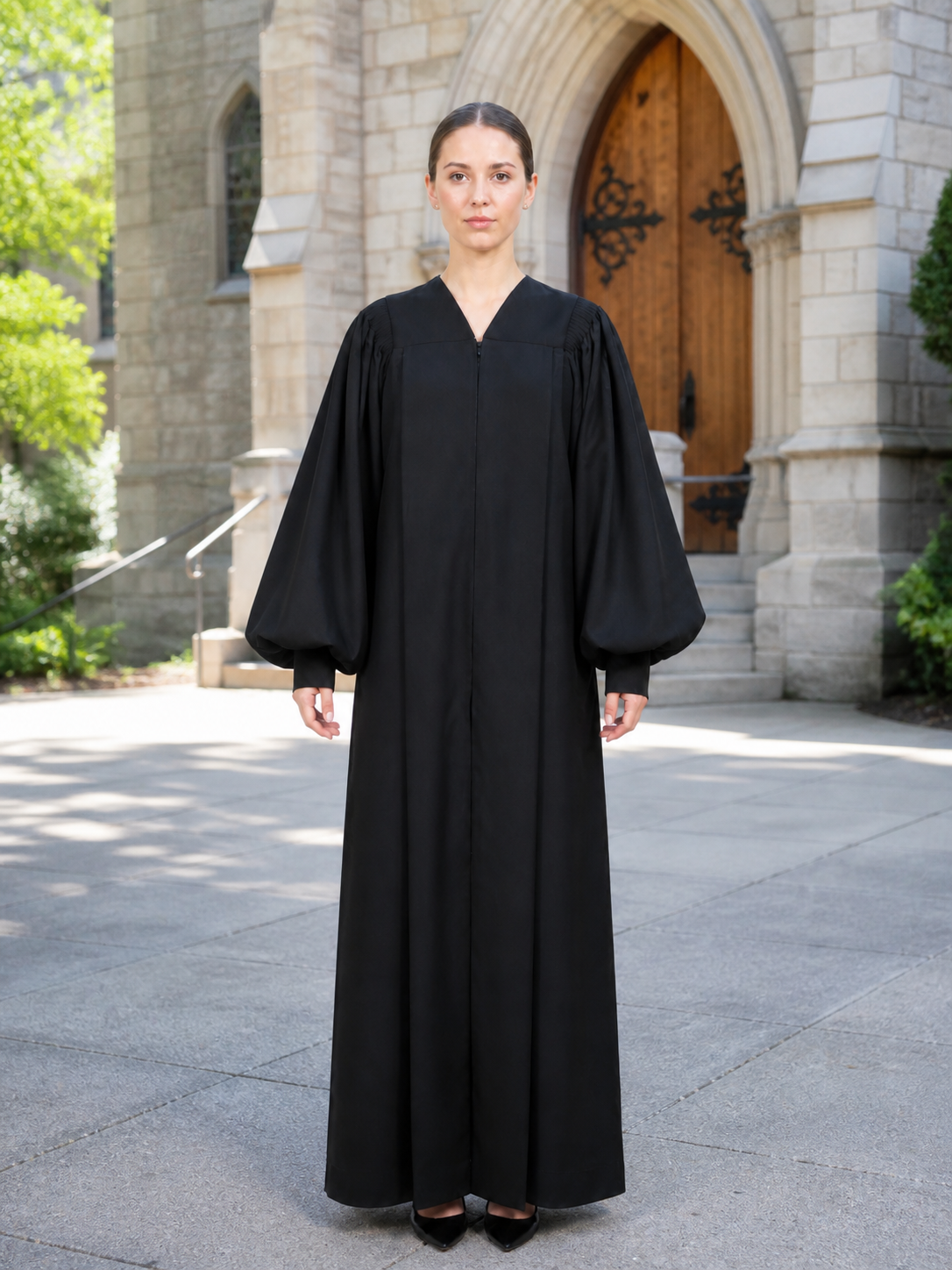
The Noctavia is the plain black pulpit robe in the traditional Reformed and Baptist silhouette, translated for women. No color contrast, no piping, no external trim. What you get is a full length black preaching robe cut on a fluted yoke, with generous bishop sleeves and a clean V neck at the front. Every design decision is subtractive rather than additive, and that is exactly the point.
This is the robe worn across the widest range of Protestant traditions in the United States and internationally. Baptist, Reformed, Presbyterian, Congregational, non denominational, independent, and evangelical churches all use a plain black pulpit robe as the standard vesture for the preacher, the deacon and the ordained minister. Without any denominational marker or rank symbol added, the Noctavia reads correctly in every one of those traditions.
It also serves as the neutral base robe for women who wear a stole, a preaching scarf or an academic hood over the top. The plain surface gives every one of those additions room to read as the visual element, without any competing detail on the robe underneath.
The Yoke and the Fluting
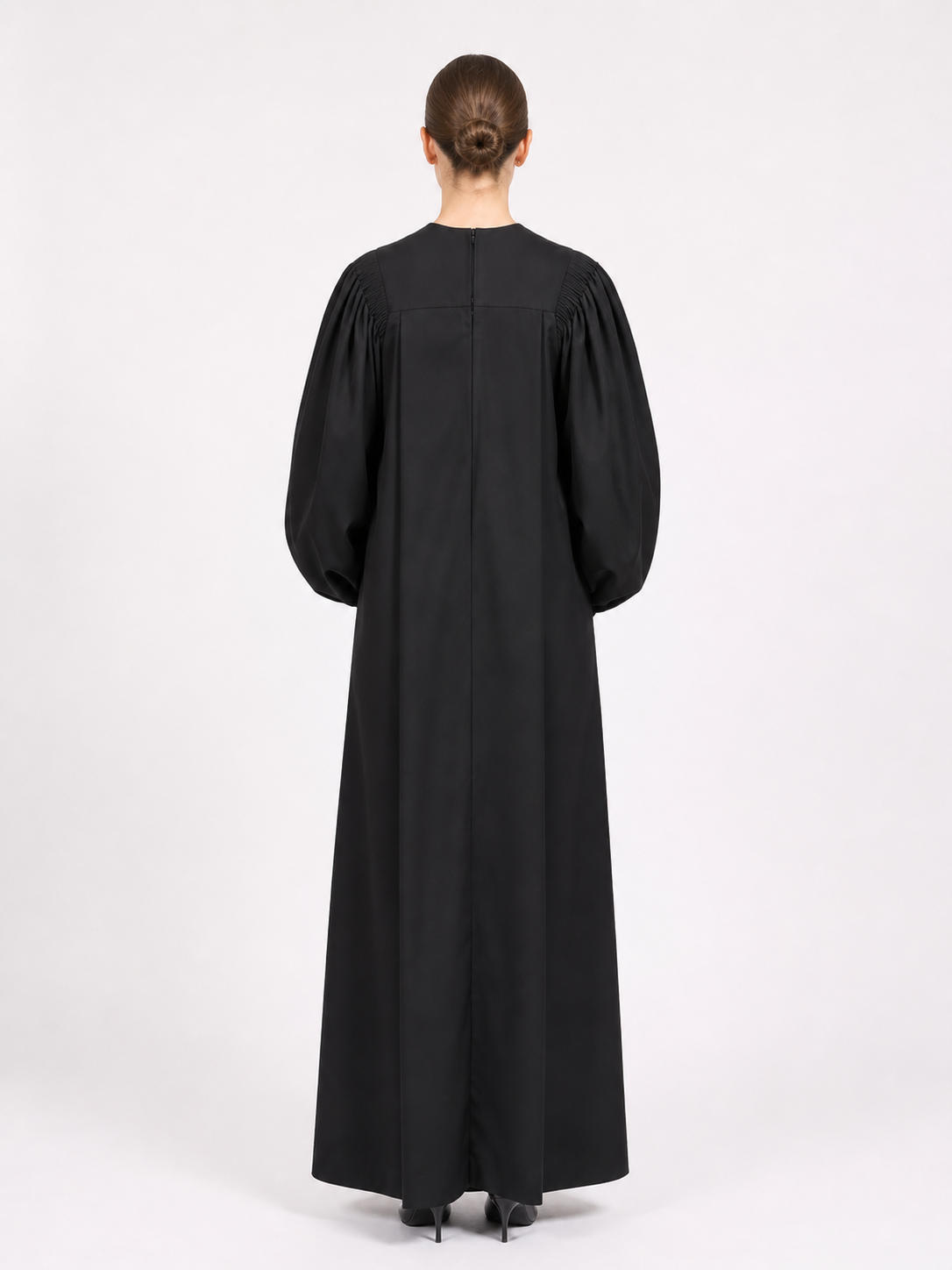
The yoke is the structural anchor of the robe. Cut in the same black cloth as the body, it sits across both shoulders and drops in a shaped line front and back. From the bottom edge of the yoke, the full body of the robe is gathered into deep pleats that flute down through the chest and open into the flowing skirt below.
Because the yoke and body are cut in the same black cloth, the fluting reads as pure texture and shadow rather than as color division. Under sanctuary lighting the pleats catch highlights and hold vertical rhythm across the chest, giving the robe presence and movement without introducing contrast that would compete with a stole or hood layered over the top.
The Bishop Sleeves
The sleeves are the second defining element. Cut wide and full through the upper arm and forearm in the traditional bishop shape, they gather at the wrist into a fitted cuff that closes smoothly against the arm. When the arms are lowered at the side, the volume of the sleeve drops in soft folds along the body. When the arms are raised in prayer, benediction or preaching, the full sleeve moves with the gesture and gives the robe presence in motion.
Bishop sleeves are the traditional preaching sleeve. They read as authoritative in the pulpit in a way that a slim tailored sleeve or an open bell sleeve cannot, and they hold the reading of the garment as vesture rather than as tailored clothing.
The Neckline and Closure
The neck is finished as a plain V facing at the front, without a stand collar and without a tab opening. That is the traditional neckline of the Reformed and Baptist preaching robe, cut deliberately to sit under a preaching scarf, a stole or an academic hood without any collar detail fighting the layer above.
The closure runs concealed down the center front from the base of the V to the natural waist, hidden inside the seam so the front reads as one continuous vertical line. A short center zip also runs at the back of the neck under the yoke for ease of stepping in and out.
Fabric and Care
Cut from a high quality lightweight tropical fabric. In a full length black pulpit robe with fluted body and bishop sleeves worn head to toe under sanctuary lighting for extended services, the weave matters twice over. Black cloth absorbs heat. A tropical weave moves air through the layers, which is the difference between a robe you can wear through a summer service and one you take off at the first free moment.
The face is matte throughout. A black in a cloth with sheen shows every crease and reads uneven on camera, while a matte black stays deep and flat in daylight, under warm sanctuary lighting and on video, which matters increasingly as more services are streamed and recorded.
Care: dry clean recommended. If you launder at home, wash cold on a gentle cycle inside out with a mild detergent for dark colors. Hang to dry on a padded hanger with the yoke supported so the pleats hang freely and the bishop sleeves keep their fullness. Steam lightly, do not press.
Sizing and Made to Measure
Standard sizing runs in four paired bands, XS/S through L/XL, with Plus 1X and Plus 2X for extended fit. Because a pulpit robe is cut with volume through the body from the yoke down, fit is measured at the shoulder and yoke rather than at the waist. If you sit between two bands, choose the band that fits your shoulder width best, since the body of the robe accommodates a range of figures below the yoke seam.
Made to measure accepts shoulder, bust, sleeve length and full length, with a lead time of about 3 to 4 weeks from confirmed measurements.
FAQs
Which traditions typically wear a plain black pulpit robe?
Baptist, Reformed, Presbyterian, Congregational, non denominational, independent, and evangelical churches across the United States and internationally use a plain black pulpit robe as the standard vesture for the preacher and the ordained minister. Without denominational markers or rank symbols, it reads correctly across all of these traditions.
Is this cut to be worn with a stole or preaching scarf?
Yes. The plain V neck and the tonal black body are cut deliberately to sit under a stole, a preaching scarf, an academic hood or any other layered vesture. The robe holds the base black, and the additional layer carries the color and symbol.
Does the collar take a clerical tab?
No, and that is intentional. The Noctavia is finished with a plain V neck rather than a stand collar, following the Reformed and Baptist preaching robe tradition. If you need a robe cut with a stand collar for a tab, one of our clergy dresses will suit better.
How does the sizing work on a pulpit robe compared with a tailored dress?
Sizing on a pulpit robe is measured at the shoulder and yoke rather than at the waist, since the body is cut with volume from the yoke down. Choose the band that fits your shoulder width best. The full body of the robe accommodates a wide range of figures below the yoke seam without adjustment.
There are no reviews yet. Be the first one to write one.