
Purple, and the Seasons It Belongs To
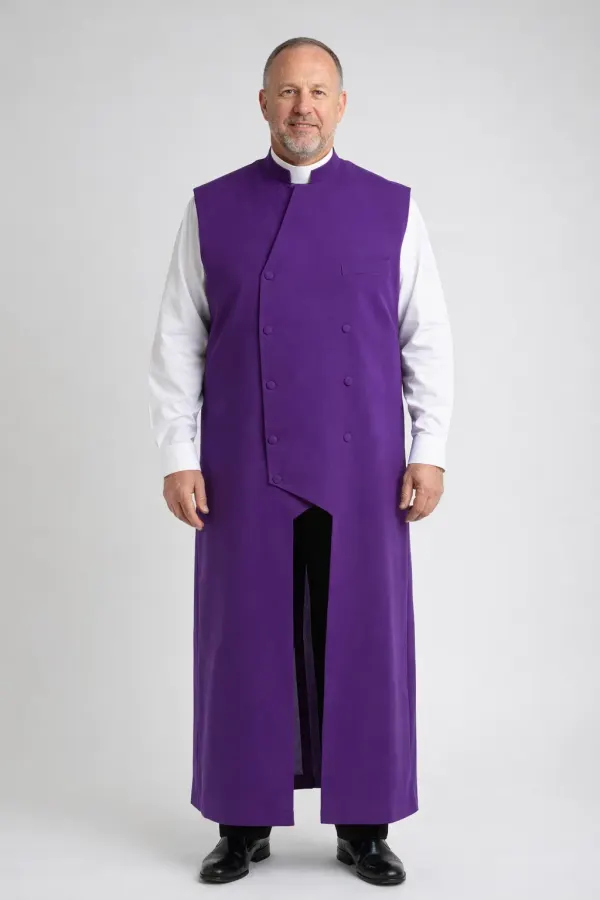
Purple is the color of waiting and repentance. It carries Advent and Lent, it covers penitential services through the year, and in many traditions it is worn at funerals where the emphasis falls on prayer for the departed rather than celebration. Confirmations and episcopal occasions bring it out again in churches that keep the calendar closely.
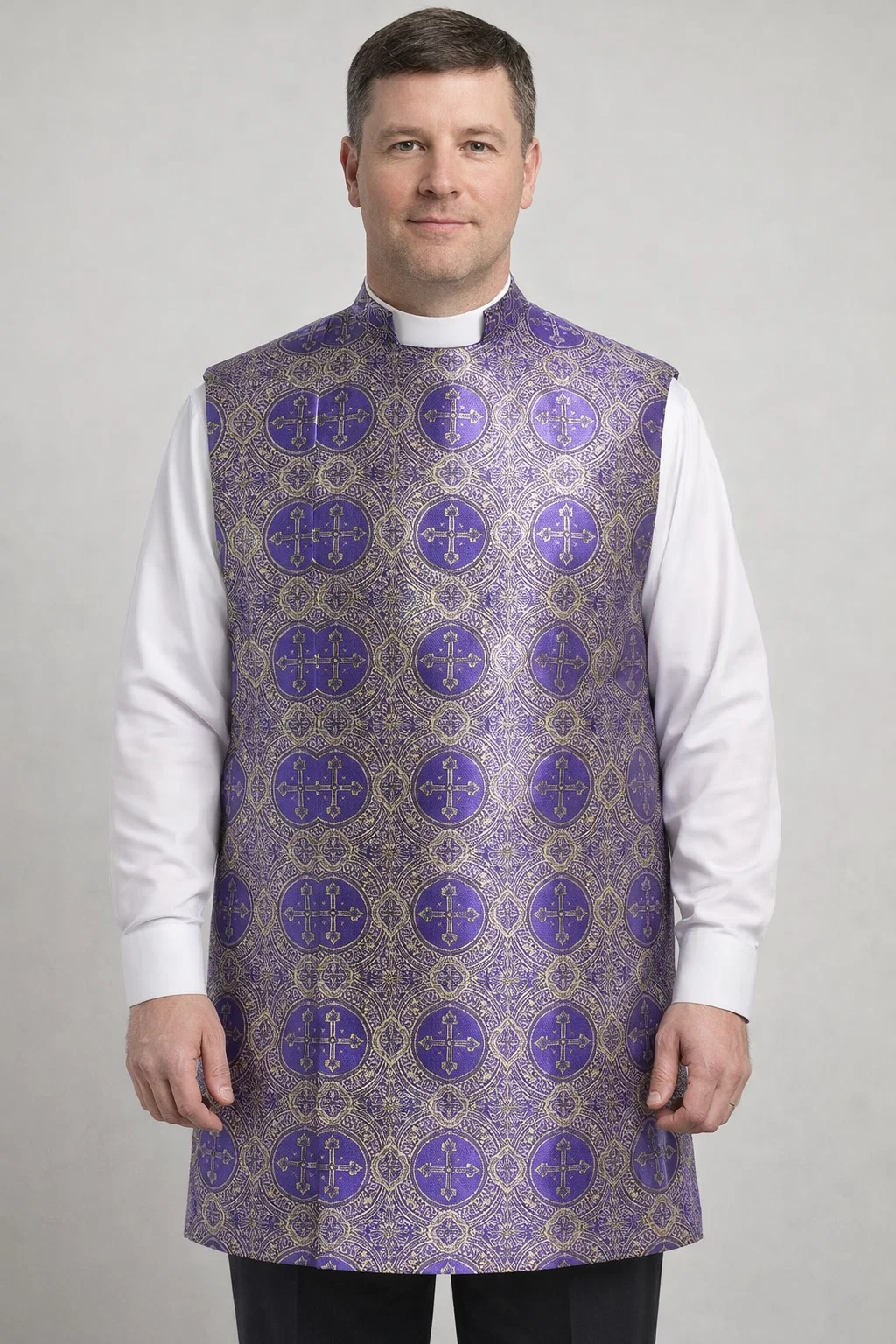
The violet here is a blue violet rather than a red toned plum or eggplant, which places it in the traditional Advent and Lenten register instead of the warmer purples used decoratively. Measured, it sits close to #574095. That distinction matters if you already own a purple stole, because plum and violet standing side by side read as a mistake rather than a set.
The Brocade: Violet Ground, Antique Gold
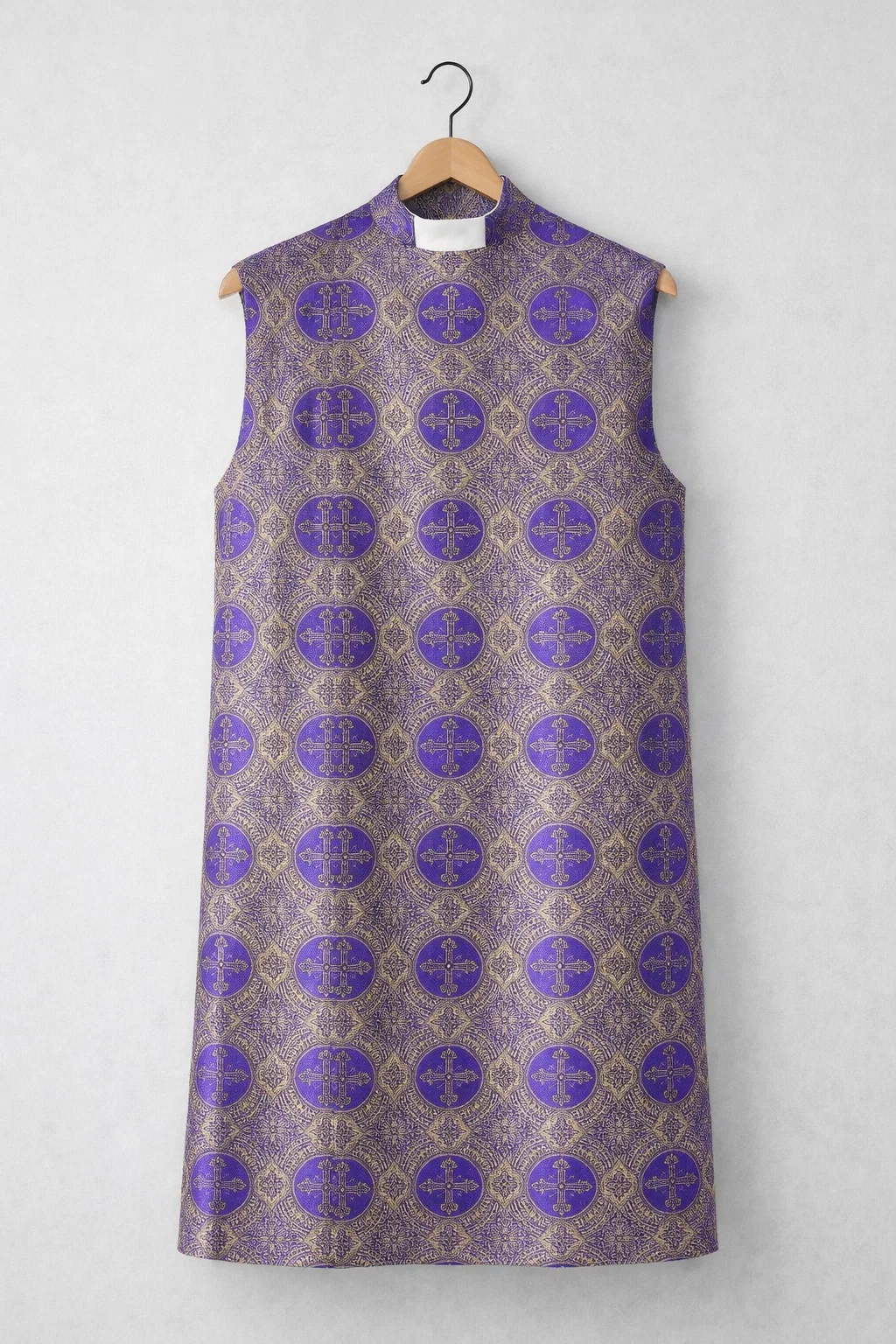
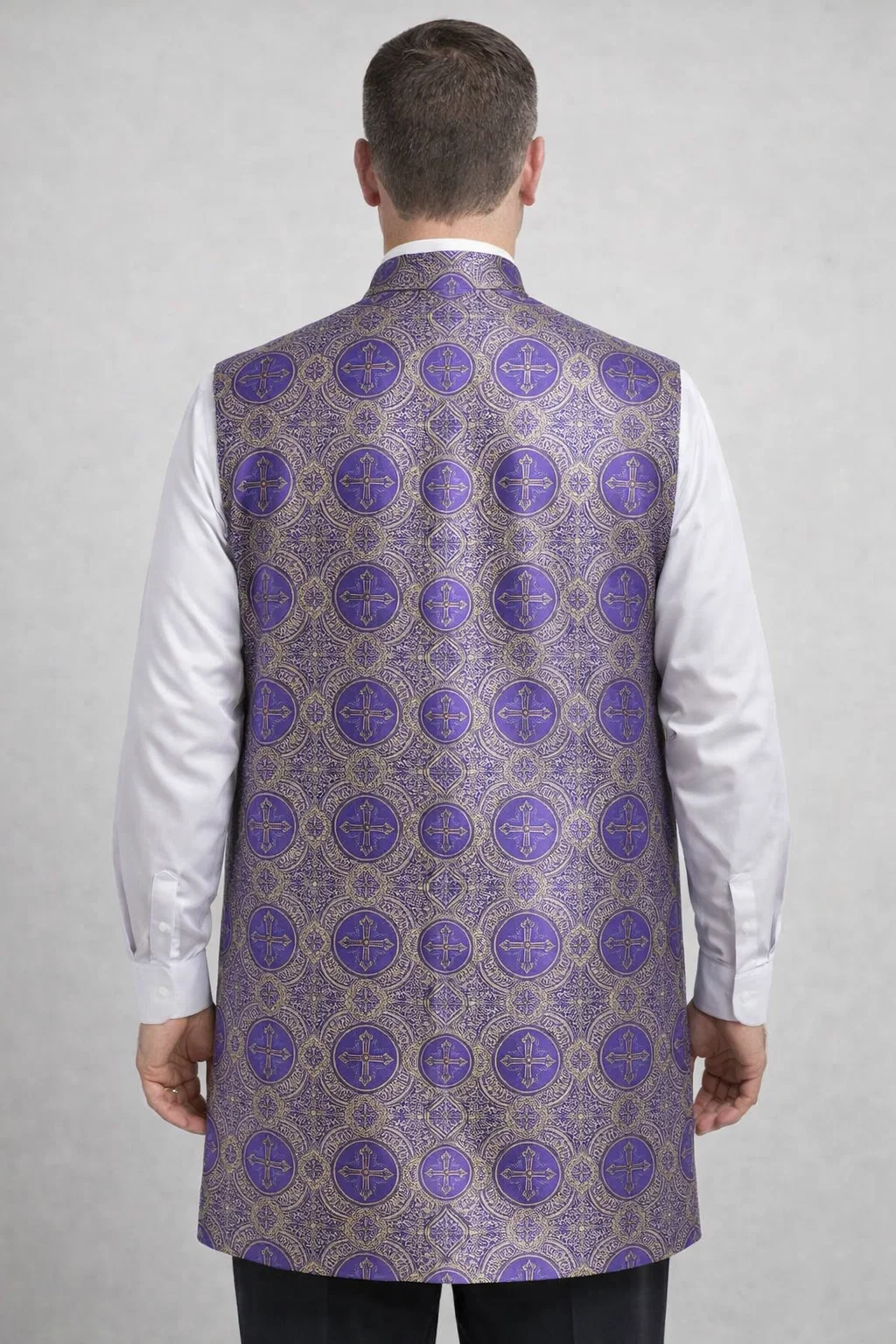
The pattern is a two color brocade woven through the cloth. Circular medallions carry ornate crosses in gold, and the ground between them fills with dense gold scrollwork, so almost no plain fabric shows anywhere on the body. The gold is an antique gold, warm and slightly muted at around #D0A379, rather than a bright brassy yellow. That choice does real work: brassy gold goes hard and cheap under camera flash, while antique gold holds its warmth.
This is the loudest piece in our apron line by some distance. The others use tone on tone weaves you read as texture. This one you read as pattern from the back of the room. Choose it knowing that.
Cut, Length and What It Pairs With
The Operis is short. The hem falls at mid thigh rather than mid calf or the ankle, and that changes what the garment is. It wears as a tunic over a clergy shirt and trousers instead of standing in for a cassock. At a lectern or on camera it fills the frame from collar to hands, which is where attention goes, without the visual weight of a floor length garment.
The body is cut with a light A line so it skims rather than clings. Shoulder and side seams are closed, armholes are deep and cleanly finished, and the banded stand collar is interfaced to hold a standard clerical insert. There is no button placket, so the medallion grid runs unbroken from collar to hem.
White shows this fabric best. The white clergy shirt in the photographs lifts the gold and stops the violet from sinking. Black works and reads more formal, but it pulls the whole outfit darker.
Fabric and Care
The base is a soft quality tropical fabric, lightweight and comfortable through a long service, with the brocade woven into it rather than laid on top. Light weight matters more here than it sounds like it should, because densely patterned cloth is usually heavy cloth, and a heavy short tunic sits badly across the shoulders.
Care: dry clean only. Never press the brocade directly. Metallic thread scorches and flattens under a hot iron and the shine does not come back. Steam from the reverse at low heat with the garment on a hanger, then let it hang and settle.
There are no reviews yet. Be the first one to write one.