
Description
The Oldest Surplice Shape
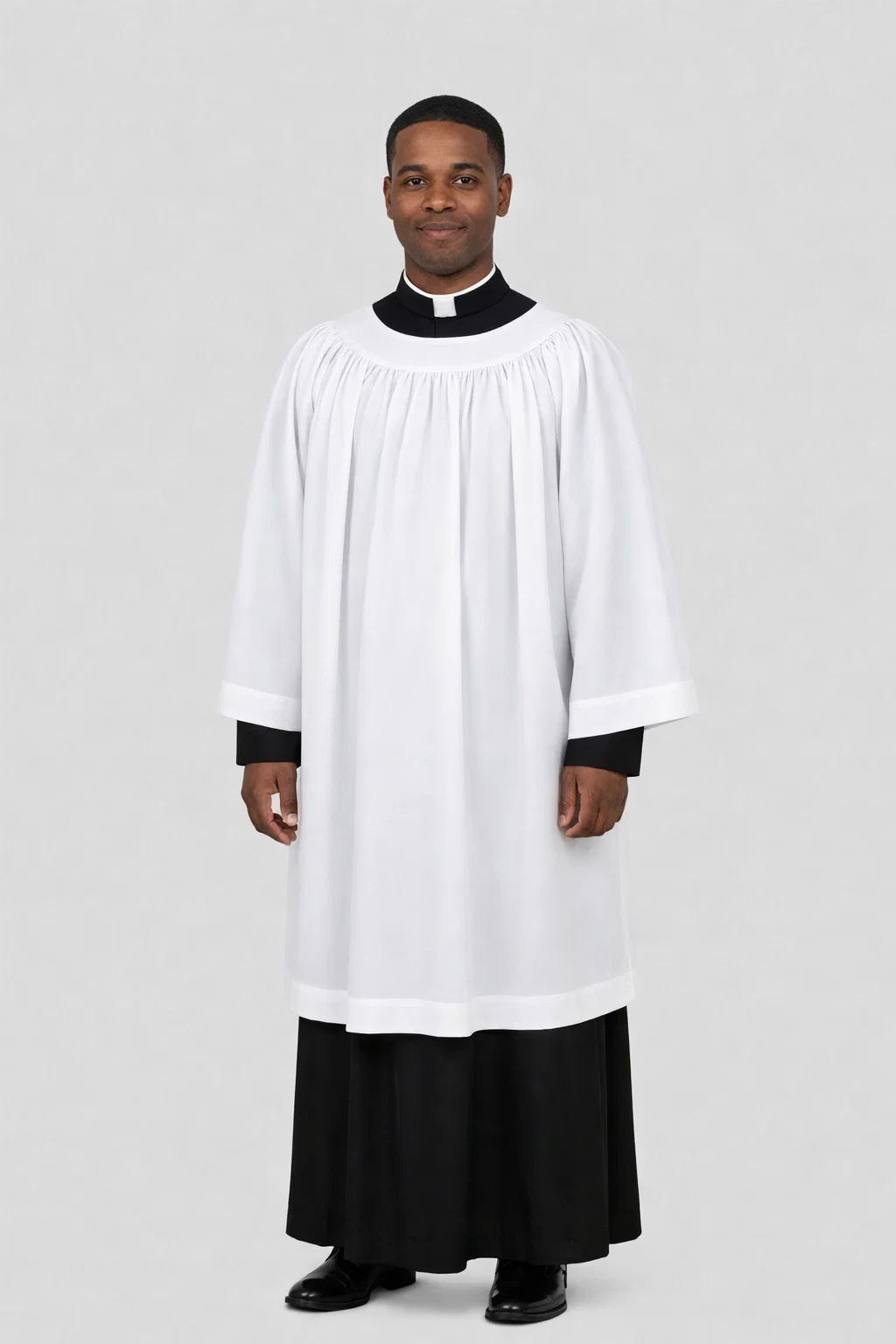
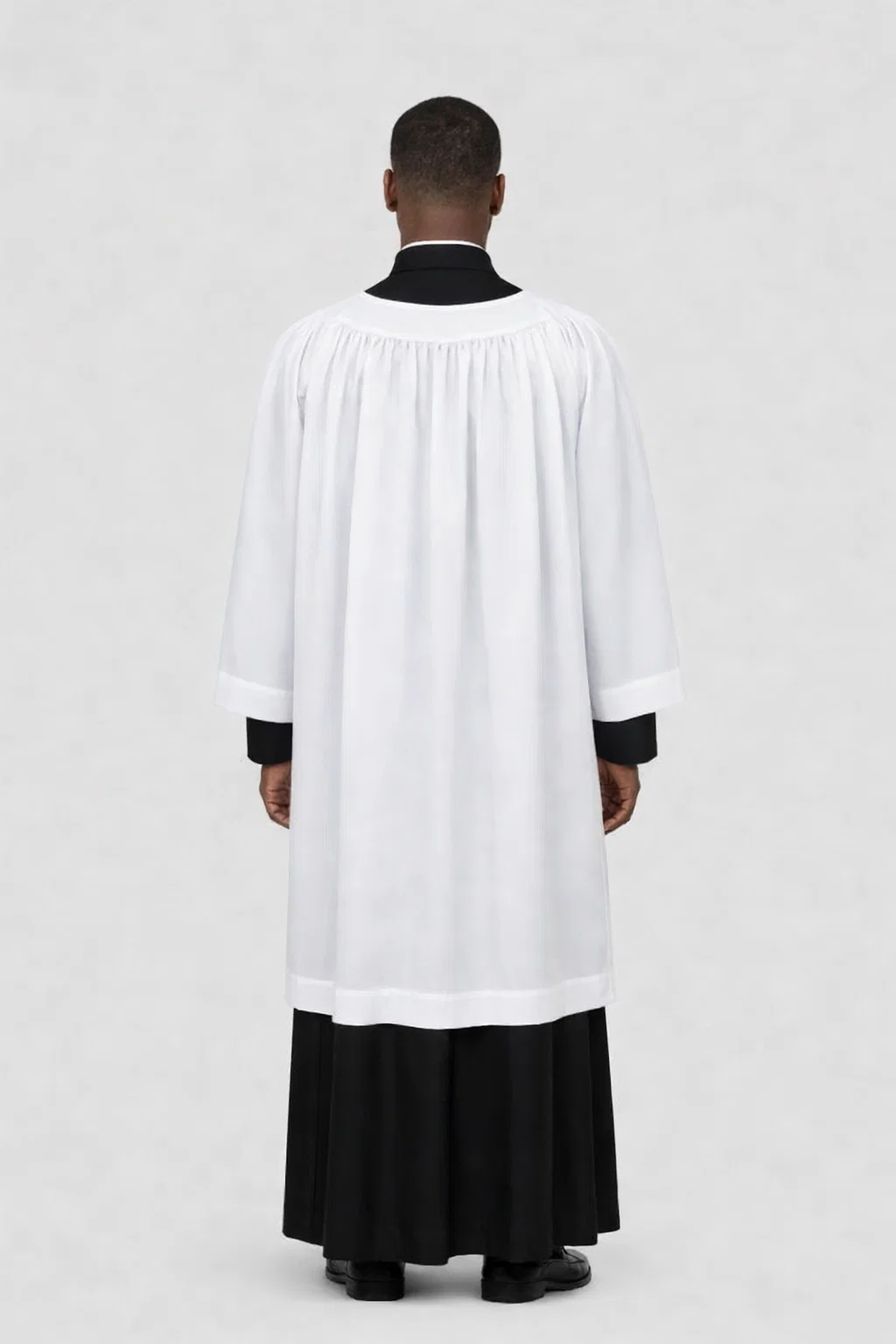
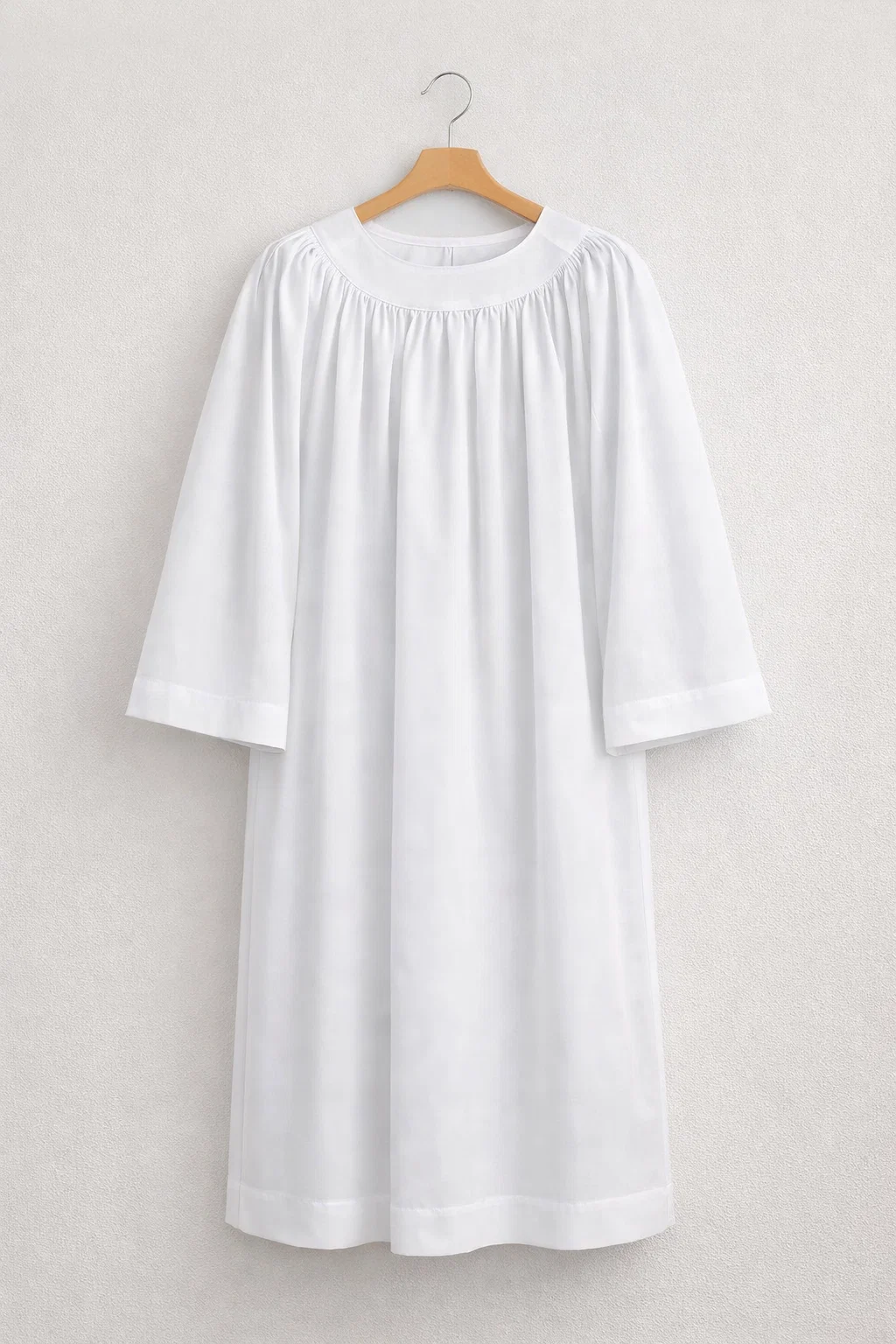
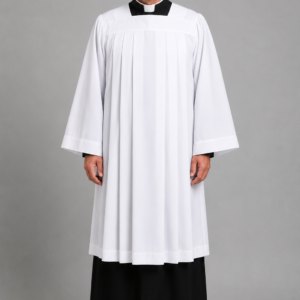
Oratoris follows the medieval surplice pattern: a full body gathered into a round neckline with no yoke, no structured pleats, and no ornamentation. This is the form the surplice took before the square-neck yoke construction became standard in the modern era. The round-neck gathered surplice is still prescribed in some Anglican and Roman Catholic cathedral foundations, monastic communities, and choir traditions that follow older rubrics.
The gathered construction produces soft, irregular folds that move with the wearer rather than the structured vertical lines of a box-pleated surplice. When a clergyman walks in procession or raises his arms for a blessing, the gathered fabric billows and settles naturally rather than holding a fixed shape. This movement is part of the garment’s character and is one of the reasons it remains preferred in choral and monastic settings where the surplice is worn for extended periods during the Office.
Round Neckline Construction
The body fabric is gathered directly into a plain white neck band that sits at the base of the throat. There is no flat yoke panel across the chest; the gathering starts immediately at the neckline and radiates down the full length of the surplice. The neck band is wide enough to pull over the head without a closure, and it sits loosely enough to show the cassock collar and clerical tab beneath.
The round neckline exposes less of the upper cassock than a square neckline does. On the square-neck surplices (Choralis, Gratian, Liturgis), the cassock’s chest and shoulders are visible above the yoke line. On Oratoris, the neck band sits close to the throat and the gathered fabric covers the cassock from the collarbone down. The cassock is visible at the collar, at the wrists below the surplice sleeves, and at the hem below the surplice skirt.
Plain and Unornamented
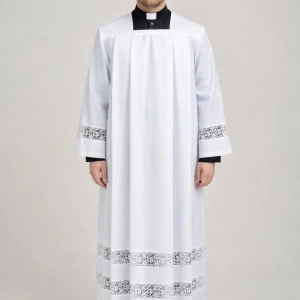
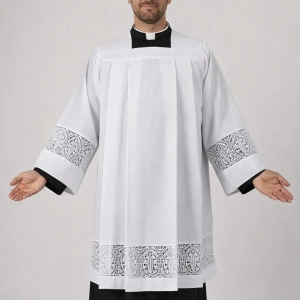
There is no lace insertion, no galloon, no embroidery, and no hem detail on Oratoris. The surplice is entirely plain white cotton-rich fabric from the neckline to the hem. This is a deliberate choice for two audiences: clergy in traditions that consider lace on a surplice to be excessive for everyday worship, and parishes that want a simple, affordable surplice that reads as formal through its construction rather than through applied decoration.
The plainness also makes Oratoris the easiest surplice in the line to launder and maintain. There are no lace panels to protect, no insertion bands to align after washing, and no delicate trim to steam around.
Fabric and Care
Oratoris is made from a high quality cotton-rich fabric in a true white. The cotton-rich weave takes gathering well; the fabric forms soft folds that hang naturally from the neckline rather than standing stiffly or collapsing flat. The true white is brighter than the ivory on Choralis, giving a crisper contrast against the dark cassock beneath.
Care: machine wash cold or warm with whites only. The gathered construction is forgiving after laundering; unlike box pleats, which need to be smoothed back into alignment after every wash, the gathered folds fall back into place on their own when the surplice is hung to dry. Steam lightly before wearing if needed. A mild oxygen-based brightener maintains the white over time; no chlorine bleach.
Sizing and Made to Measure
Oratoris is available across a range of sizes for clergy and choir members. Because the gathered construction is inherently fuller than a yoked surplice, it accommodates a wider range of body shapes within each size. Size by height and shoulder width; the surplice should reach knee to mid-calf length.
Made to measure is available with a 3 to 4 week lead time. For cathedral choirs, monastic communities, or parish clergy teams ordering matching gathered surplices, we can cut all garments from the same fabric lot so the white shade is consistent across the group.
FAQs
How is the round-neck gathered surplice different from the square-neck pleated ones?
The square-neck surplices (Choralis, Gratian, Liturgis) have a flat yoke panel across the chest with structured box pleats falling below it. Oratoris gathers the fabric directly into a round neck band with no yoke, producing soft irregular folds. The visual effect is fuller and more flowing than a pleated surplice. Choose based on whether your tradition or personal preference favours structured pleats or gathered drape.
Is Oratoris less formal than the lace surplices?
Not necessarily. Formality in a surplice comes from the quality of the fabric and the fullness of the cut as much as from applied lace. Oratoris is a full-bodied gathered surplice in cotton-rich fabric, which reads as formal in its own right. Many cathedral and monastic settings consider the gathered round-neck form more traditional than a lace-trimmed square-neck version.
Does the gathered construction require more ironing than box pleats?
Less. Box pleats need to be realigned after every wash; if they dry twisted, they need pressing or steaming along each pleat line. Gathered folds fall back into their natural position on their own when hung to dry. A light steam before wearing is usually all that is needed.
Can Oratoris be worn by altar servers or is it only for clergy?
Oratoris works for both. The round-neck gathered surplice is common in server programs, particularly in Anglican and Roman Catholic parishes that use the traditional form. Its simplicity and easy maintenance make it practical for a server sacristy where multiple surplices need to be laundered and stored each week.
There are no reviews yet. Be the first one to write one.