
Description
Hemstitch Instead of Lace
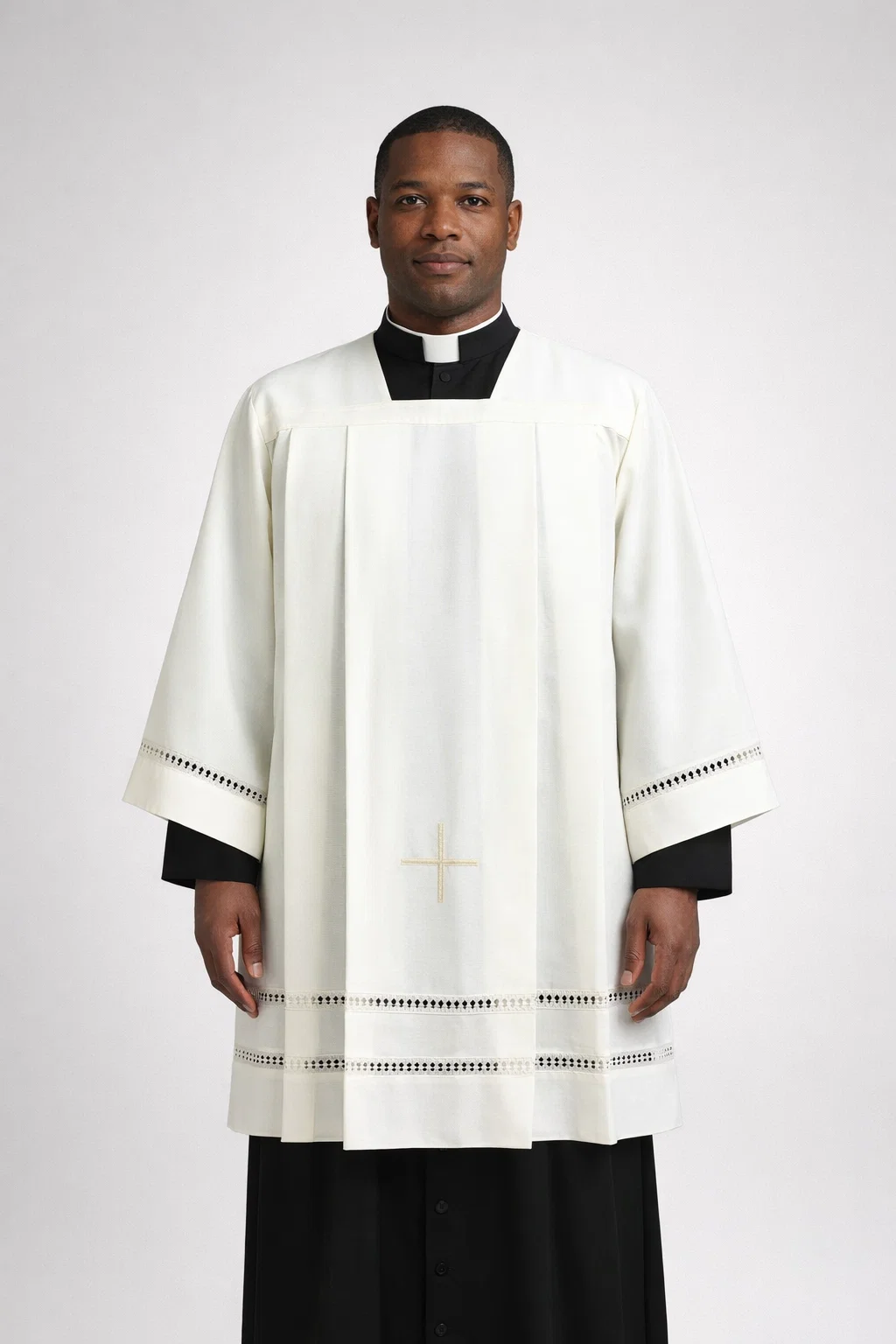
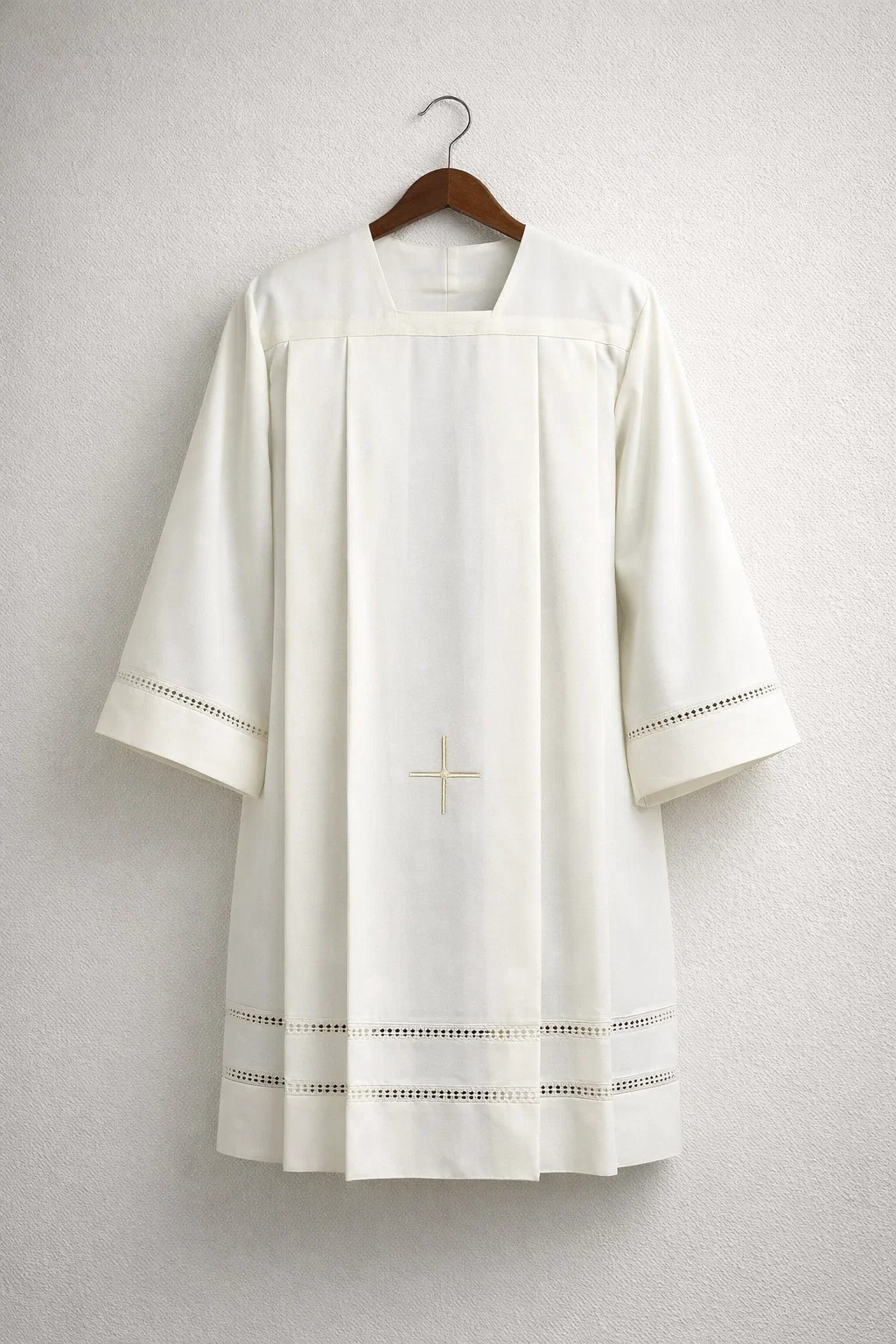
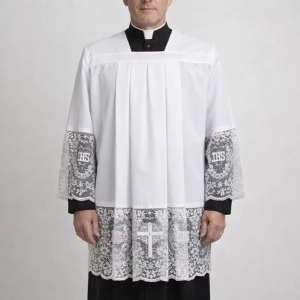
Veneris takes a different approach to ornamentation than the other trimmed surplices in the line. Where Gratian uses floral lace insertion, Pastoris uses bold crochet medallions, and Sanctorum uses deep IHS lace panels, Veneris uses drawn-thread hemstitch openwork: a geometric row of tiny eyelets created by withdrawing threads from the ground fabric and securing the remaining threads into a regular pattern. The effect is structured and restrained, closer to whitework embroidery than to lace.
Hemstitch is one of the oldest decorative techniques in liturgical textile work, predating machine-made lace by centuries. It was the standard form of surplice ornamentation before lace became widely available, and it remains preferred in traditions that want visible handcraft without the fullness of a lace panel. Anglican and Lutheran parishes, in particular, often favour hemstitch over lace for its cleaner, more geometric appearance.
The Embroidered Cross
A small Latin cross is embroidered at the center front of the surplice body, positioned between the yoke seam and the hem openwork. The cross is worked in tone-on-tone thread (gold or ivory against the ivory ground), so it does not read as a bold contrast element. It is visible at conversation distance and under direct altar lighting but does not dominate the front the way the IHS and cross motifs on Sanctorum’s lace panels do.
An embroidered cross on the front of a surplice is a devotional marker rather than a rank indicator. It signals that the garment is a liturgical vestment rather than a plain choir robe, which matters in traditions where both clergy and lay choir members wear white over-garments and the cross distinguishes the two.
Openwork Placement
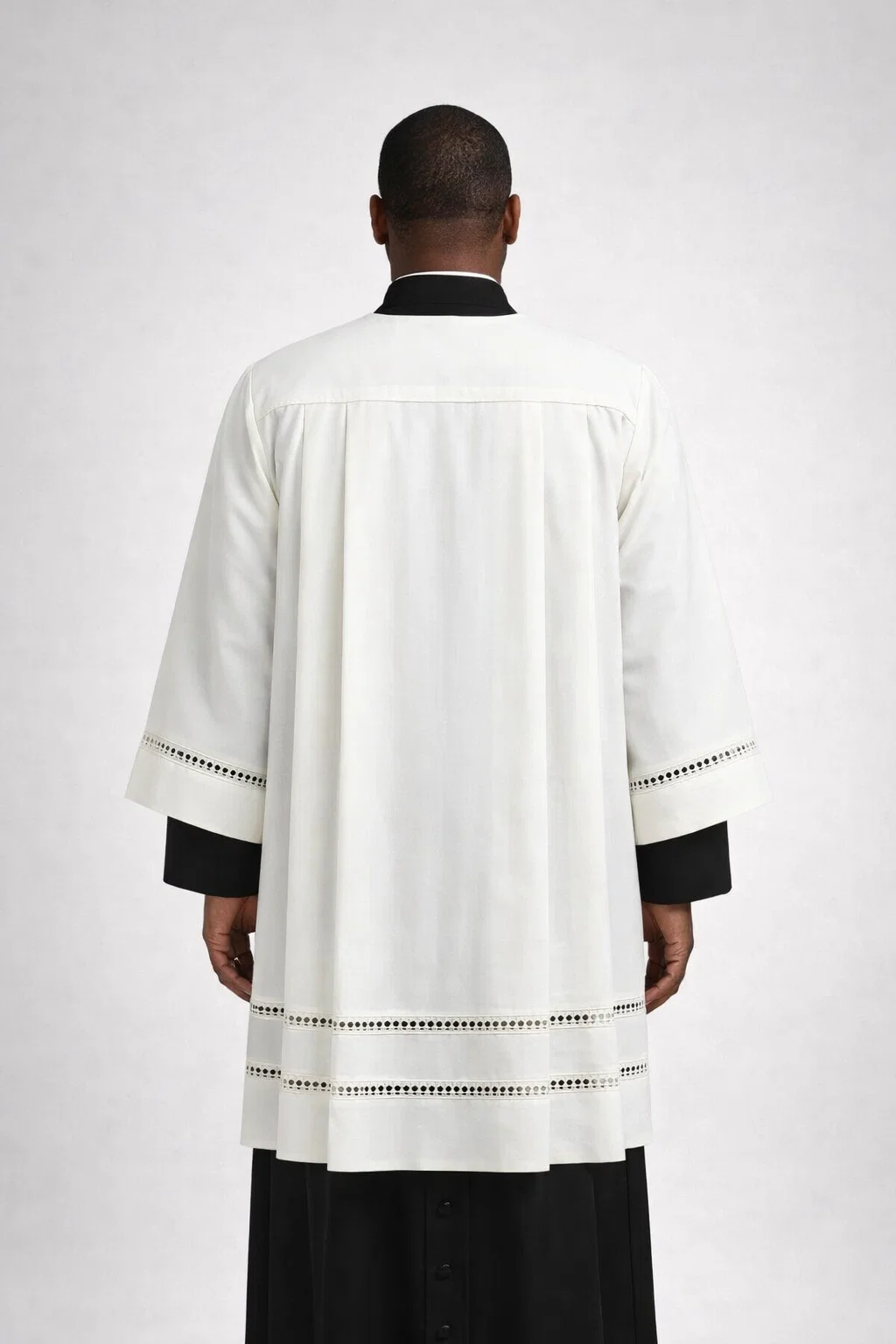
The cuff openwork is a single hemstitch band placed above the sleeve hem edge. The band is narrow and precise, reading as a fine horizontal line of geometric texture against the smooth ivory ground. At the hem, two parallel hemstitch bands run across the full width of the surplice, separated by a strip of ivory ground fabric.
The double band at the hem follows the same proportioning logic used on Gratian: the lower portion of the surplice carries more ornamentation than the cuffs because it covers a wider surface area and needs more visual weight to look balanced. The hemstitch rows are narrow enough that they add texture without breaking the surplice’s clean vertical lines.
The Ivory Tone
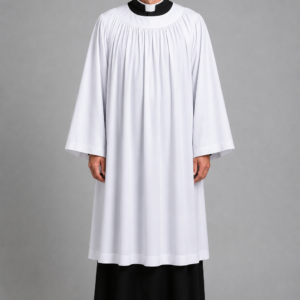
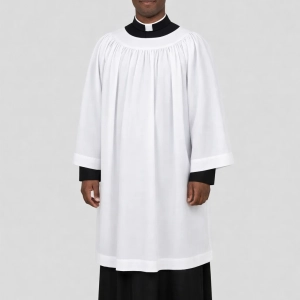
Veneris is cut from a soft ivory rather than the true white used on Gratian, Liturgis, Pastoris, and Sanctorum. The ivory sits warmer under sanctuary lighting, particularly in buildings with sandstone, warm wood, or candlelight as the primary light source. It does not look yellow; it reads as a deliberate cream-white rather than a faded or dingy white. Against a black cassock, the contrast is slightly softer than a true white produces, which some clergy prefer for the less stark overall appearance.
The ivory tone also complements the tone-on-tone embroidered cross better than a stark white would. On true white, a gold or ivory thread reads as a contrast colour. On ivory, the same thread reads as a tonal detail, which is the intended effect.
Fabric and Care
Veneris is made from a high quality cotton-rich fabric. The drawn-thread openwork is part of the fabric construction (threads are physically removed and the remaining ones secured), not an applied trim, which means it holds up well under regular laundering without the distortion risk that lace faces.
Care: machine wash cold or warm with whites or light colours. Hang to dry while aligning the pleats. The hemstitch openwork does not distort under normal washing the way lace can, so tumble drying on low is acceptable if needed, though hang drying is still preferred. Steam rather than press. A mild oxygen-based brightener can be used sparingly; avoid over-brightening, which can push the ivory tone toward a cold white and create a mismatch between the body and the embroidered cross thread.
Sizing and Made to Measure
Veneris is available across a range of sizes for clergy and choir members. Size by height and shoulder width. The surplice sits at knee to mid-calf length, consistent with the standard surplice proportion.
Made to measure is available with a 3 to 4 week lead time. For parish clergy teams or choir programs ordering matching ivory surplices, we can cut all garments from the same fabric lot so the ivory shade, hemstitch density, and cross embroidery placement are identical across the group.
FAQs
Why ivory instead of white?
Ivory sits warmer under sanctuary lighting and works better in buildings with sandstone, wood panelling, or candlelight. It also complements the tone-on-tone embroidered cross. True white surplices are available in the rest of the line (Choralis, Gratian, Liturgis, Pastoris, Sanctorum, Oratoris) for parishes that prefer a brighter white.
How does hemstitch openwork differ from lace?
Hemstitch is created by withdrawing threads from the ground fabric and securing the remaining ones into a geometric pattern. Lace is a separate textile applied or inserted at a seam. Hemstitch produces a precise, structured row of small eyelets within the fabric itself, while lace produces a softer, more ornate pattern as a separate layer. Hemstitch is more durable and easier to launder than lace because it is part of the fabric rather than an attached panel.
Is the embroidered cross visible from the congregation?
At close range and under direct altar lighting, yes. From the back of a large nave, it is subtle; it reads as a tonal texture rather than a bold symbol. If you want a highly visible cross, Sanctorum’s lace panel cross is larger and more prominent. Veneris is designed for understated devotional identification rather than high visibility.
Can Veneris be paired with the server cassocks in the line?
Yes, though its ivory tone will not match a true white server cassock like Lucenta or Serenova. It pairs best with dark cassocks (Umbraval in black, Monastara in black, Regium in purple, Fidelis or Cruoris in red) where the ivory reads as a warm white layer rather than being compared directly against a true white garment.
There are no reviews yet. Be the first one to write one.