
A Closed Front Chimere
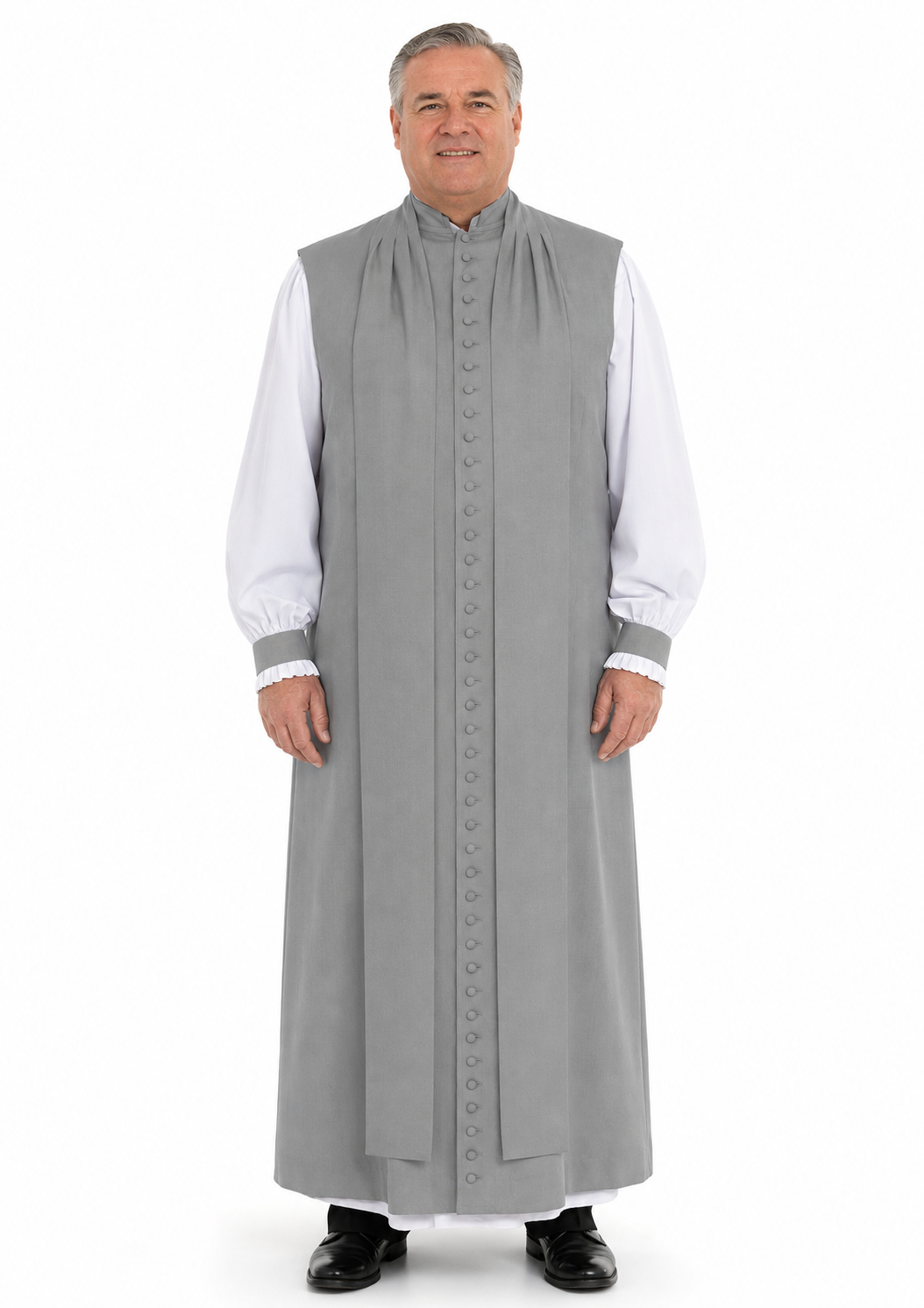
This chimere takes the opposite construction approach from the Magenta Bishop Chimere with Open Front. Where that piece closes with a single two-button loop at the throat and falls open for its full length, this grey chimere closes completely down the center front with a continuous row of small covered buttons, worn close together from the collar to well below the waist.
The closed-front chimere conceals the rochet beneath almost entirely, showing only the rochet’s collar at the throat and its bishop sleeves at the arms. This is a different visual statement than the open-front version: instead of framing the white rochet body as a central panel, the closed chimere presents as a single continuous garment from collar to hem, with the rochet visible only at the extremities.
The Button Row
The front closure uses a long, closely spaced row of small covered buttons running the full visible length of the garment. Unlike the two-button loop closure on the Magenta Bishop Chimere, every button here is functional and evenly spaced, giving the front a formal, structured line similar in spirit to a cassock’s button row but applied to a sleeveless over-vestment.
This construction is associated with more conservative or traditionalist episcopal dress, where a fully closed chimere reads as more restrained than the open, draped Anglican convention. The dense button spacing also means the chimere holds its shape closely against the body rather than swinging open with movement, which some wearers prefer for a tidier silhouette during long standing services.
Pleating and Shoulder Construction
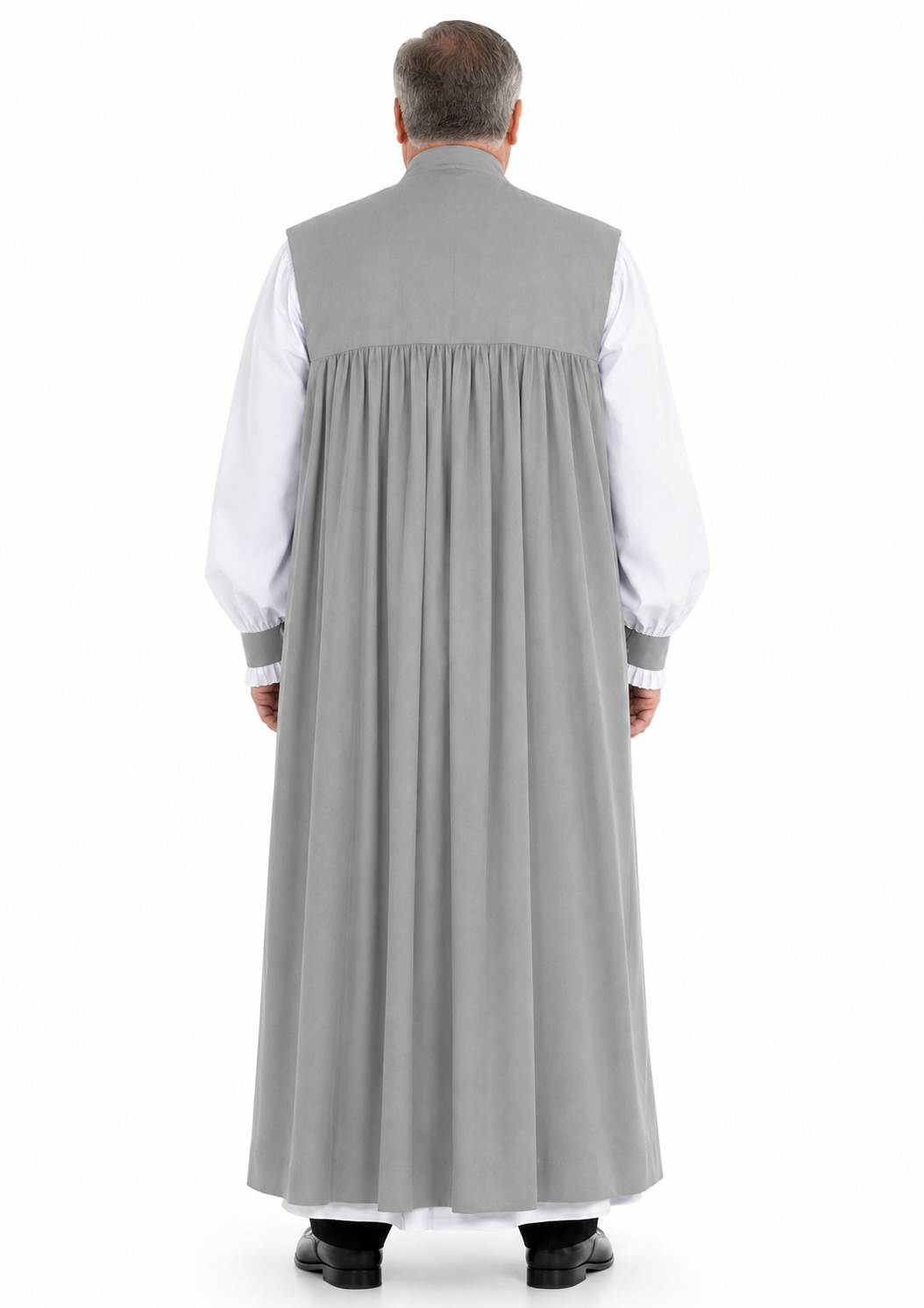
Rather than a flat front yoke, this chimere carries soft vertical pleats falling from the shoulder seam down through the upper chest, visible on both the front and back panels. The pleats add fullness at the top of the garment, which balances the narrower, button-controlled silhouette below and prevents the chimere from looking flat or stiff across the shoulders.
The back mirrors this construction: a flat panel at the very top of the shoulders releases into gathered pleats that fall the full length of the back, consistent with the yoke-and-gather approach used throughout the rochet and surplice lines, but with a fuller pleat count here than on the open-front chimere.
Grey as a Neutral Choice
This chimere is cut in a neutral dove grey rather than a rank-specific liturgical color. Grey does not carry the same coded meaning as magenta, episcopal purple, or black in Western liturgical tradition; it functions instead as a versatile choice for choir dress in settings where a specific rank color is not required, or for clergy who want a chimere that pairs with multiple cassock colors without a strict color-matching requirement.
The grey sits well over a white rochet, providing enough contrast to define the chimere’s shape clearly while remaining understated compared to the saturated violets and magentas used elsewhere in the line.
Fabric and Care
This chimere is made from soft tropical suiting fabric, the same base used for the Magenta Bishop Chimere. The fabric holds the pleated shoulder construction well without becoming bulky at the fold points, and its lightweight, breathable quality matters even more here because the closed front and dense button row add warmth that an open-front chimere does not.
Care: dry clean recommended, particularly to keep the closely spaced buttons and their buttonholes from stressing under home laundering agitation. If home laundering is attempted, use a gentle cold cycle and hang to dry; do not tumble dry, which can pull at the button placket. Steam rather than press directly over the button row.


There are no reviews yet. Be the first one to write one.