
When White and Gold Is Worn
White and gold is the highest rank vesture combination in Western Christian dress. In the Roman Catholic tradition it is the color combination of papal vesture and of the Easter Vigil. In the Anglican and Episcopal traditions it is worn for Easter, Christmas, the feasts of Christ and the Blessed Virgin, All Saints and cathedral installations. In many historically Black Pentecostal, Baptist and Apostolic churches, white and gold is the vesture of presiding bishops, general overseers, senior bishops and apostles, worn at holy convocation, annual convocation, ecclesiastical anniversaries and consecration services. In every tradition where it is codified, white and gold means the highest possible rank on the highest possible day.
The Solara is designed with that reading in mind. This is not a working white dress. It is the piece to reach for when the sanctuary is already white on the altar, when the occasion is the peak of the year or the peak of a ministry, and when the vesture itself is expected to declare rank without a word being said.
Where the Gold Sits, and Why
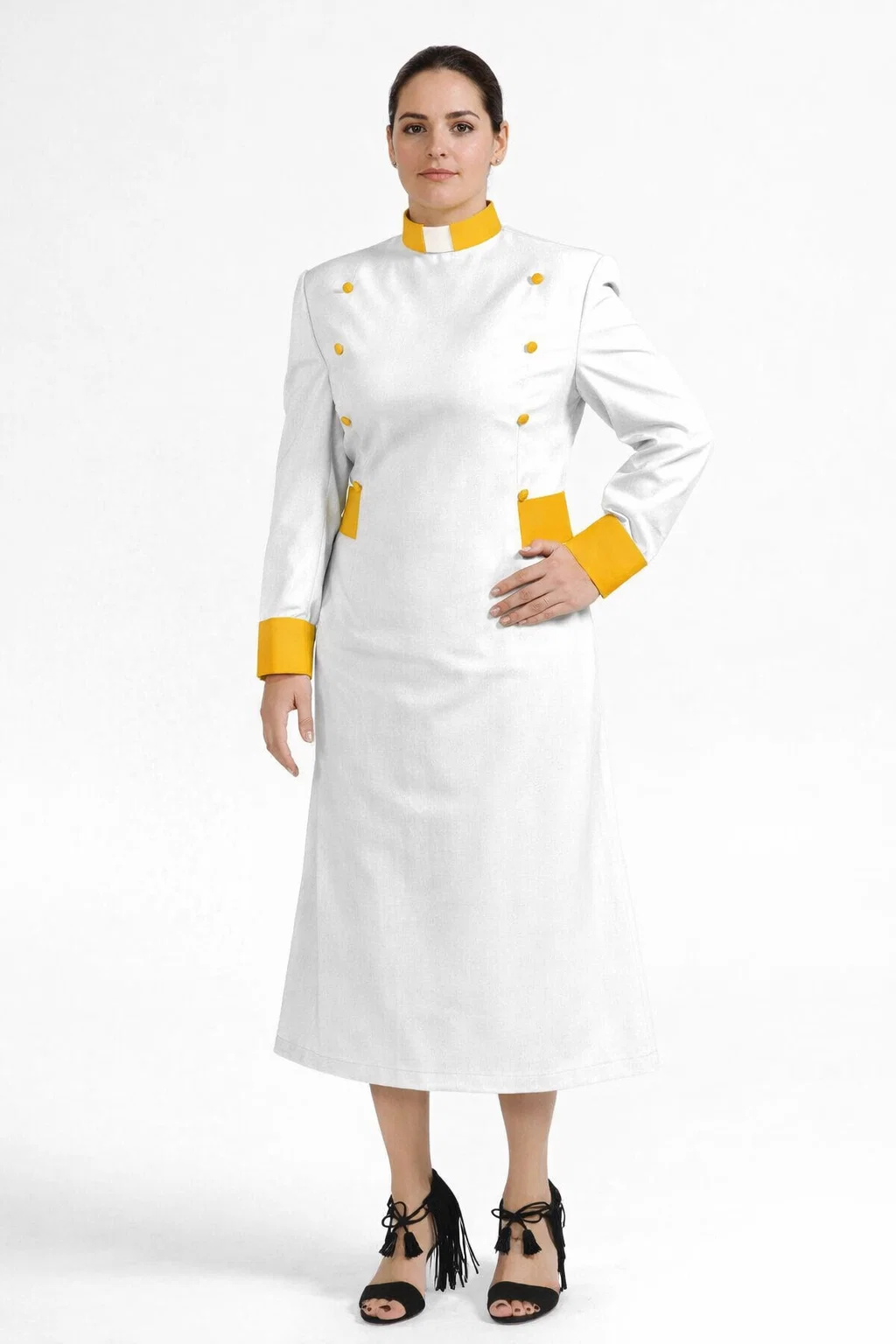
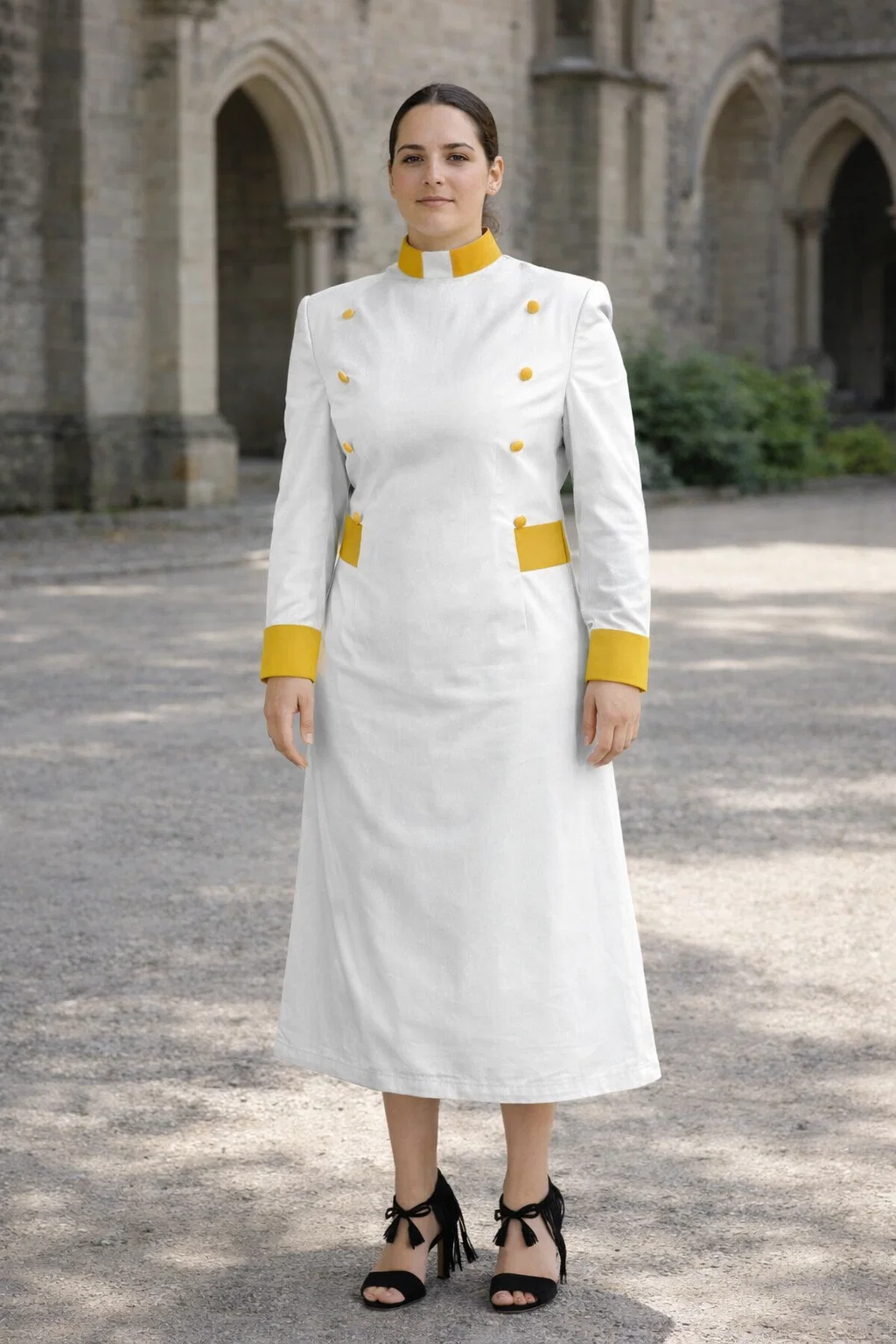
The collar is the highest anchor. Cut as a full solid gold stand collar with a tab opening at the front, it reads immediately from any angle in a sanctuary and on camera. The gold is a rich deep golden yellow rather than a metallic gold or a bright fashion yellow, placing it firmly in the ecclesiastical tradition where the color has centuries of association with the papacy and with high rank.
Below the collar, six gold covered buttons sit in a wide double breasted grid across the chest, arranged as two vertical columns of three from the collarbone to just above the natural waist. The buttons are decorative rather than functional, sitting on a shaped bib panel while the actual closure runs concealed at the back or side.
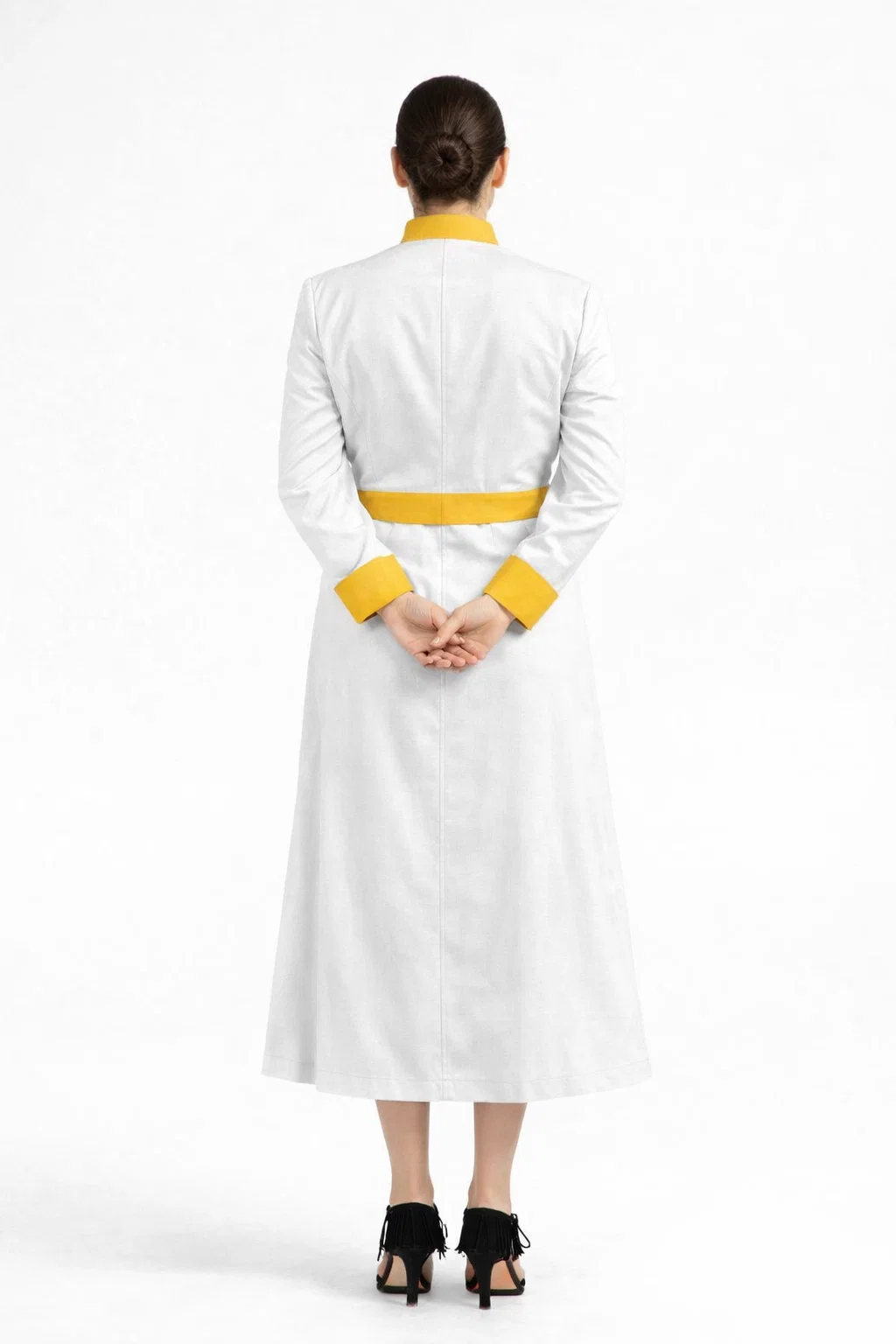
At waist height, two gold waist tabs sit on each side of the natural waist. Around the back, a full gold band runs across the waist connecting the two tabs into a single horizontal line. From the front the waist reads as two clean gold markers; from the back it reads as a full gold belt.
At the wrists, deep gold turn-back cuffs show four to five inches of gold against the white sleeve, matching the collar and waist tabs in depth and finish. The gold elements together frame the body in the traditional ecclesiastical proportion: crown, chest, waist and wrists.
Fabric and Care
Cut from a lightweight tropical fabric. In a white vestment with gold contrast panels worn under sanctuary lighting for extended services, the weave matters twice over. It moves air, which keeps a fitted vestment wearable through processions, long liturgies and warm summer feast days. And it drops creases on the hanger, which is what preserves the crispness of both the white and the gold.
The white face is matte. The gold pieces are cut in the same weave in a rich deep golden yellow, so the contrast reads sharp and intentional. Under sanctuary lighting the white stays soft and even and the gold reads rich rather than glaring.
Care: dry clean recommended, both to protect the white and to prevent the gold from bleeding into it. If you launder at home, wash cold on a gentle cycle with a color-safe detergent, and never wash with lighter or darker colored garments. Steam lightly on a hanger.
There are no reviews yet. Be the first one to write one.