
Description
A Surplice with Lace for Formal Liturgies
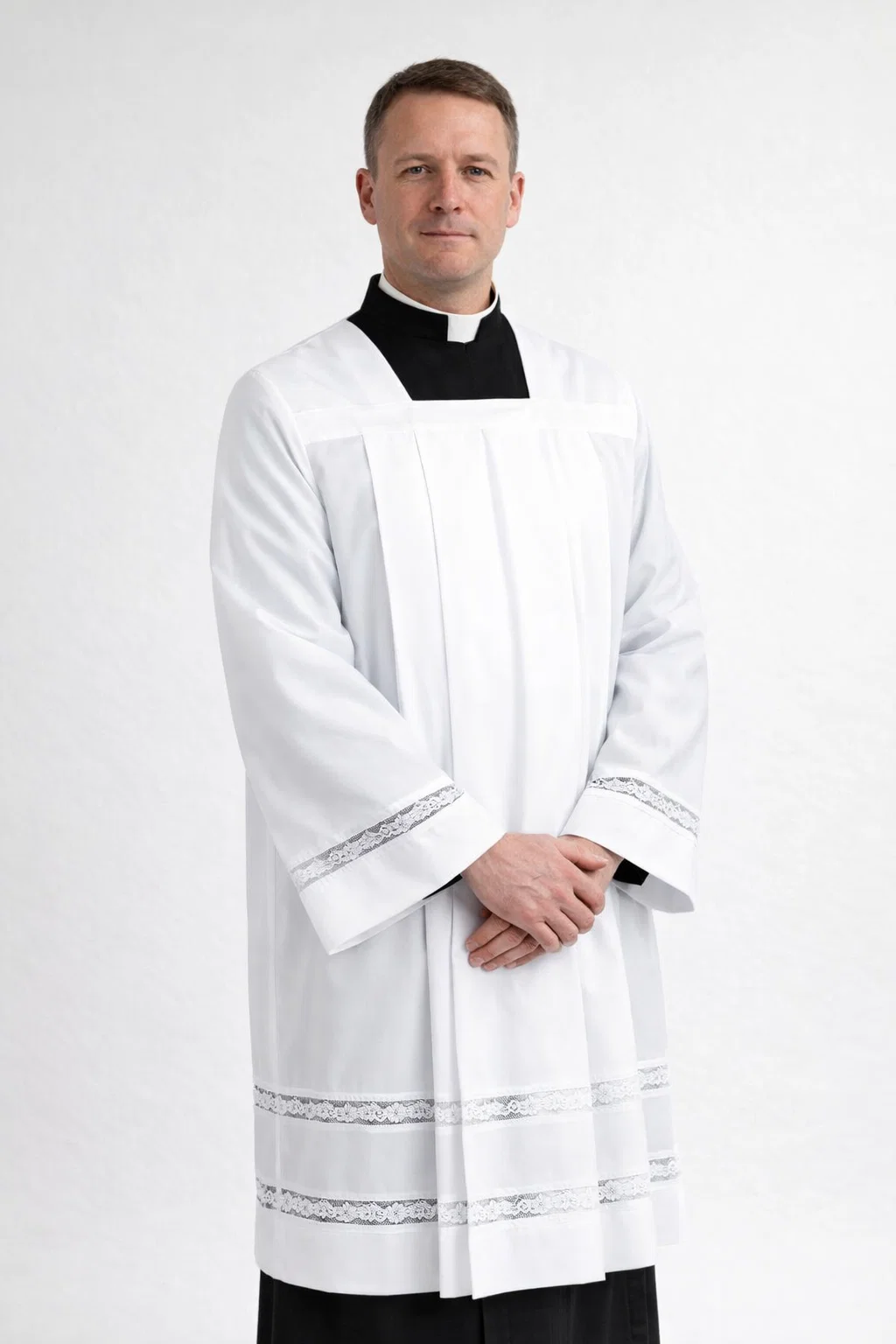
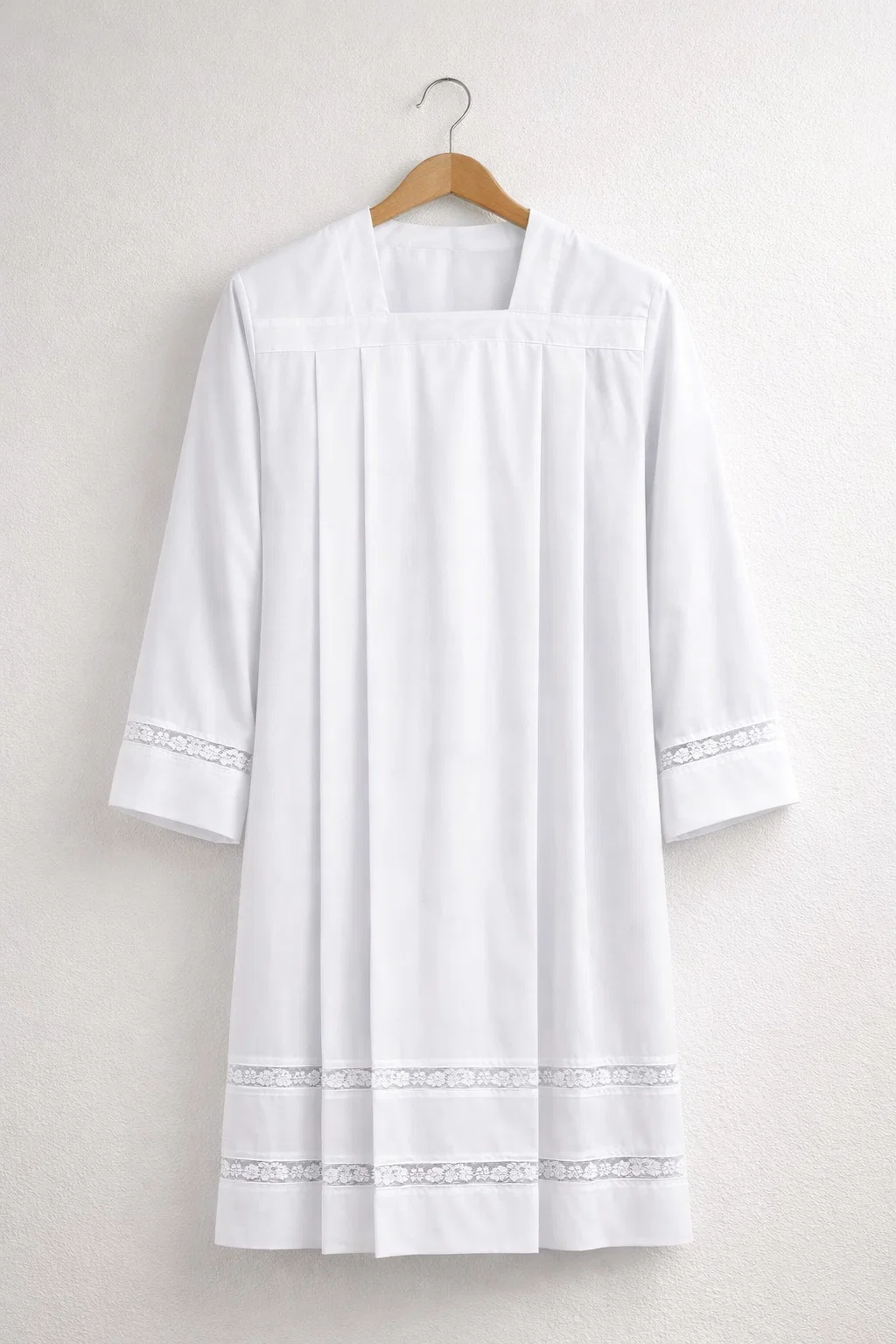
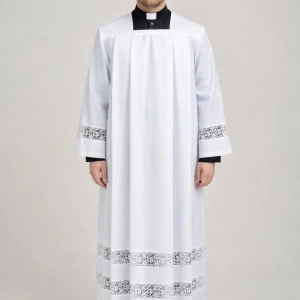
Gratian takes the same square-neckline, box-pleated surplice construction as Choralis and adds white lace insertion bands at the cuffs and hem. The lace turns a practical choir vestment into a formal liturgical piece suited to Sunday Eucharist, high feast processions, cathedral Evensong, ordinations, and any occasion where the surplice is the outermost visible vestment and needs to carry more visual presence than a plain version can provide.
Lace on a surplice is not ornamental for its own sake. It has a long history in Western liturgical dress, where the amount and quality of lace on a surplice traditionally indicated the formality of the service. A plain surplice was for daily offices; a lace-trimmed surplice was for Sundays and feast days. Gratian follows that distinction by offering the lace version as the formal counterpart to the plain Choralis.
Lace Placement
The cuff lace is a single insertion band placed above the hem edge of each sleeve. The lace sits between two strips of plain white fabric, so it reads as an inset detail rather than a raw lace edge at the end of the sleeve. This placement protects the lace from the abrasion that a terminal edge would receive and keeps it visible when the wearer’s arms are at rest or folded.
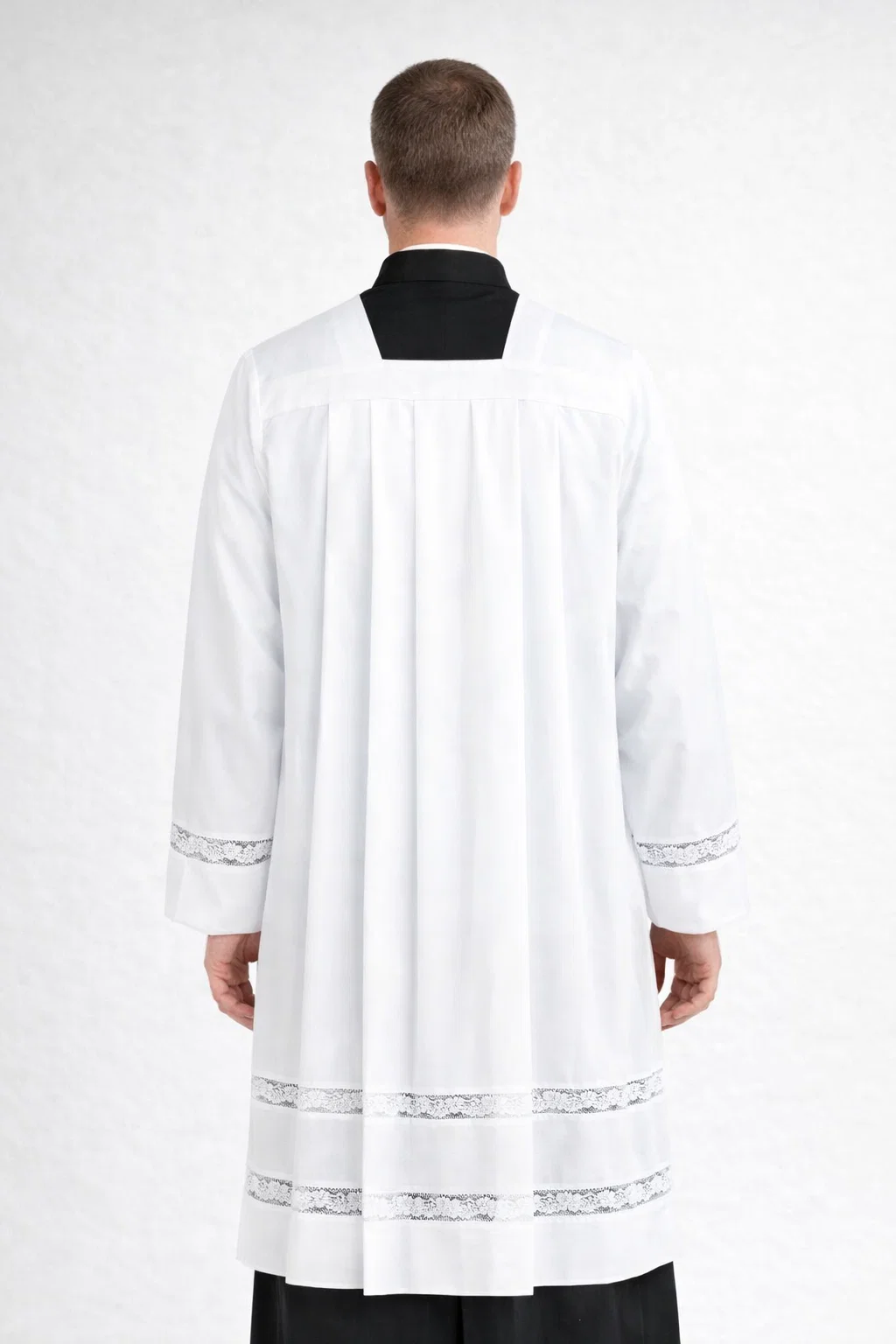
The hem lace is a double band: two parallel rows of the same floral-motif lace, separated by a strip of white ground fabric, with a plain white hem band below the lower row. The doubled treatment at the hem gives the base of the surplice more visual weight than the single cuff band, which is standard proportioning for lace-trimmed vestments because the hem covers a wider area and needs a stronger lace presence to balance the overall garment.
The lace motif is a repeating floral pattern, consistent between the cuffs and the hem so the ornamentation reads as a single coordinated detail rather than mixed patterns.
Construction and Fit
The body construction matches Choralis: a flat yoke across the chest and upper back, with box pleats falling from the yoke seam to the hem. The pleats carry through the lace bands at the hem without interruption, so the vertical lines of the surplice continue through the lace rather than being broken by it.
The sleeves are wide, ending above the wrist so the cassock sleeve shows below. The three-quarter to full-length sleeve gives more visual presence than the Choralis sleeve, and the lace band adds a finished detail at the cuff that anchors the sleeve visually.
The neckline is the same square cut with V-notch at center front, exposing the cassock collar and clerical tab beneath.
Fabric and Care
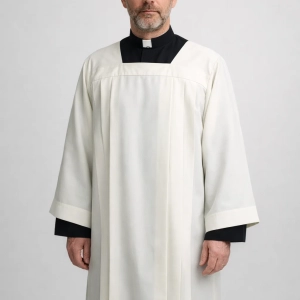
Gratian is made from a high quality cotton-rich fabric in a true white, noticeably brighter than the soft ivory used on Choralis. The brighter white is intentional for a formal surplice: it reads as crisp and fresh under altar lighting and creates a sharper contrast against the dark cassock beneath, which gives the layered combination more visual impact from the congregation’s perspective.
The cotton-rich weave holds the box pleats well and takes the lace insertion cleanly at the seam lines. The lace itself is a lightweight floral pattern that lies flat against the body fabric without adding bulk or stiffness at the cuff and hem.
Care: machine wash cold or warm with whites only. Hang to dry while smoothing the pleats and the lace bands into alignment. Do not tumble dry; heat can distort the lace tension and pull the insertion bands out of flat. Steam rather than press directly over the lace panels. A mild oxygen-based brightener can be used to maintain the white; do not use chlorine bleach, which degrades lace fibres faster than the surrounding ground fabric.
Sizing and Made to Measure
Gratian is available across a range of sizes for clergy and servers. Because a surplice is a pull-on garment with no closure, sizing is based on the wearer’s height and shoulder width. The surplice should reach knee to mid-calf length and sit square on the shoulders.
Made to measure is available with a 3 to 4 week lead time. For cathedral chapters, parish clergy teams, or choir programs ordering matching lace surplices, we can cut all garments from the same fabric and lace lot so the white shade and lace motif are identical across the group.
FAQs
Why is Gratian more expensive than Choralis?
The lace insertion at the cuffs and hem adds material cost and construction time. Each lace band must be cut, aligned, and sewn into the seam between two strips of ground fabric rather than simply hemming a raw edge. The double band at the hem doubles that work for the lower portion of the surplice.
Is the lace on Gratian the same type as on the Castalis alb?
Both use white lace insertion set between plain fabric bands, but the motif patterns are different. Castalis uses a crochet lace in a cross-and-medallion pattern. Gratian uses a lighter floral-motif lace suited to the thinner cotton-rich surplice fabric. Both are inset rather than appliqued.
When should I choose Gratian over Choralis?
Choose Gratian for Sunday worship, high feast days, ordinations, cathedral Evensong, and any service where the surplice is the outermost vestment and needs to carry more visual presence. Choose Choralis for daily offices, weekday services, and occasions where a plain surplice is sufficient or preferred.
Can the lace be replaced if it wears out before the rest of the surplice?
The lace is inset into the seam construction, not appliqued on top, so replacing it requires a tailor to open the seam, remove the old band, and sew in a new one. With recommended care (cold wash, hang dry, steam rather than press), the lace should last the full life of the surplice without needing replacement.
There are no reviews yet. Be the first one to write one.