
When White Is Worn, and Why This Dress Is Cut in It
White is the color of the highest occasions in the liturgical calendar. Easter and the fifty days that follow, Christmas and the Christmas season, the feasts of Christ, the feasts of the Blessed Virgin, weddings, baptisms, ordinations, and All Saints. Across most Western Christian traditions white is the color of joy, resurrection, glory, and consecration. In the Anglican and Roman Catholic traditions it is the color the priest wears at Mass on those days. In many historically Black Pentecostal, Baptist and Apostolic churches, white is worn for first Sunday communion, anniversary services, watch night, and consecration services.
The Albaris is designed as the base garment for those services. It is not a working white dress. It is a dress for the days when the sanctuary is already white on the altar, and the officiant’s vesture is expected to hold that reading from the pulpit and behind the table.
The Tone-on-Tone Detail
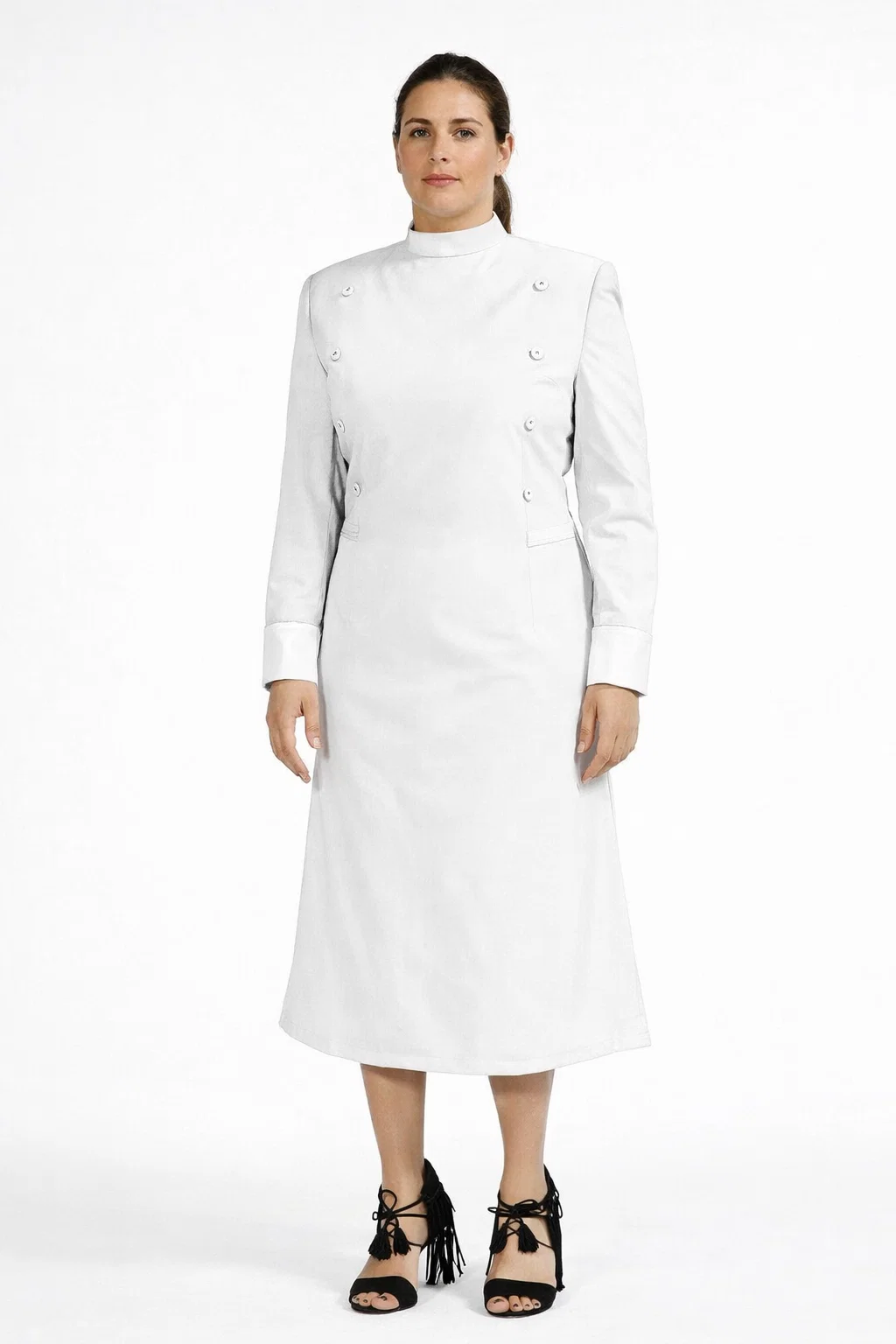
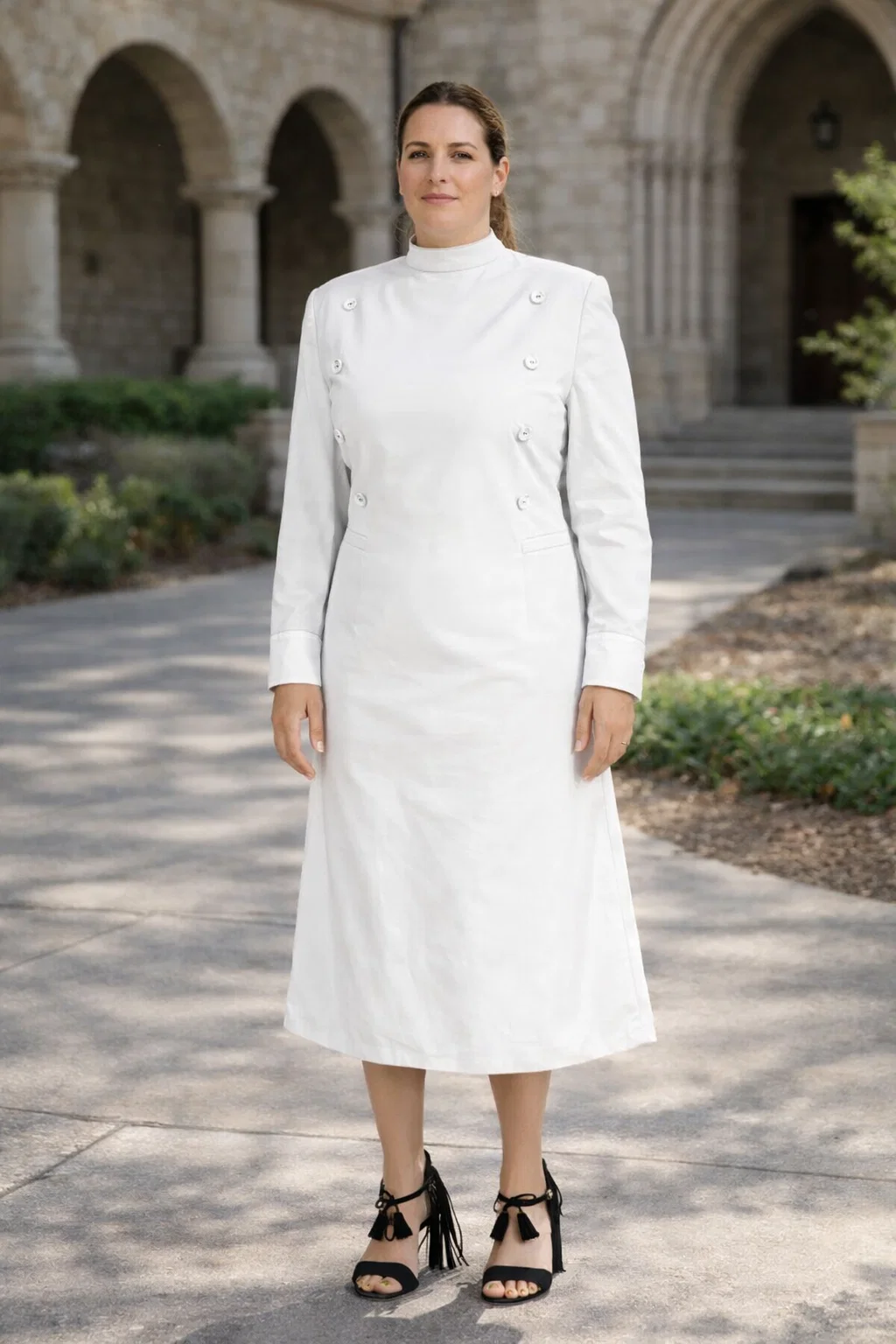
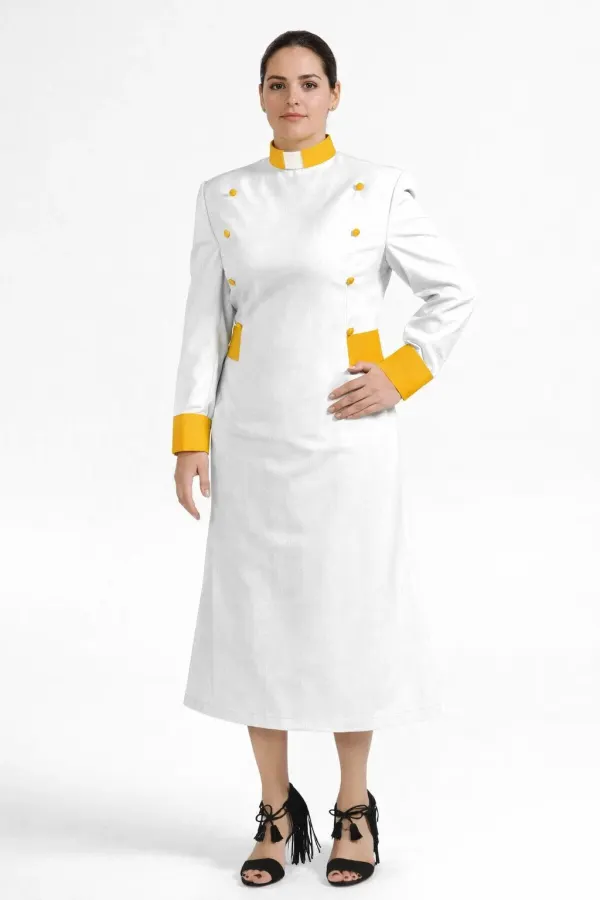
The design language on this dress is deliberately quiet. Six covered buttons in the exact white of the cloth sit in a double breasted grid across the chest, arranged as two vertical columns of three from the collarbone to just above the natural waist. From a distance the buttons read as fine texture rather than as contrast. Up close they read as intentional structure.
That tone-on-tone choice is the point. A white dress with visible contrast buttons or colored trim competes with the vestments worn over it. A white dress with tone-on-tone detail sits under a chasuble, a stole, a preaching scarf or an ordination robe without any color interference, and it reads as vesture on its own if worn without an outer garment.
Two welt pockets sit at the waist below the button grid, cut cleanly into the front panel rather than applied to the surface as patch pockets. Welt construction keeps the front line clean and matches the tone-on-tone discipline of the buttons.
Fabric and Care
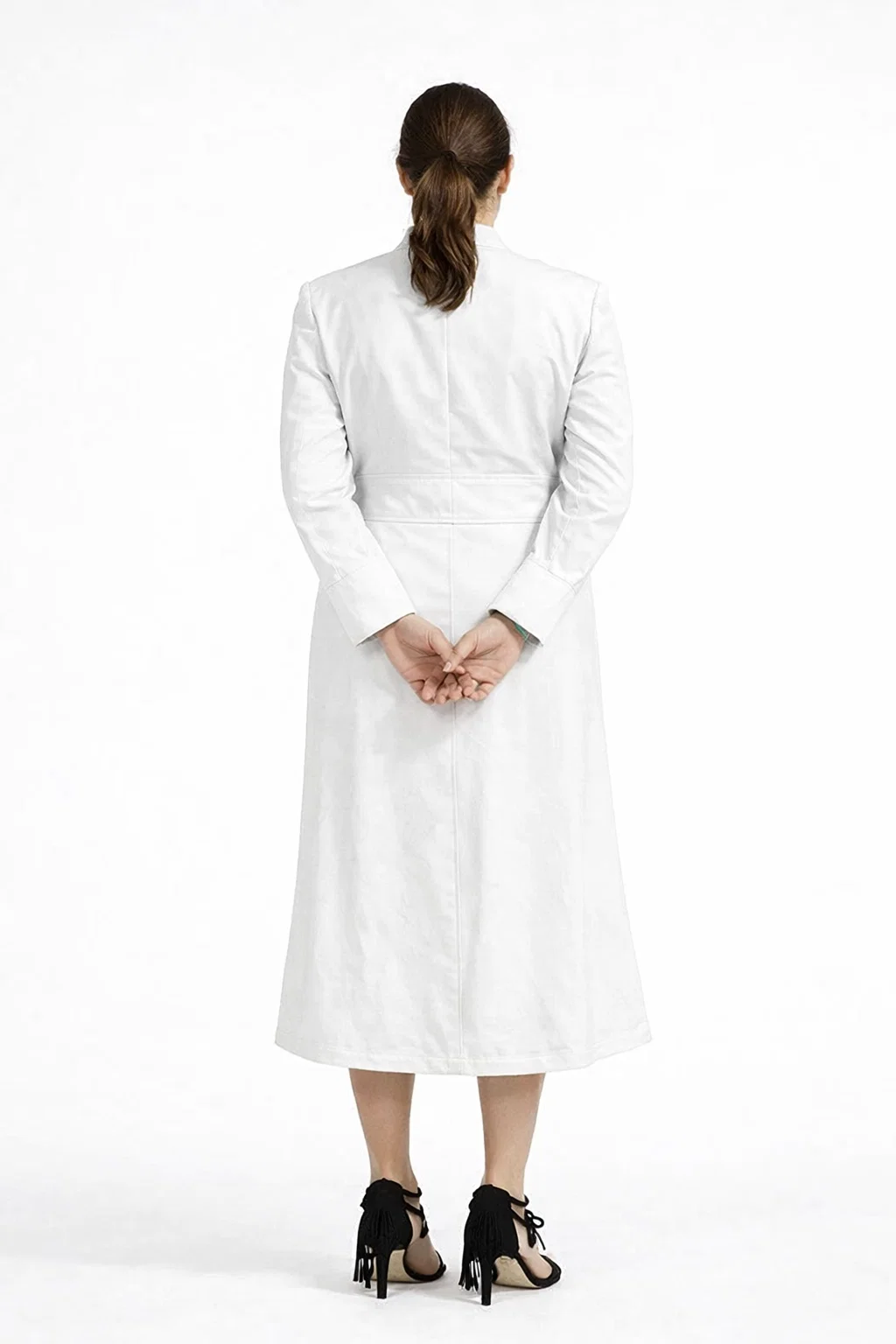
Cut from a lightweight tropical fabric. In a fitted white dress worn through Easter services, ordinations, and summer feast days, the weave matters twice over. It moves air, which keeps a layered ecclesiastical dress wearable through long services and warm sanctuaries. And it drops creases on the hanger, which is what preserves the white cloth against wrinkles that show far more on white than on black.
The face is matte. A white in a cloth with sheen picks up every crease and photographs uneven under sanctuary lighting. A matte white stays soft and even in daylight, under warm sanctuary lighting and on camera.
Care: white cloth stains more visibly than any other color, so treat spots quickly and dry clean whenever possible. If you launder at home, wash cold on a gentle cycle with a mild detergent for whites, and never wash with colored garments. Hang to dry. Steam lightly on a hanger.

There are no reviews yet. Be the first one to write one.