
The Blue, and Why It Matters
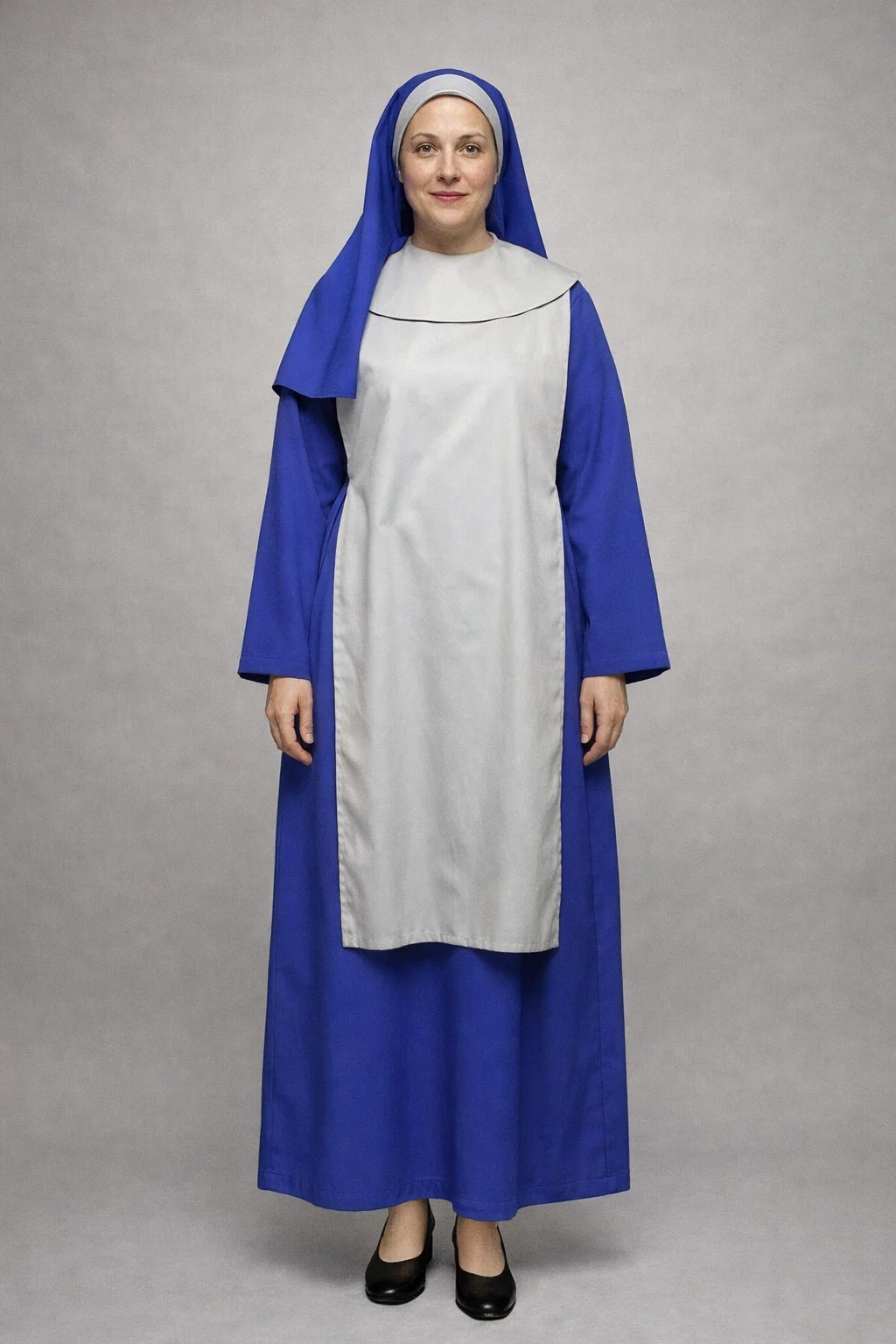
Not every blue reads as a Marian blue. This one does. Measured, the cloth sits close to #253280, an ultramarine at hue 233, which is a true blue carrying just enough violet to place it in the register Western Christian art has used for the Blessed Virgin since the medieval period. Deeper than a cornflower or a French blue, cleaner than a navy, and set apart from the powder and pastel blues that read as everyday clothing rather than as religious dress.
Blue habits are the marker of Marian congregations. The Daughters of Mary, the Sisters of the Immaculate Heart, the Marianist sisters, the Home of the Mother, the Sisters of Life in their white and blue, and a number of newer apostolic communities all wear blue as an outward sign of devotion to Our Lady. If you are outfitting for one of those communities, or if you are a Catholic parishioner sewing for a religious sister, a private oblate, or a habit for consecrated life outside canonical form, the shade is doing real work.
How the Three Pieces Work Together
The habit is built as three garments that layer.
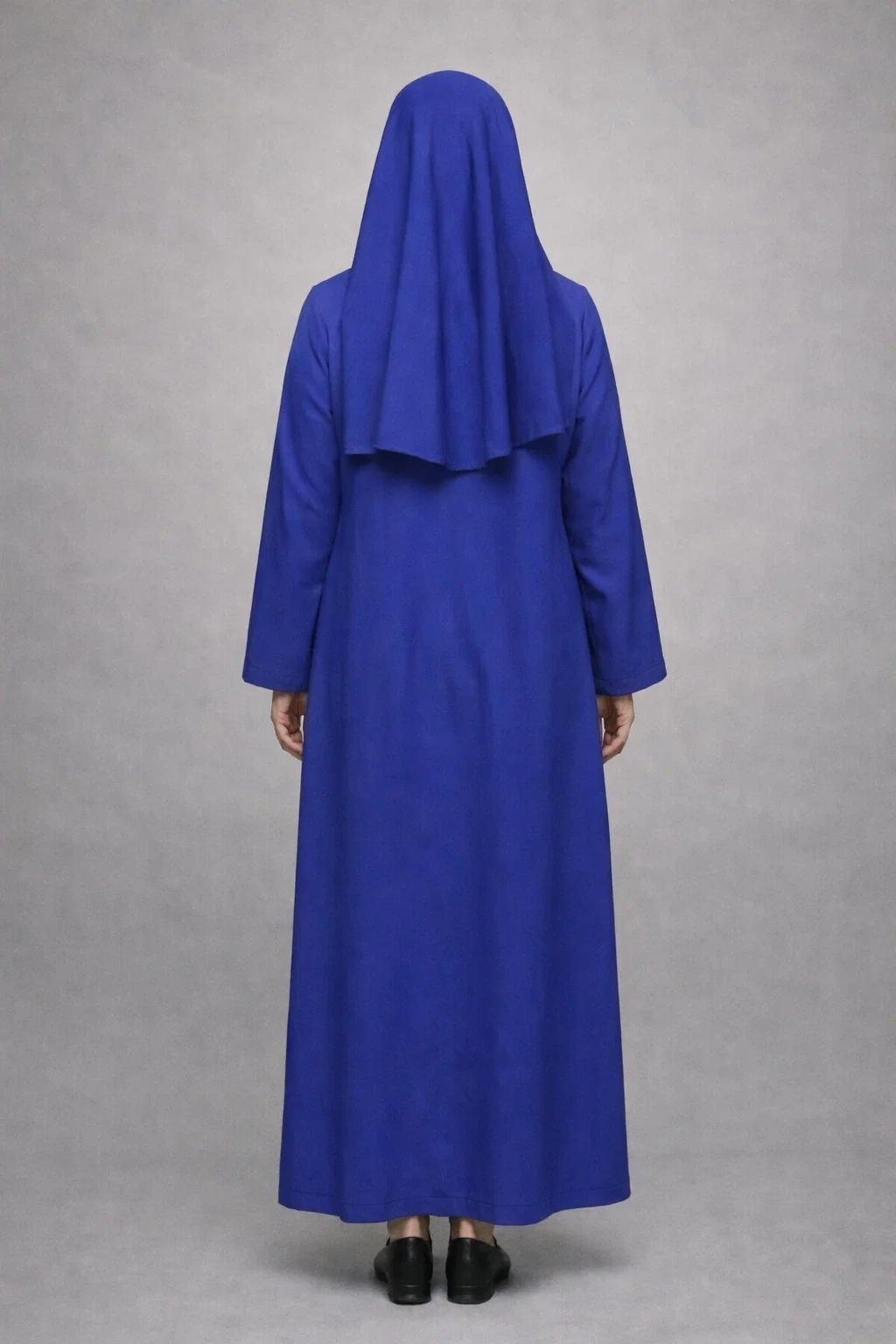
The tunic is the base. Full length to the ankle, cut with long sleeves that reach the wrist, gathered gently at the shoulder so the sleeve falls straight rather than ballooning. The neckline is finished plain so the coif and scapular sit against it without fighting for space. The back is a single unbroken panel with a natural A line through the skirt, wide enough for kneeling and standing without gathering.
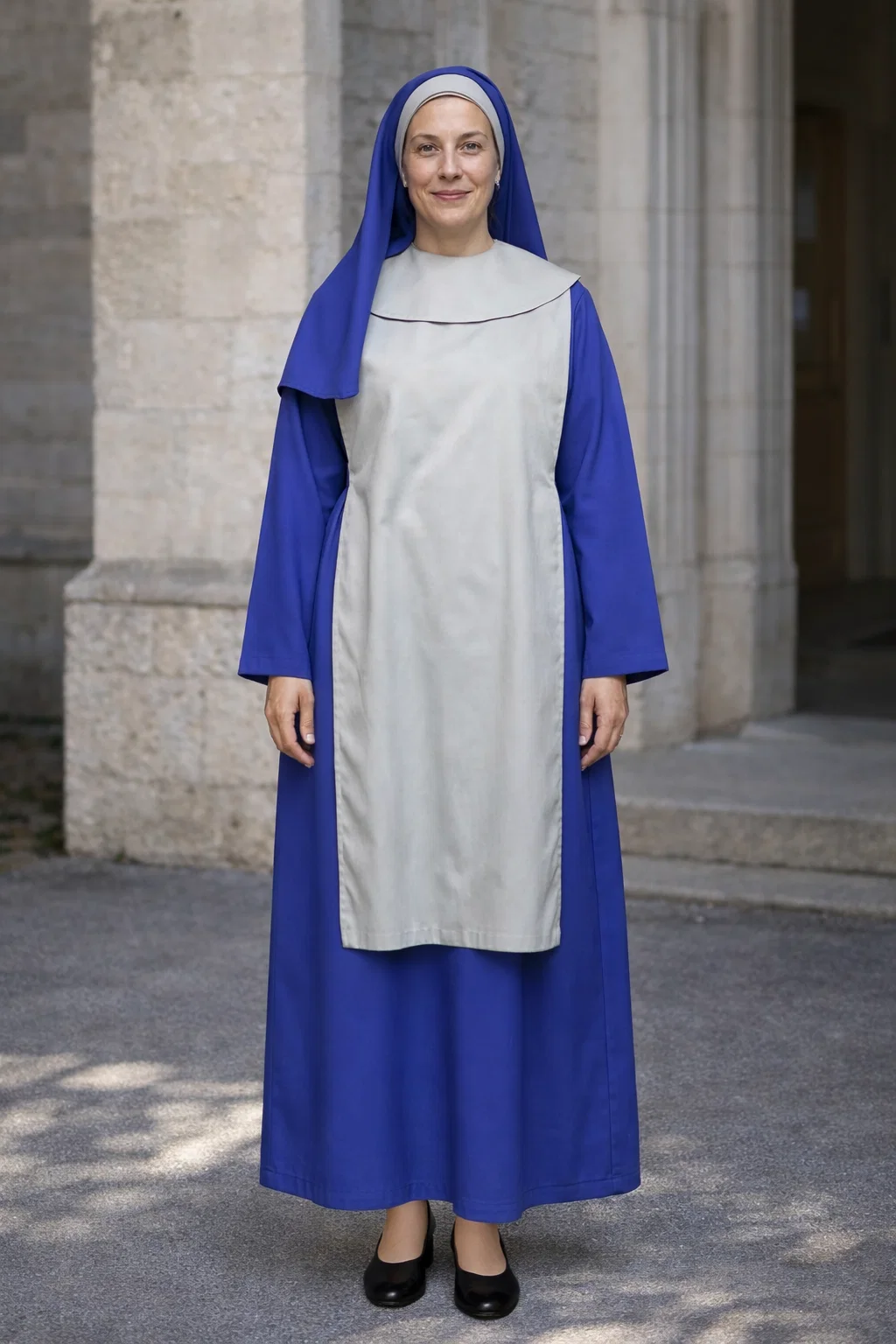
The scapular is the middle layer. Cut in a pale dove grey close to #BFC0C0, it lifts over the head through a plain neck opening and falls front and back to mid calf. The grey against the blue is the defining visual, and the contrast is deliberate: enough separation to read as two distinct garments from the back of a chapel, not so much that it fragments into panels. A quiet piped edge runs along the neckline to define the shape without adding weight.
The veil sits over a cream coif that frames the face. The veil itself is cut from the same blue as the tunic, draped so it falls over the shoulders and to mid back, with the coif visible only as a soft band at the forehead. That layering keeps the whole head reading as one composed silhouette rather than a hat placed on top of a dress.
Fabric and How It Wears
Every piece is cut from a lightweight tropical fabric. That choice does more work in a habit than in almost any other garment, because a habit is worn head to toe, layered, for the entire day. A heavy cloth in three layers becomes unbearable in a warm chapel by ten in the morning. A tropical weave moves air through the layers, which is why this works for religious sisters in Texas, in the Philippines, in East Africa and anywhere summers are long.
The face is matte. A saturated ultramarine in a cloth with sheen picks up every highlight and reads uneven under fluorescent chapel lighting or on video. A matte surface keeps the blue holding flat and even in daylight, under sanctuary lights and on camera. That last point matters more each year, as more communities record daily office and stream liturgy.
Care: dry clean recommended for the tunic and veil to protect the depth of the blue. The scapular can be washed cold on a gentle cycle and hung to dry. Steam all three lightly on a hanger rather than pressing hard.
There are no reviews yet. Be the first one to write one.