
The Surplice Over the Cassock
Choralis is a modern surplice designed to be worn over a cassock as the standard layered vestment for choir offices, non-Eucharistic services, the Liturgy of the Hours, Evensong, baptisms, and any occasion where an alb and chasuble are not called for. The cassock-and-surplice combination is one of the oldest vestment pairings in Western Christianity, and it remains the prescribed dress for choir, preaching, and non-sacramental worship in Roman Catholic, Anglican, Episcopal, and Lutheran rubrics.
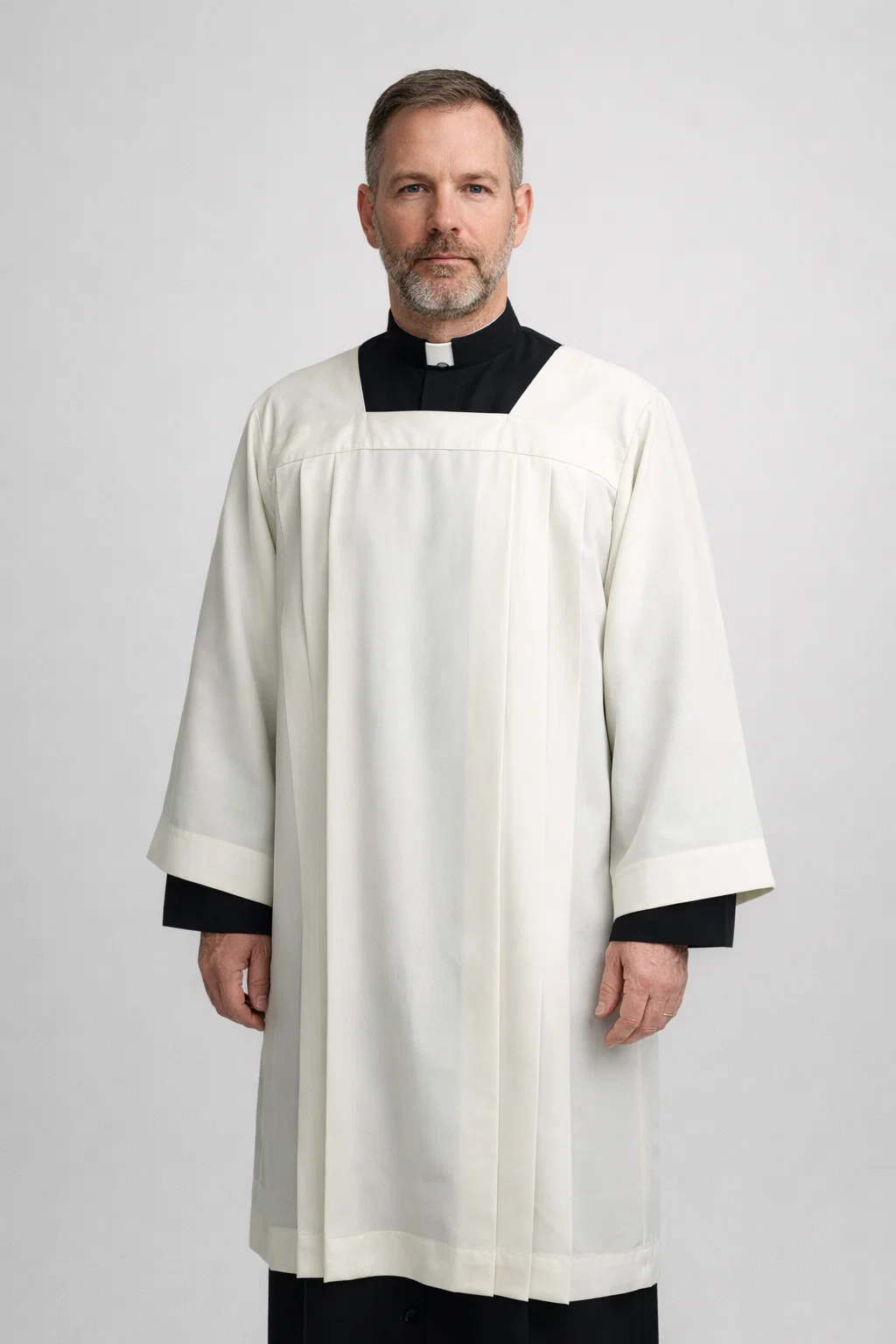
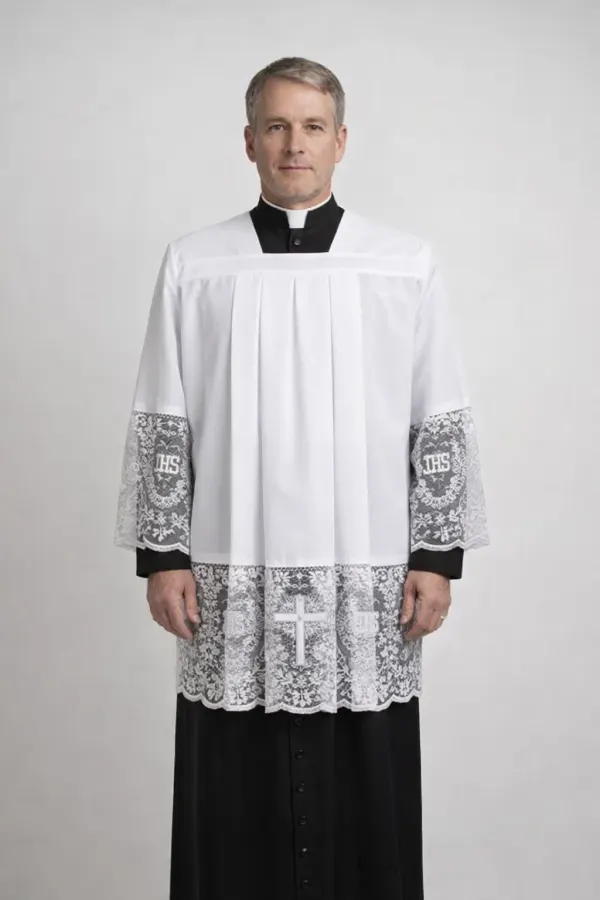
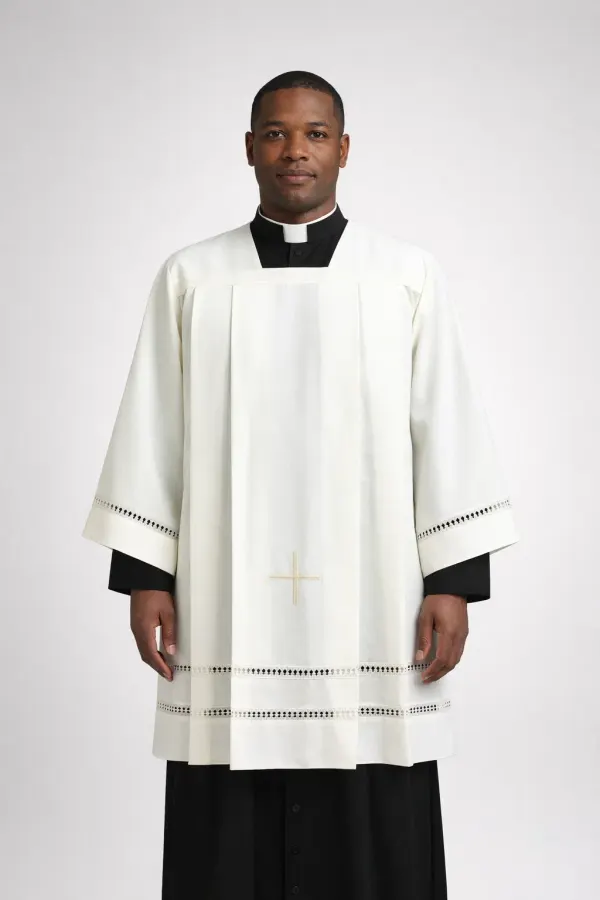
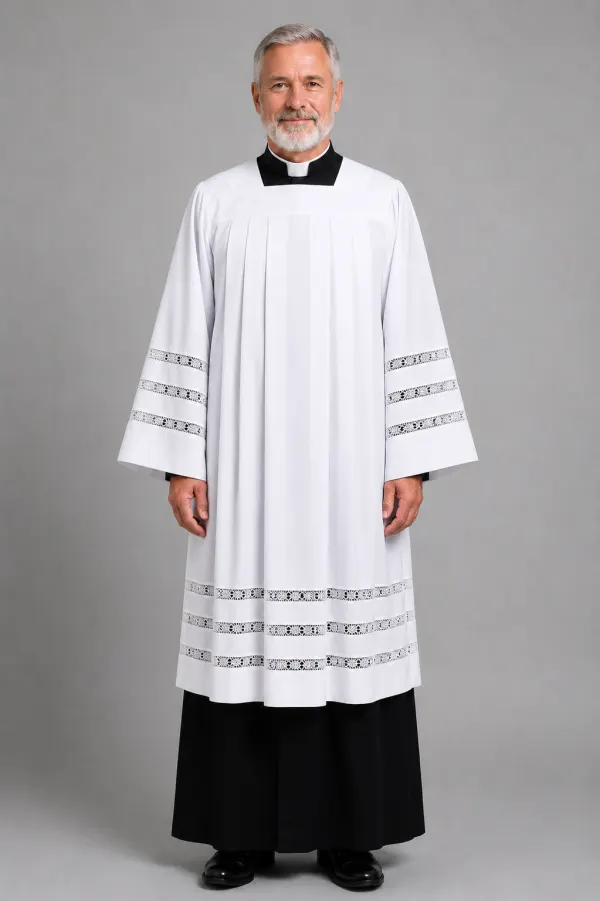
The surplice is not a standalone garment. It is a pull-on over-garment with no closure, designed to sit on top of a cassock so that the cassock’s collar, sleeves, and lower hem are all visible beneath. The images show Choralis worn over a black cassock with a tab clerical collar; the black collar, cassock sleeves, and cassock skirt are all visible as intended.
The Square Neckline
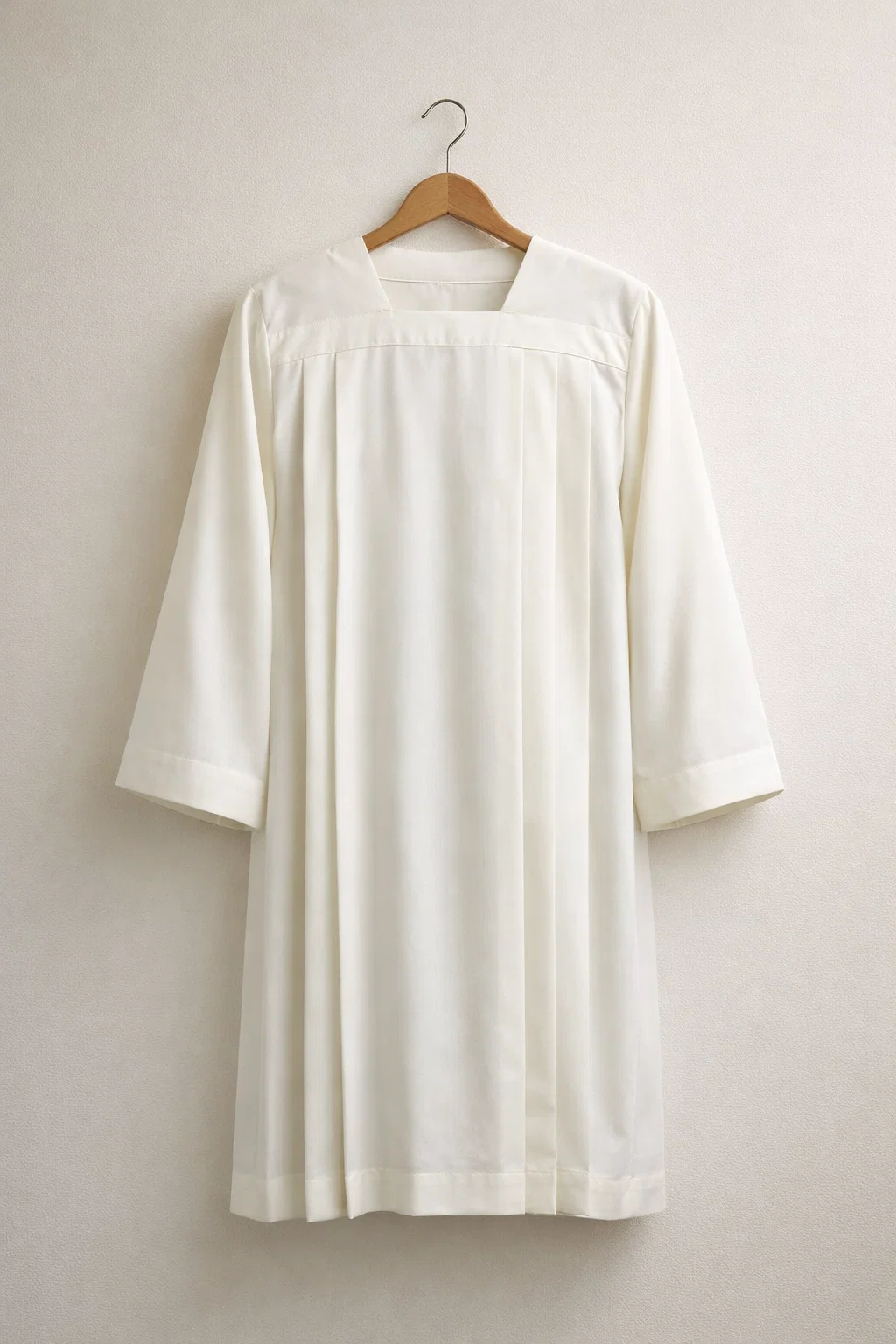
The neckline on Choralis is a square cut with a small V-notch at the center front. This is the modern Anglican and Roman Catholic surplice shape, distinct from the round-neck medieval surplice and the shorter, round-neck Roman cotta. The square neckline sits wide across the shoulders and exposes the cassock collar at the throat, which means the wearer’s clerical tab or collar band remains visible when the surplice is on.
The V-notch at the center front is a construction detail that helps the neckline sit flat on the shoulders without pulling inward. It also gives the front of the surplice a defined center point that aligns with the cassock’s center front closure below.
Pleats and Construction
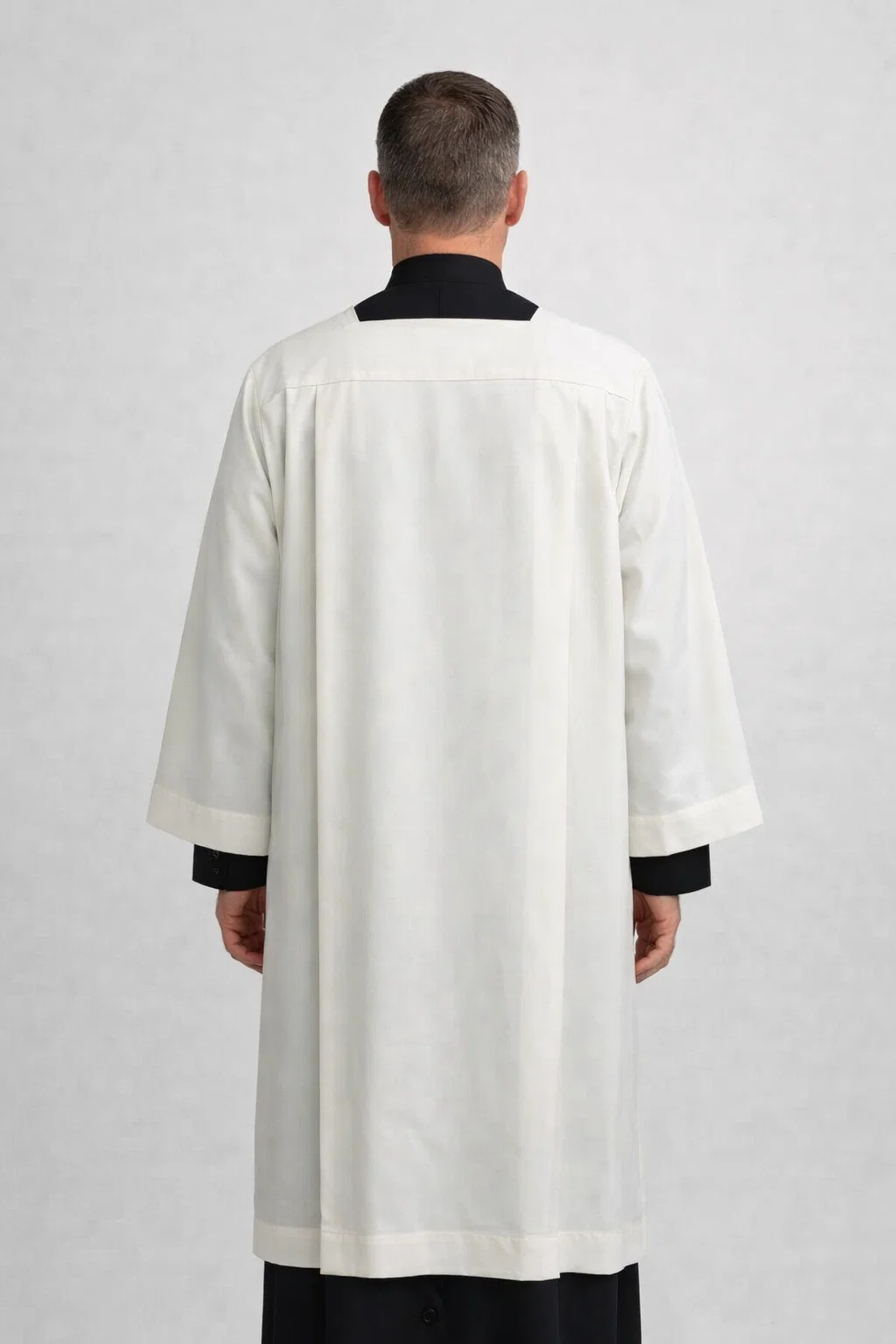
The body of Choralis is box-pleated from a flat yoke that sits across the chest and upper back. The yoke is unpleated, giving the shoulders and upper chest a smooth, structured panel. Below the yoke seam, the fabric breaks into evenly spaced vertical box pleats that fall from the chest to the hem.
Box pleats give a surplice more visual weight and formality than a gathered surplice (which would have soft, irregular folds). The pleats hold their shape when the wearer is standing and fall open naturally when the arms are raised, which gives the surplice movement during liturgical gestures without collapsing flat against the body.
The sleeves are wide and three-quarter length, ending above the wrist with a plain hem band. The three-quarter length is standard for a surplice: it exposes the cassock sleeve at the wrist, which is part of the layered visual effect and also keeps the surplice sleeve out of the way when the wearer handles books, candles, or liturgical vessels.
Fabric and Care
Choralis is made from a high quality cotton-rich fabric. Cotton-rich surplice fabric matters for two reasons. First, it takes and holds pleats better than a full synthetic, which is why the box pleats on Choralis stay crisp after repeated wear rather than softening into loose folds. Second, cotton breathes well when layered over a cassock, which is important because the wearer is already in a full-length garment underneath.
The color is a soft ivory white rather than a stark optical white. Ivory sits better against the warm tones of stone, wood, and candle flame found in most sanctuary settings, and it does not look blue-tinted under fluorescent or LED lighting the way an optical white can.
Care: machine wash cold or warm with whites only. Hang to dry while smoothing the pleats into alignment; tumble drying can twist the pleats out of position. Steam rather than press; if pressing is needed, press on the reverse side along the pleat lines. A mild oxygen-based brightener can be used to maintain the ivory tone over time. Do not use chlorine bleach.
There are no reviews yet. Be the first one to write one.