The Gap This Fills
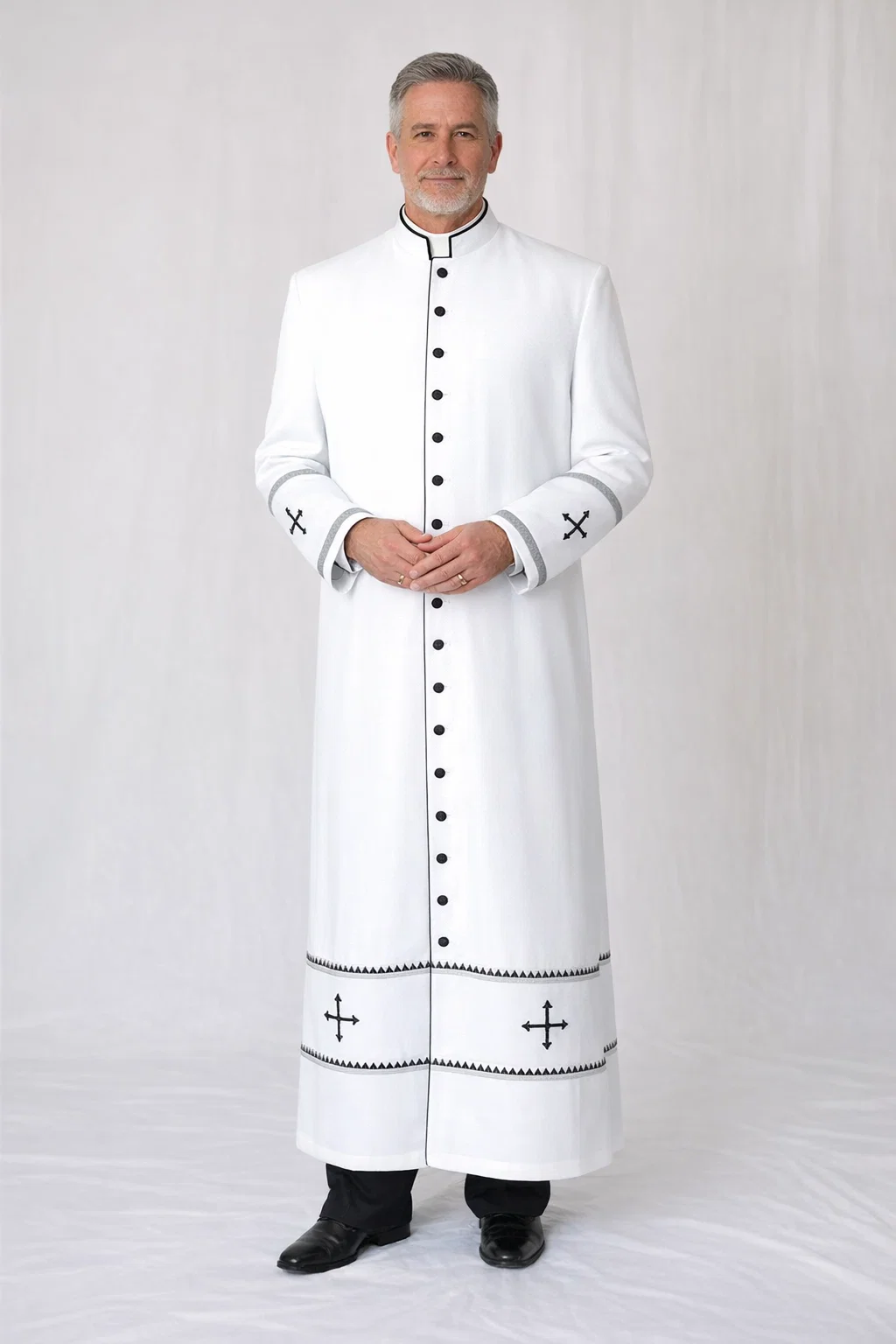
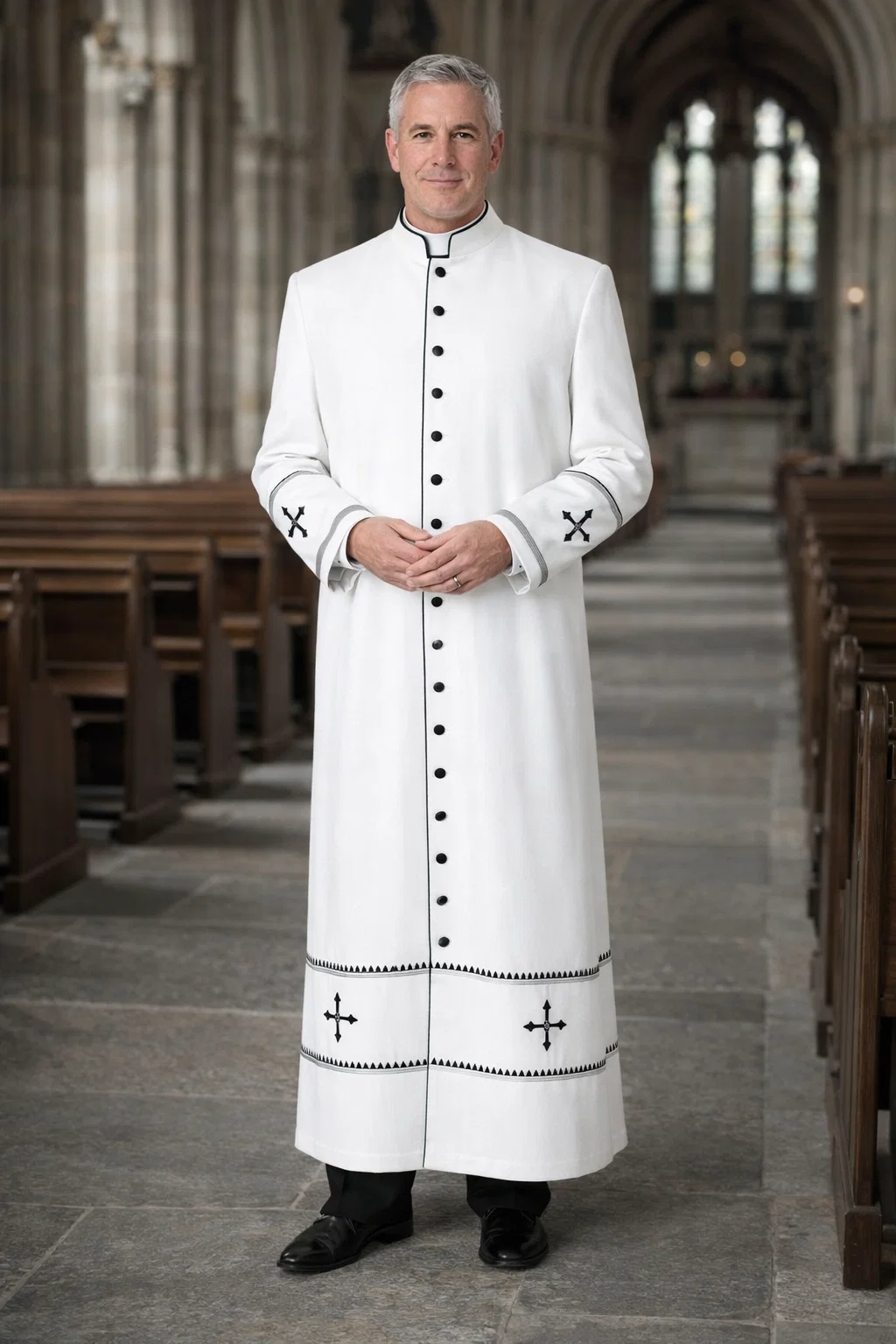
A formal robe needs to read as intentional vestment, not as a colored overlay. It needs to work at the altar and in the chancel without looking borrowed or incomplete. The Lucerna is built for traditions that keep formal dress simple, elegant, and focused: white ground with minimal ornament, so the robe disappears and the office comes forward.
The Lucerna bridges the gap between plain and ornate. It has enough detail to signal formality and care, but not so much that the detail competes with the liturgy or distracts from the work. The black crosses and geometric trim are restrained and classical. The tropical suiting holds its shape through a full day of service. This is vestment for clergy who value understatement and precision.
The White and Black, Specifically
The white is a pure, true white. No cream, no ivory, no warmth. It photographs cleanly and holds steady under any lighting. The black is a deep, true black: not gray, not navy, so the contrast with the white is clean and sharp. The embroidered crosses are worked in black thread with precision.
White is the color of Christmas, Easter, Epiphany, weddings, baptisms, and ordinations. It is worn year-round in traditions that appoint white for all formal occasions. The black trim is liturgically neutral: it does not signal a specific season or feast, so the Lucerna works in any tradition where white is appointed. The simplicity of black on white reads as classic and traditional without being ornate.
Fabric, Cut and Details
The Lucerna is made from tropical suiting fabric: a blend that combines structure with breathability. The weave is tight and holds a crisp drape, resists wrinkles through hours of wear, and moves air so the robe stays fresh even in a packed sanctuary.
The body is cut with a straight line from shoulder to hem, tailored close enough to read as formal without clinging. The long sleeves are fitted through the forearm, tapering to the wrist so they sit clean and trim. Small crosses are embroidered at each cuff, finished with a narrow black piping edge.
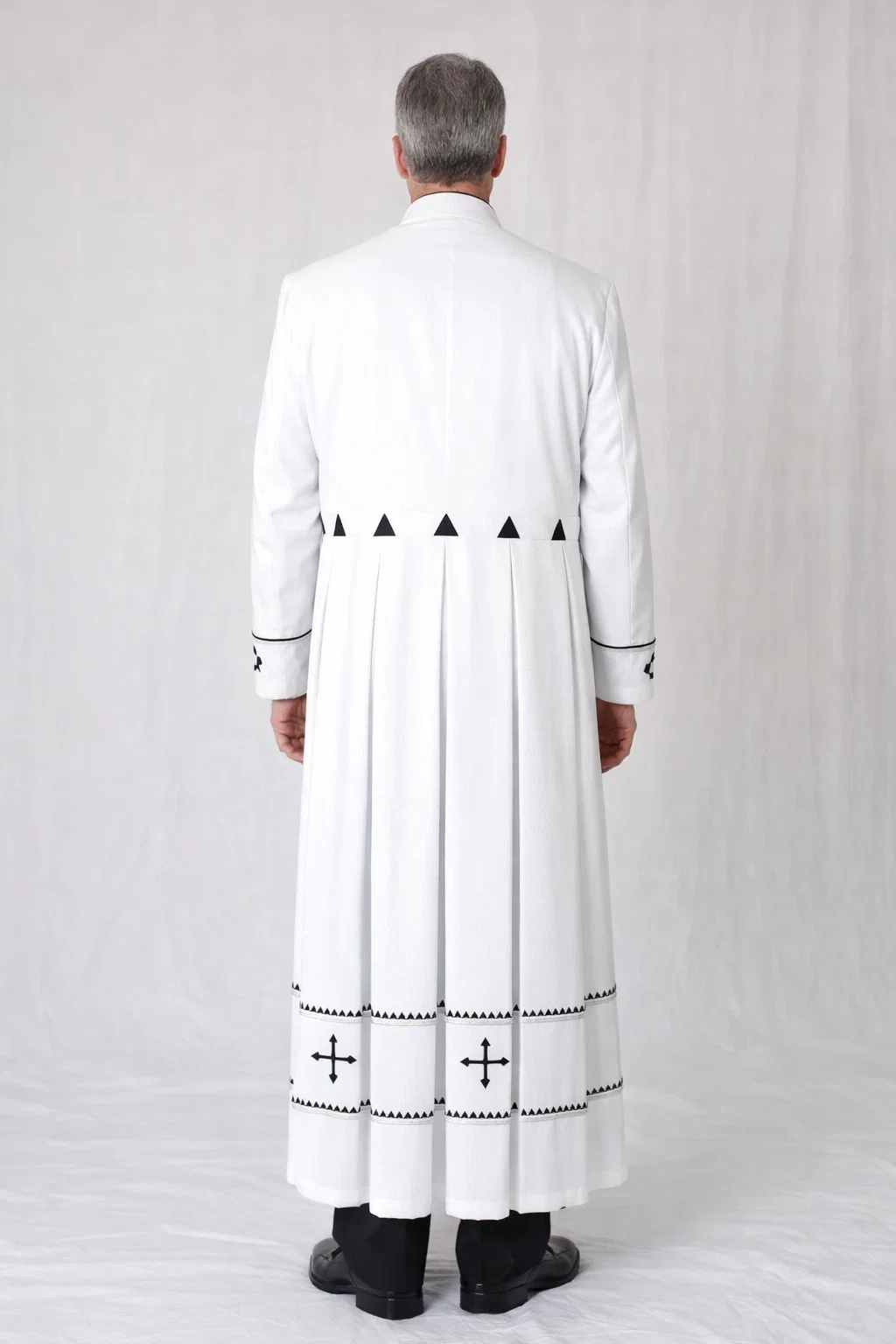
The mandarin collar stands structured and clean, edged with black piping. The button front runs the full length from neckline to hem with small black buttons spaced evenly. At the waistline, a geometric embroidered band frames the body, worked in black on white with triangular motifs and cross details. Below that band, the hem falls to the ankle, framed with another matching embroidered border. Paired crosses sit centered on the lower hem.
The center back vent runs between the hem details so you can sit and move without the fabric dragging. All seams are finished cleanly with flat fell construction.
Care: dry clean recommended for formal wear. If you launder at home, wash cold on a gentle cycle, hang to dry, and steam lightly. The tropical suiting sheds wrinkles quickly and holds its shape well.
Where It Belongs
The Lucerna belongs in traditions that value formal vestment without ornament. At the altar for Christmas, Easter, and high feast days when white is appointed. For ordinations, installations, confirmations, and formal services. In formal processions and liturgical occasions where your dress needs to signal intention without distraction.
The robe is worn as a complete vestment on its own, or paired with a stole. It can be worn under a cope for even more formal occasions.
The Lucerna is not a working garment. It is vestment for formal occasions and liturgical services where you mean to be fully dressed as clergy. If you need a robe for daily work or pastoral visits, the Albaris is built for that. The Lucerna is for the altar and formal ceremony.